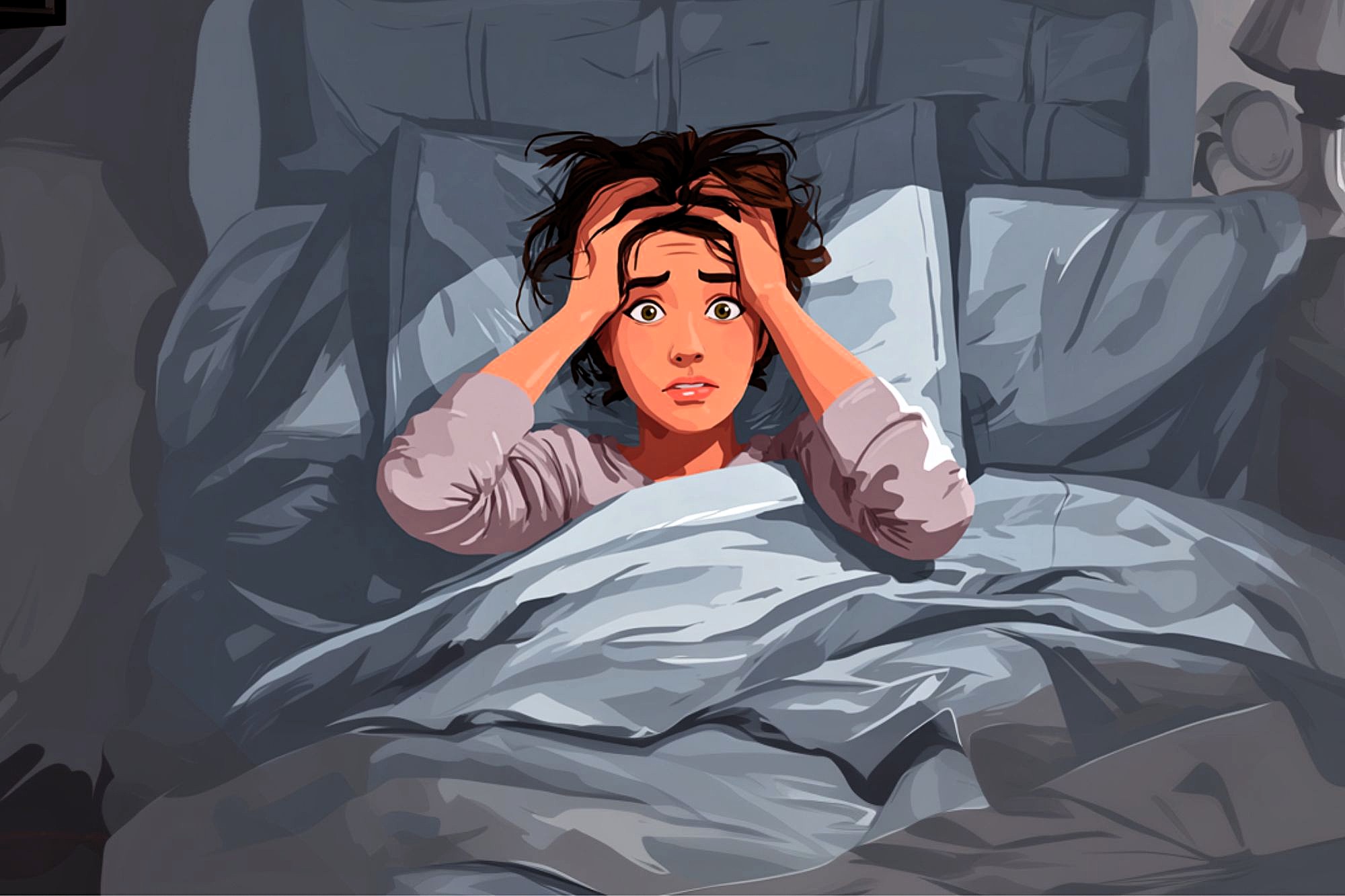
Do you lie awake night after night, playing all kinds of memories and random scenarios in your head? Or can you sleep soundly despite whatever’s going on in your world? Those who are usually calm and grounded rarely stay up all night because their minds and memories are tormenting them, but that’s a regular occurrence for anxious people.
In fact, the things mentioned below tend to keep them from sleeping soundly on a regular basis. You may not give them much thought at all, but for anxious people, these things are torturous brain fodder that interferes with their daily lives.
1. Awkward moments that happened, often weeks, months, or even years later.
Nobody gets all the way through life without saying something terribly awkward to someone at some point. Most of us have had some spectacular foot-in-mouth moments over the years, and immediately regretted the idiocy that we had uttered, especially when in the company of someone we were trying to impress at the time.
The thing is, although many people remember the feeling of awkwardness, unless they have an anxious, overthinking mind, they likely can’t remember exactly what it was that they said at the time. But anxious individuals often hold onto those experiences and keep rolling them around in their minds — sometimes for years or even decades after the fact.
They may go over the exchange in excruciating detail, remembering the other person’s facial expressions, how they hated themselves afterwards, and so on, with all the self-loathing and panic of that moment rearing back up with every mental repeat.
2. Rehearsing every possible conversation or interaction ahead of time.
Few anxious people like surprises. In fact, they tend to be so averse to unexpected stimuli of any kind that they try to plan and prepare for every possible interaction or experience. As such, they usually rehearse conversations in their heads before having them, planning out exactly what they’d say in any given exchange.
The problem with this is that nobody ever knows exactly what another person is going to say to them during a conversation. As a result, all those carefully rehearsed phrases end up getting tossed aside when the person speaking to them says something unexpected. At that point, the anxious individual may freeze up and either make an excuse to leave or blurt something, which only serves as further fuel for that post-event rumination mentioned above.
3. What other people think of them.
Many anxious people agonize over whether those around them like them or not. They’ll replay exchanges they had with others, looking for clues as to whether people expressed disdain towards them or not, and wonder what they might have potentially done to alienate these people. After all, they want to be liked, and if they aren’t, there must obviously be something wrong with them, right?
In reality, nobody will be liked by every single person they meet. That would be creepy. People who don’t experience such anxiety usually recognize that they’re not going to be liked, admired, or respected by everyone they encounter over the course of their lives, and that’s fine with them: they don’t like everyone else they meet either.
4. Implausible “what if?” scenarios.
You may not lie awake at night thinking about how horrible it would be to suffocate beneath a pile of fallen mattresses at a bed furniture warehouse, but some anxious people certainly do. In fact, they often think about implausible scenarios like these and then fall into “what if?” rabbit holes that prevent them from sleeping.
It’s highly unlikely that any of them will ever find themselves in an airplane hangar-sized warehouse full of mattresses stacked 100 feet high, but they’ll worry about that scenario nonetheless — right down to trying to figure out whether they’d survive being crushed, and how they would go about freeing themselves from their soft, foamy prison if and when this ever occurred.
5. Potential health issues.
A lot of anxious folks experience health-related anxiety and are prone to catastrophizing when and if there’s anything out of the ordinary with their health. For example, if they find a bruise they can’t explain, they may panic about having leukemia. Similarly, they may be concerned that their rather standard morning muscle stiffness might be early multiple sclerosis, and so on.
In contrast, people who don’t struggle with anxiety are more able to access logic and reason when it comes to health concerns. If they aren’t bleeding out of their eyes, they’re pretty sure they’re okay. And if they’re not, they’ll go to a doctor and deal with whatever the diagnosis may be once it’s determined.
6. Work or housing insecurity.
People who aren’t prone to anxiety don’t usually worry about their work or housing security at all. They just go through their days, working and coming home as usual. If they get notice of dismissal at work or discover that their living situation is going to change (e.g., eviction from the landlord, surprise divorce papers, and so on), they deal with each situation as it arises.
In contrast, naturally anxious people worry about these things all the time, even if there’s little risk at all of anything changing. Even when they are happy and comfortable in their lives, they may have to imagine terrible scenarios as a means of self-protection, so they can prepare for the worst in case it arrives.
7. Relationship issues.
Anxious people often tend to stay up at night worrying and thinking about their relationships, whereas calm people just have them. They work through things as they unfold rather than anticipating every possible misunderstanding or tense issue that may arise. After all, they know that they can’t envision every single interaction that may occur, so they remain present and focus on being the best partner they can be.
This approach is inconceivable to anxious individuals, who worry about everything that could possibly go wrong in their romantic or platonic relationships. They worry about saying or doing anything that may cause conflict, and agonize over how heartbroken they’d be if the relationship ever fell apart. They could be literally curled up in their sleeping partner’s arms, lost in thought about how sad they’d be if this person (who loves them dearly and has shown no indication otherwise) broke up with them, for whatever reason.
8. Worries about death.
One thing that unifies most anxious people is a generalized fear of their own mortality. Some worry about the possibility of pain when they die, while others fixate more on what will happen to their loved ones after they’re gone, or what life after death might be like, if it exists. Or all of the above. Meanwhile, people who aren’t anxious are generally secure in the knowledge that they aren’t sure what will happen when they die, but they’ll find that out when they get there.
Of course, we all have moments when we fear death, but for non-anxious people, these usually occur when they’re faced with their own mortality or experience a health scare. Outside of these situations, they don’t give it much thought. To them, whatever happens will happen, and that’s the end of it. Literally.
Final thoughts…
Anxiety isn’t an easy thing to deal with, and more people than ever are contending with it on a daily basis now. Those who aren’t naturally anxious may brush off other people’s irrational fears as ridiculous, without being aware of how paralyzing these worries can be to those who suffer from them.
Research shows that anxious people can benefit greatly from trying to remain as present as possible, and naturally calm folks can help them out by being supportive and encouraging, rather than dismissive when their fears arise in this era of upheaval and uncertainty.