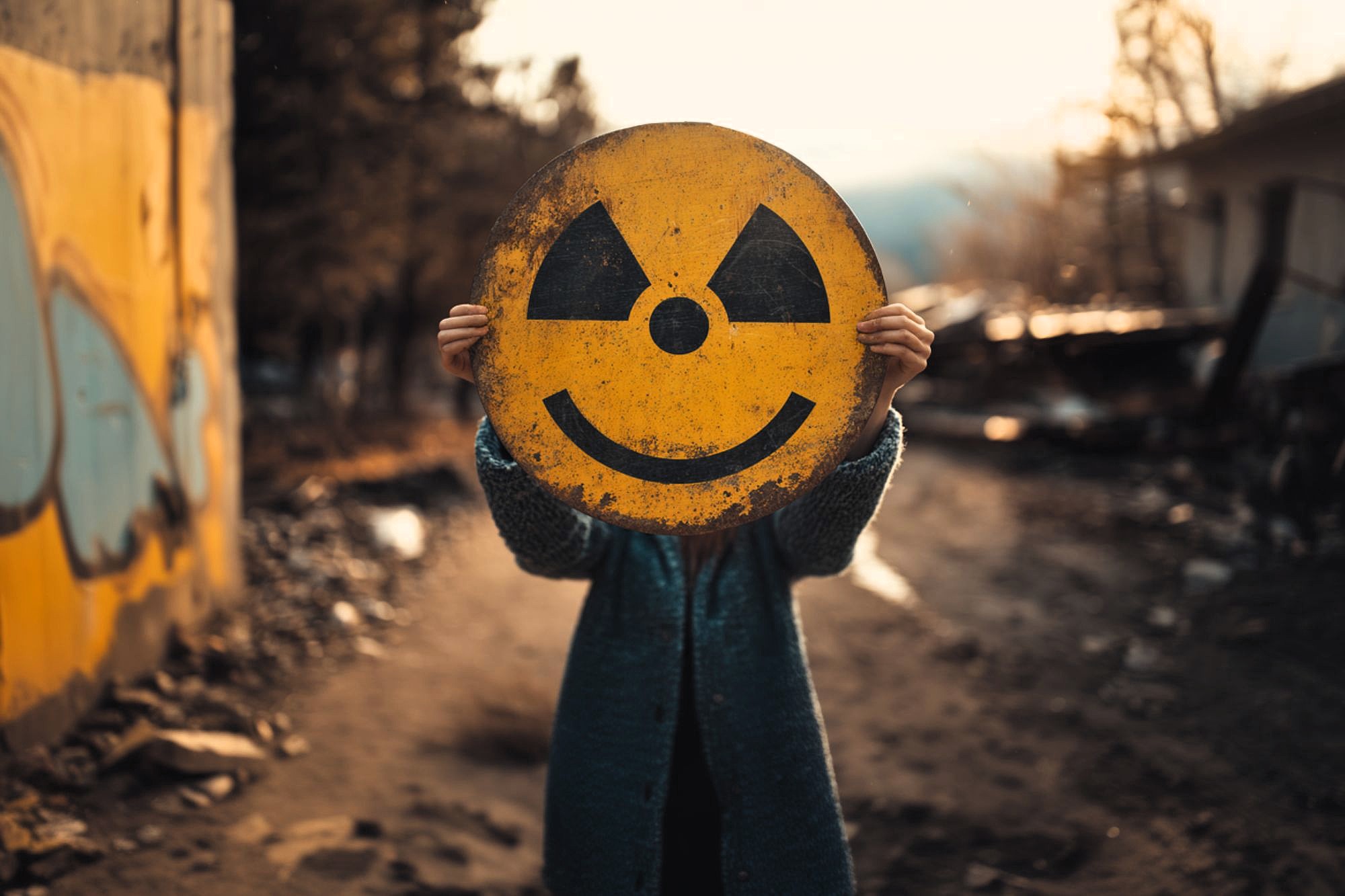
Stay positive! Good vibes only! These quotes seem great, and almost act as a cheerleader for life, don’t they? Who wouldn’t want to be positive? After all, isn’t the other choice being negative? Well, no, not really. Sometimes, it’s neither; it’s simply being realistic. If things aren’t okay, it’s learning to sit in that and accept it, rather than disguising everything as never-ending optimism.
I want to dust off the pseudo-layer of glitter and reveal 10 things you may see as positive thinking, but that actually do more harm than good. You have permission to think life can suck at times: I know I do!
1. When you act in accordance with the “It could be worse” mantra.
You lost your job, and you have no way of being able to pay your bills, but hey, you could have broken both legs on your way out of the office, too, so, chin up! Now, that’s not to say for one second that your life couldn’t be worse in some way, but does minimizing your pain in this way really make the current problem you’re facing less of a problem?
In pushing aside what you are facing because at least I have a roof over my head, you’re not actually accepting that something big has happened, and you need to deal with it. It’s okay to find it frustrating that your boss laid you off or that some other major thing happened. It’s an uncertain time for you, and it’s toxic to think you’re in a musical at a time like this.
2. Avoiding honest conversations because you don’t like conflict.
My life is positive, and conversations are easy! Sounds ideal, but it’s not real life. Real life does get tricky, and we need to lean into having those tougher talks. We forget that, actually, through the harder moments we experience, we learn the most about ourselves.
We learn patience, self-reflection, compromise, and we learn how to deal with our emotions in a regulated manner. We also learn a lot about others and strengthen our bond with them through rupture and repair. You don’t get that by having a pleasant ride through life and relationships. Pretending that everything is fine, even when you know it’s not and that you need to speak honestly, is just toxic. You’re doing yourself (and others) zero favors by avoiding what you know deep down you need to do.
3. Smiling through your pain.
We’re taught that pain is bad and to just smile through it. Many adhere to this, living a life where they deny the entire concept of pain. But what does that achieve?
Pain is an indicator. Whether physical or emotional, the body will respond by letting you know that you’re hurting in some way. Ignoring it does your body, mind, and the pain a disservice. If we ignore it and push it away, it won’t just disappear. It will resurface, often when you least want it to.
What’s more, admitting it’s there doesn’t make you weak. It’s actually a sign of great courage to be able to be vulnerable about your pain or suffering, because for many people, it’s so much harder to do.
If I can offer you any advice, it’s to listen to the messages you’re receiving. They’re being sent to you for a reason, and not giving them the credit they deserve will only cause further pain in the long term.
4. Refusing to understand your anger and instead, swallowing it.
We’re talking about big emotions here. Anger, frustration, grief, anxiousness. They’re not small in their approach, and they’re seldom small to deal with. Does that mean we should gulp them down like they’re an unnecessarily large supplement, or should we explore them?
One is easier to do, and believe it or not, it’s swallowing them. But when you do that, these emotions just stay in you. There’s nowhere for them to go, and the more you try to pretend they aren’t there, the more they will remind you they are. Stress, impatience, sleep issues, digestive problems, heart palpitations; they will all be your reminder that you’re holding those emotions inside.
Understanding where these emotions come from and working through them can initially hurt more. But there’s magic in knowing about yourself a little more. Remembering there’s no such thing as a negative emotion can also place you in a good position to accept all emotions (I tell myself this when somebody cuts me up in traffic…). Viewing emotions neutrally instead, simply as messages trying to tell you something about yourself or a situation, can be more helpful. It’s not healthy to be positive all the time, so view all emotions as valid and useful.
5. Surrendering your boundaries out of kindness to others.
I just want everybody to be happy.
Sounds lovely, but what about you? If you’re surrendering your boundaries to make somebody else feel at ease, where does that leave you? These questions are meant to help you clarify what good you think you’re doing by assuming your people-pleasing acts are acts of kindness. They might be kind to others, but you aren’t being kind to yourself.
Boundaries exist for a reason, and that reason is usually so that you’re aligned with what you feel is right and fair. Don’t neglect that and smile through it. Smile and mean it, or don’t smile, and mean that, too.
6. Thinking your emotional numbness is peace.
All too often, our emotions can dominate to the point where we can become so used to them that they just start to feel numb. Those who believe in staying positive all the time convince themselves that their numbness is inner peace, but the truth is, it’s nothing of the sort.
Real inner peace isn’t the absence of feeling. It’s actually the opposite. Peace comes when we accept the tides of life. As it flows, everything feels good, and as it ebbs, it can feel a little more unpredictable. The point of inner peace is that you remain you throughout, feeling all of it, and letting whatever arises come and go. You still feel it, but there’s a real this too shall pass approach to it.
Numbness, on the other hand, flatlines everything, the good alongside the bad, and that’s a significant loss because we cannot feel one without the other.
7. Convincing everybody that you’re okay when you’re far from it.
You’re not doing yourself any favors by giving people the brush-off and pretending you’re okay when you’re not. A lot of the time, people will believe you, and as such, their olive branch, or chance to connect, will fall away. While you may not want to talk all the time, there might be a moment you do, and if you are constantly pretending you’re fine, nobody will suspect that you aren’t.
Trust me here, people can be very convincing on these occasions, and you can think, “Wow, this person is always so happy and together.” Speaking as a parent, I think it’s okay to let your kids know that you’re not feeling fired up every single day of the year. It’s good practice for them not to hide when they’re not alright, like a subconscious permission slip.
It works outside parent/child dynamics, too. If you let people see the real you, they can help and support the real you. And when you normalize struggle, they can also not feel so isolated and worried when they’re not doing so well.
8. When you judge the negativity of others.
You’re not a bad person for judging people if they feel bad, but it likely does come across that way at times, especially if they’re just trying to be honest.
For instance, I get tired. If I clock in the hours, I’ll probably let you know about it with a grunt or a sigh. There’s nothing inherently wrong with me; I just might have had ‘one of those nights.’ I will explain that, and apologize if I appear cranky. For somebody who accepts all emotions, they might give me a wide berth and say, “That’s okay. Get your coffee,” (and I will run to it). For those who never like to drop the positive thinking, they may deem me as overly negative or short on patience. I’m not. I’m just tired, and it’s okay to be tired as long as you own it.
What never helps is when somebody whose smile never cracks widens their eyes in horror. Suddenly, I’m a terrible human being because of my broken sleep. This kind of attitude doesn’t help anybody. We’re all human. And it’s human to experience all emotions.
9. Thinking, “Everything happens for a reason,” and never evolving from it.
What a way to avoid what’s really going on. Saying everything happens for a reason is absolutely a form of avoidance, and instead of processing what might be happening, you shut it down with a fail-safe phrase. The conclusion shouldn’t be that simplified. There are some terrible things that happen to people, and saying they happen for a reason minimizes the real suffering they cause.
Ask yourself why you feel the way you do, and what triggered it. You never know, you just may grow as a result. And besides, if something bad that happened really happened for a reason, might you want to explore that a little more?
Final thoughts…
Toxic positivity keeps you stuck in happy mode, but it won’t address what you’re going through. Smiling through it all won’t fool you in the long run, and it only creates a person who suppresses, rather than expresses their emotions.
The reality is that toxic positivity isn’t actually about being positive; it’s more a case of denying your emotions, and that comes with an expensive well-being price tag. If this sounds like you, then maybe exploring something like acceptance and commitment therapy might help you.