
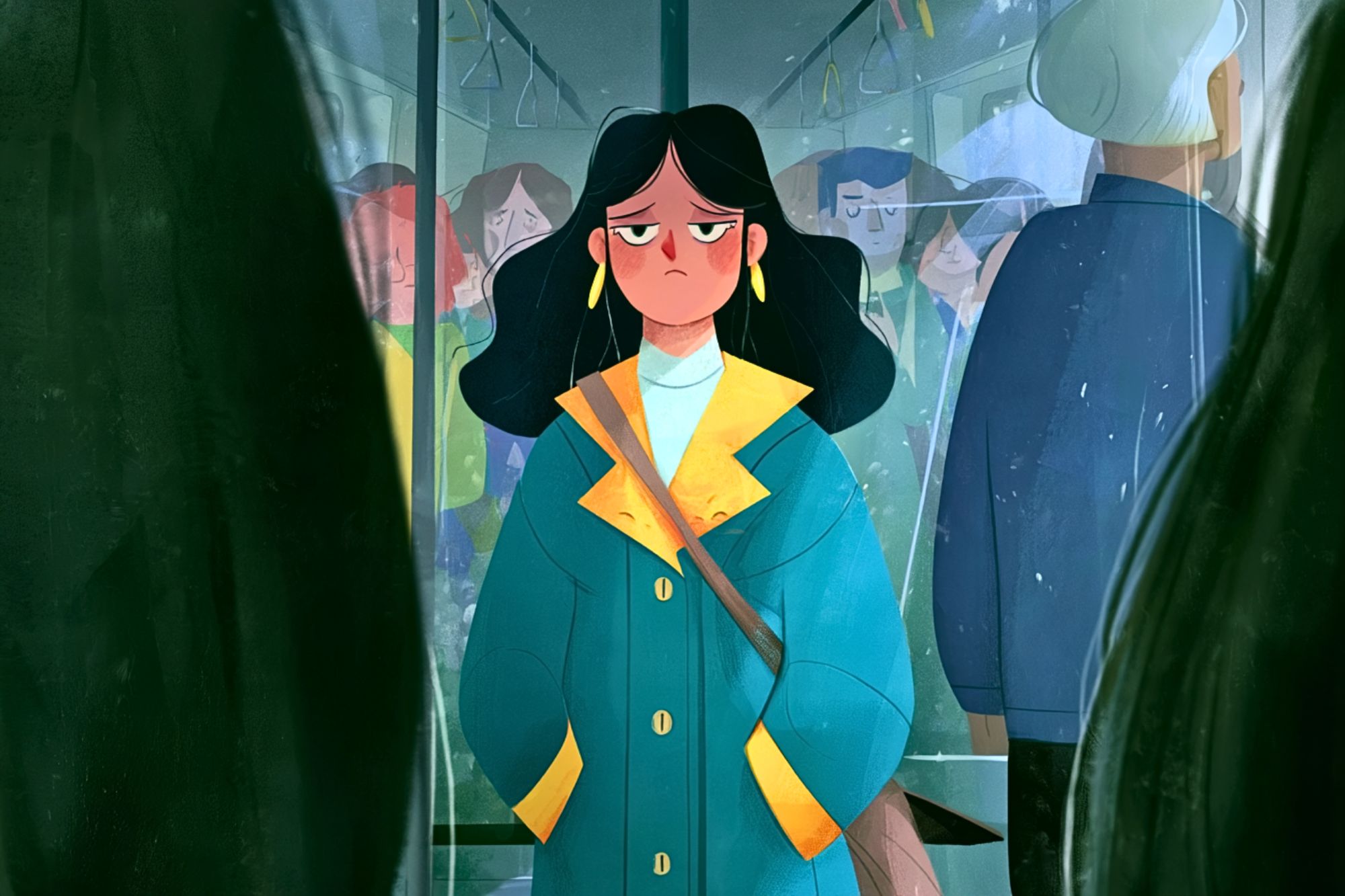
Most of the days you will ever live are ordinary ones, so if ordinary days feel like a chore to you, most of your life will feel that way too.
You can, however, look at it a different way. Since so many of your days will be ordinary ones, you have lots of chances to change them.
Each ordinary day is a fresh canvas. You can wake up and decide to try something, notice something, or meet someone new.
It might not feel like it, but admitting that you want more from your time—from your life—is the hardest step. That honest wish is where real change starts.
Plenty of people have felt exactly how you feel now and found their way back to enjoying their lives. You can too, and you can start today.
10 habits to build if your life feels like an endless series of things you just have to endure:
1. Stop treating your life like a waiting room for “someday”.
Listen closely to how people talk about their week. “Nearly Friday.” “Just need to get through today.” “Only three more sleeps until my holiday.”
We say these things so often that we barely hear them anymore.
Yet each phrase implies that the good part of life is somewhere else. It’s waiting after the deadline, after the house move, after the kids start school, after retirement.
But when that moment finally comes, a new “someday” always seems to pop up to take its place. The waiting never really ends.
Weekdays make up around 70% of your life. If those days are just time you put up with until the fun starts, then most of your life is being put up with.
Of course, there are times when getting through really is the best you can do. Grief, illness, a newborn baby, or a family crisis can push anyone into survival mode, and that’s okay.
The trouble starts when survival mode becomes your normal setting long after the hard times have passed.
So, for the next few days, try catching yourself every time you use the language of endurance. No need to judge it. Just notice it.
It’s important to say that nearly everyone falls into this habit at some point. And habits can change.
2. Find out where your days are actually going.
Back in 2004, psychologist Daniel Kahneman and colleagues asked over 900 employed women to reconstruct the previous day, one episode at a time. For each part, they rated how much they enjoyed it.
Commuting came last, ranking even lower than work itself. Intimate relations came out on top, followed by socializing; time with friends and relatives was also among the most enjoyable parts of the day.
You can run your own version of this at home. For two or three days, jot down each part of your day, whether that’s the school run, a meeting, cooking dinner, or scrolling in bed. Then give each one a score from 1 to 5 based on how it felt.
Most people find that their days are far from all gray. Certain slots drain them badly, while others are surprisingly bright.
There is one thing to keep an eye on, though. You might notice you had a couple of free hours in the evening and still felt like you had no time to yourself. Author Brigid Schulte has a name for this: “time confetti.” Your free time gets broken into tiny bits by phone checks, messages, and jumping between tasks, so it never feels like real enjoyment.
To spot it, note whether each chunk was interrupted, as well as what you did. Thirty calm minutes with a book may score far higher than a whole evening of half-relaxing.
The core message here is that you may not need more hours at all. You might just need to protect a few unbroken ones.
3. Stop turning your free time into another to-do list.
Some of the most worn-out people I know are at their busiest on weekends. Saturday is booked solid with a gym class, a brunch, two errands, a kids’ party, and a “quick” DIY job. Sunday is for meal prep and catching up on the reading challenge they signed up for in January.
None of these things are bad on their own. But when every free hour has a plan and a purpose, rest starts to feel like another job.
Researchers Gabriela Tonietto and Selin Malkoc found exactly that in 2016. When people put fun activities on a strict schedule, those activities felt more like work and were less enjoyable. Their fix was wonderfully simple: try “rough scheduling” instead. Agree to see a friend “sometime Saturday afternoon” rather than “2 till 3:30,” and let the rest of the day stay loose.
Writer Oliver Burkeman makes a related point in his book Four Thousand Weeks. That’s roughly how long an 80-year life lasts. He argues that when we treat time as something to get the most out of at every moment, we end up anxious and always living for the next thing. The present turns into a means to an end.
So please, allow yourself to leave a few gaps. An empty Sunday morning with nothing planned can feel a little uncomfortable at first, but stick with it. Some of the nicest moments in life turn up when nobody scheduled them.
4. Do something purely for the joy of being bad at it.
The word “amateur” comes from the Latin amator, which means “lover.” Originally, an amateur was simply someone who did something because they loved it, rather than for money.
Somehow, many adults have lost touch with that idea. We drop hobbies the moment we’re not good at them. We avoid anything that doesn’t “lead somewhere.” And when we do find something we enjoy, there’s often a voice saying, “You could sell these on Etsy.”
Of course, once a pastime turns into a possible income stream, it picks up deadlines, pressure, and comparison. The fun soon fades.
Psychologist Mihaly Csikszentmihalyi, best known for his work on the concept of flow, had a term for things we do purely for their own sake. He called them “autotelic” experiences, where the reward is the doing itself. He also noticed that people who find this kind of reward in everyday tasks tend to report richer, more satisfying lives.
Being a beginner has a hidden perk, too. When you start from zero, you get better fast. Every session brings progress you can see, and that feels great.
So, pick something with no goal, no audience, and no plan to make money from it. Sing loudly in your living room. Try needlework. Doodle for 10 minutes. Dust off those old rollerblades.
Will you be any good? Probably not. That’s rather the point.
5. Inject tiny doses of novelty into your routine.
Can you remember what you did on a random Wednesday last March? Most of us can’t. When days follow the same pattern, they blend together in memory, and whole months can seem to vanish.
Psychologist and broadcaster Claudia Hammond explores this in her book Time Warped. She describes something called the “holiday paradox.” While you’re on holiday, the days fly by. Yet when you look back, the trip feels long and full because it was packed with new sights and experiences. Your brain created lots of fresh, distinctive memories.
Routine has the reverse effect. A dull week can drag while you’re living it, then shrink to almost nothing in hindsight. That’s one reason adult years seem to pass so quickly compared to childhood. Fewer “firsts” means fewer memories to mark the time.
What can you do? Well, if you want your life to feel longer and fuller, you don’t need extra time. You need more moments that stand out.
Thankfully, novelty can be really small:
- Take a different route home
- Try a lunch spot you’ve walked past a hundred times
- Sit in a different chair at the table
- Cook food from a country you’ve never visited
- Move the furniture around in one room
None of these will change your life on their own. Together, though, they give your weeks some shape, so they stop blurring into one long stretch.
Aim for one small new thing each week, and see what you remember a month from now.
6. Learn to savor, and know when to pause the good stuff.
Ad breaks are one of the most annoying parts of watching TV. Oddly enough, they may make you enjoy the show more.
Across a series of studies, researchers Leif Nelson and Tom Meyvis found that breaking up pleasant experiences made people enjoy them more. That included massages with short pauses and TV programs with ads.
The reason comes down to something called hedonic adaptation. Humans get used to good things very quickly. The first bite of cake is heavenly, while the tenth barely registers. A short break resets your senses, so to speak, making the pleasure feel fresh again.
Savoring works hand in hand with this idea. It means slowing down on purpose to notice and stretch out a good moment, such as the first sip of morning coffee, the sun on your face, or a long chat with an old friend. Most of the time, we rush right past these moments while thinking about what’s next.
A few simple ways to savor more include:
- Slow down and pay attention to the details, such as the taste, the sound, or the feeling.
- Describe the moment to yourself in words.
- Share it with someone, even if that’s just a quick “this is lovely.”
- Take a mental snapshot so you can come back to it later.
Then consider breaking up the experience. Put your fork down between bites. Spread your treats across the week instead of having them all at once. Save the next episode for tomorrow night.
Good things last longer when you take them slowly.
7. Talk to the stranger, the barista, the person next to you.
One of the easiest mood boosters around costs nothing and takes about thirty seconds. You just have to say hello.
Plenty of us move through our days surrounded by people, yet we barely speak to any of them. We tap our cards, nod at the bus driver, and keep our earbuds in. Days like that can feel very flat, even if nothing actually went wrong.
Psychologist Gillian Sandstrom became curious about the people we half-know: the regular at your coffee shop, the dog walker you pass each morning, or the classmate you only chat with before lessons. Researchers call these “weak ties.” In a 2014 study with Elizabeth Dunn, Sandstrom found that on days when people had more chats with these casual contacts, they felt happier and had a stronger sense of belonging.
What’s great is that these little chats are so easy to come by. Next time you buy a coffee, ask the barista how their day is going and actually listen to the answer. Compliment a stranger’s jacket. Learn the name of the neighbor you’ve waved at for three years. Chat with the person beside you in the queue about the long wait.
Yes, it might feel awkward at first. Most people are far friendlier than we expect, though, and many are happy for someone else to make the first move.
Start with one small chat a day, and see how much warmer your days start to feel.
8. Go looking for awe.
Awe is the sense of facing something vast that you can’t quite wrap your head around. And that feeling matters a lot when your days feel like a slog.
Ask most people where they find awe, and they’ll mention mountains, oceans, or a sky full of stars. Those are great sources, but they aren’t the only ones.
Dacher Keltner, a professor at UC Berkeley, gathered stories of awe from people in 26 countries for his 2023 book Awe. The number one source turned out to be other people. He calls it “moral beauty.” It’s the feeling of awe you get when you see someone show great kindness, courage, or virtue. A stranger stopping to help someone who has fallen counts. So does a friend sticking by someone through a terrible time.
A to-do list keeps your attention narrow and fixed on yourself. Awe widens it. For a moment, your worries shrink, and you feel part of something much bigger.
The best part is how easy it is to find once you start looking:
- Watch the sunset instead of scrolling past it
- Stand under a huge old tree and look up
- Listen to a piece of music with your eyes closed
- Read a true story or watch a biographic movie about someone who did something brave or incredible
- Notice the small kindnesses people show each other on a busy street
Forget the plane ticket and the dramatic view. Keep your eyes open, and awe has a way of finding you.
9. Always have something small on the horizon.
Hold on. Didn’t I start this article by warning you against living for “someday”? Yes, I did, and that warning still stands.
But looking forward to things is healthy. The trouble only begins when all your happiness rests on one big event that’s months or years away.
Small, regular things to look forward to work very differently. They lift your mood today while still giving you something nice ahead.
Leaf Van Boven and Laurence Ashworth looked at this in 2007. Their research found that anticipating a positive experience can be more emotionally intense—and often more enjoyable—than looking back on it afterwards.
Anticipation brings its own kind of joy. You get to imagine it, plan it, and feel that little buzz of excitement each time it crosses your mind.
Spread those good feelings across your week by putting a few small treats on the calendar. Here are a few ideas:
- Thursday dinner with a friend you haven’t seen in a while
- A new book you’ve ordered and can’t wait to start
- A bike ride on Saturday morning if the weather holds
- A film night with snacks you’ve been saving
- A phone call with your sister on Sunday afternoon
Not one of these needs to be big or expensive. Each one gives an ordinary day a little lift, and gives you a reason to smile when you check the calendar.
Try keeping at least one small thing on the horizon at all times. When it comes and goes, add another.
10. Imagine your life without the things you take for granted.
Choose one good thing in your life right now. Maybe it’s your partner, your best friend, or the dog who goes wild every time you walk through the door.
Now imagine it had never happened. You never met that person. You never found that friend. The dog went home with someone else. Sit with that for a moment, then come back to reality and notice how you feel about that good thing now.
Most people feel a rush of warmth and relief. Researchers have a name for this exercise: “mental subtraction.” In a 2008 study, Minkyung Koo, Sara Algoe, Timothy Wilson, and Daniel Gilbert found that imagining how a good event might never have happened lifted people’s positive mood more than reflecting on how it had actually occurred.
Remember those ordinary days you’ve been trying to get through? Look a little closer, and you’ll find they’re full of things you’d miss terribly. A parent’s voice on the phone. Your morning cup of tea. A friend’s silly text that makes you laugh out loud.
This is a whole new way to think about gratitude, and it might work for you where traditional gratitude lists have failed.
Final thoughts.
Feeling like you’re just getting through your days is a sign that part of you wants more. Listen to that part. It knows something important about you.
Change at this level happens slowly, one ordinary day at a time. Some days, you’ll remember to slow down and enjoy things. Other days, you’ll slip back into old habits and spend the evening wondering where the time went. Both are part of the process.
Be patient and kind with yourself as you go. Celebrate the small wins, like a nice chat, a good laugh, or a morning that felt lighter than usual. Over time, you’ll start to feel like you’re actually living your life, rather than merely enduring it.
Every single day is worth enjoying, the very ordinary ones included. After all, they make up your life. Start living them today, and keep going tomorrow.