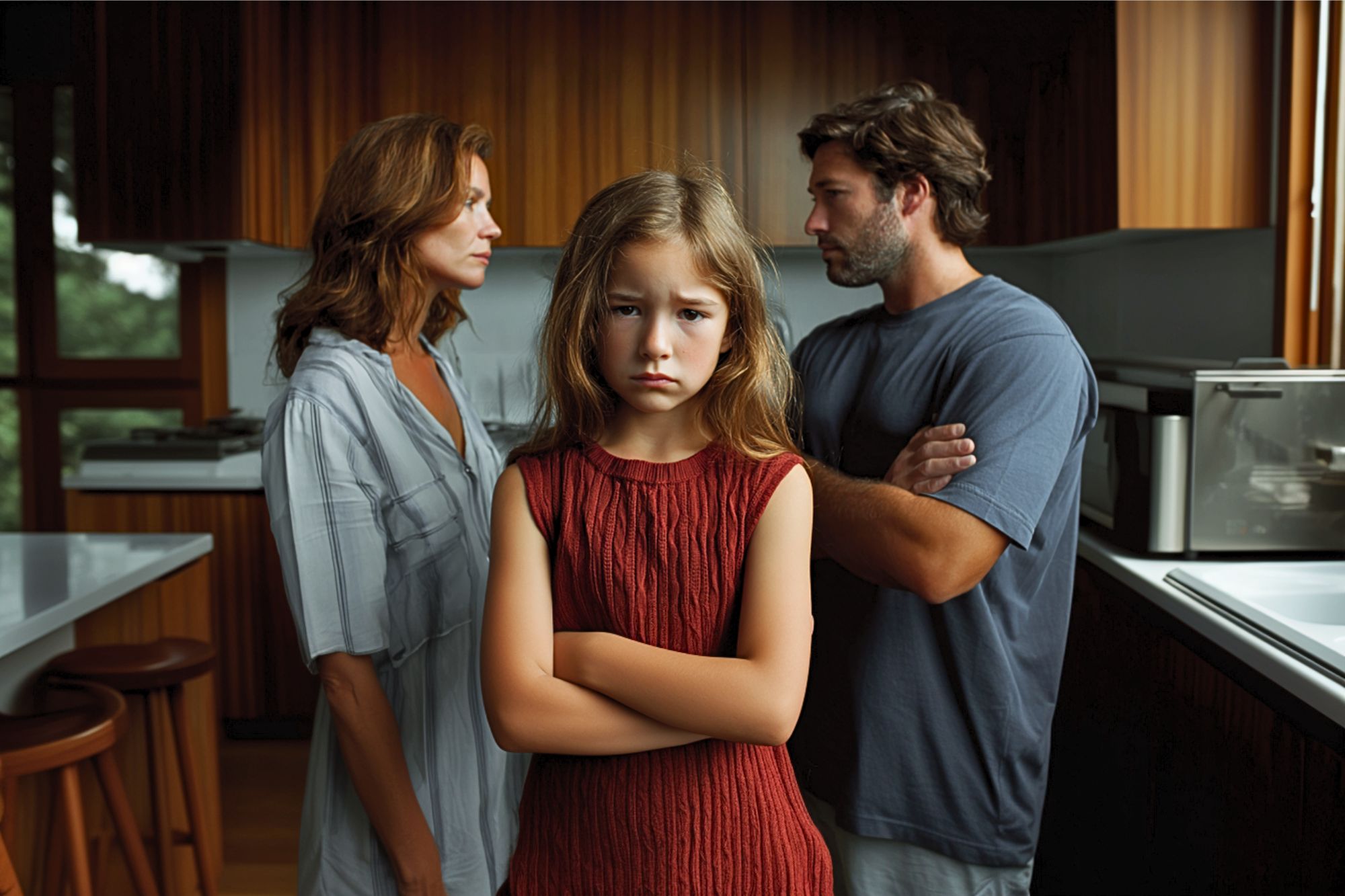
Love has become a daily performance in your home, and everyone knows the script by heart. You and your partner pass each other in hallways like polite strangers. Conversations center around schedules and logistics while deeper feelings remain buried under years of accumulated silence. Every family photo requires effort to manufacture smiles that don’t reach your eyes.
Your children watch this choreographed dance of disconnection, absorbing lessons you never intended to teach. The decision to stay together for their sake feels noble and selfless. Yet beneath this sacrifice lies a complex web of unintended consequences that can damage everyone involved far more than you might realize.
1. Children learn dysfunctional relationship patterns.
Your eight-year-old daughter notices how Daddy sleeps in the guest room every night. She watches Mom’s face go blank when Dad tries to hold her hand. Without realizing it, she’s creating a mental blueprint of what marriage looks like.
Children absorb relationship dynamics like a sponge. When they witness parents who communicate through sighs, eye rolls, and careful avoidance of real conversations, these patterns become their normal. Your son learns that couples don’t laugh together or share genuine affection. Your daughter discovers that love means tolerating someone rather than enjoying their company.
Emotional distance becomes their comfort zone. Conflict avoidance transforms into their primary relationship skill. Passive aggression feels more familiar than direct communication because that’s what they’ve seen modeled day after day.
Years later, when they enter their own relationships, these learned patterns emerge automatically. They might seek partners who feel familiar—emotionally unavailable or disconnected. Alternatively, they may struggle to recognize healthy relationship signs because warmth and genuine connection feel foreign or overwhelming to them.
2. A toxic home environment creates long-term psychological damage in children.
Children possess remarkably sensitive emotional radar systems. Even when you think you’re successfully hiding your marital problems, they’re picking up on subtle tension in your voice, the way you and your spouse avoid eye contact, and the thick atmosphere that settles over dinner conversations.
Living in chronic emotional stress affects their developing nervous systems profoundly. Sleep becomes elusive because their little bodies remain on high alert, subconsciously monitoring for signs of conflict or instability. Academic performance often suffers as concentration becomes difficult when home feels like a minefield of unspoken tensions.
Hypervigilance develops as a survival mechanism. They learn to read micro-expressions and body language with extraordinary accuracy, constantly scanning for threats to their security. What should be carefree childhood years become filled with worry about family stability.
Many children internalize responsibility for their parents’ unhappiness. They blame themselves for arguments they overhear or for the sadness they sense in their parents. Guilt and shame complexes form early, creating adults who struggle with self-worth and carry inappropriate responsibility for others’ emotions throughout their lives.
3. Parents experience a deterioration in their mental health.
Living authentically becomes impossible when you’re performing happiness while feeling empty inside. Your mental health pays an increasingly steep price for maintaining this exhausting charade.
Depression often creeps in slowly at first, then overwhelms completely. You wake up each morning facing another day of pretending to be content in a relationship that feels more like a prison sentence. Anxiety builds as you suppress natural emotions and authentic responses to situations that frustrate or hurt you.
Sleep disorders frequently develop from the stress of constant emotional suppression. Your body holds tension that never fully releases because you can’t express your true feelings safely. Some parents turn to alcohol or other substances to numb the pain of their sacrificed happiness.
Resentment grows like a cancer, poisoning not just your marriage but your relationship with yourself. You begin to lose touch with who you really are beneath all the pretending. A martyrdom complex develops where your suffering becomes a twisted source of identity and righteousness, making it even harder to consider healthier alternatives for everyone involved.
4. Children develop distorted views of love and marriage.
Love loses its magic when children observe parents going through the motions without genuine affection or joy. Your teenagers watch you and your spouse interact like roommates managing household logistics rather than partners who chose each other.
Marriage appears to be a burden rather than a choice when they witness parents treating their relationship as an obligation to endure. They never see the sparkle in your eyes when your partner walks into the room because that sparkle died years ago. Affection becomes rare or feels forced when it does occur.
Commitment becomes associated with suffering rather than growth and partnership. They internalize beliefs that relationships inevitably become stale, that passion always dies, and that staying together requires sacrificing personal happiness. Love transforms from something beautiful into something that traps people.
Their adult relationships suffer tremendously as a result. They might avoid commitment altogether, fearing the death of joy they witnessed in your marriage. Others become serial daters, abandoning relationships the moment difficulties arise because they learned that working through problems leads to years of misery. Secure attachment becomes nearly impossible when their primary model showed them that love means settling for less than fulfillment.
5. Children become people-pleasers.
Family peace becomes their responsibility in households where parents maintain surface harmony while harboring deep resentment. Children quickly learn that their job is to manage everyone else’s emotions and prevent additional stress in an already fragile family system.
Walking on eggshells becomes second nature as they develop extraordinary sensitivity to mood changes and potential triggers. They sacrifice their own needs, opinions, and desires to avoid “causing more problems” in a home already stretched thin emotionally. Their natural childhood exuberance gets dampened as they learn to make themselves smaller and less demanding.
Decision-making becomes paralyzed in adulthood because they never learned to prioritize their own needs or trust their instincts. Self-advocacy feels selfish because they were trained to put everyone else’s comfort first. Boundaries become foreign concepts because their childhood was spent managing other people’s emotional states.
Codependent relationships become the norm as they seek partners who need caretaking or who make decisions for them. They attract people who take advantage of their people-pleasing tendencies because they never learned that their needs matter equally. The cycle often continues as they struggle to teach their own children healthy emotional boundaries they never learned themselves.
6. Parents model that love = personal sacrifice.
“I’m doing this for you” becomes a frequent refrain in homes where parents stay together despite being miserable. Children receive the message that real love requires sacrificing your happiness, dreams, and authentic self for others’ sake.
Self-sacrifice becomes confused with virtue rather than understood as sometimes necessary but not inherently noble. They learn that prioritizing their own wellbeing is selfish, that good people suffer for those they love, and that asking for what they need makes them bad or ungrateful.
Career choices suffer as they select paths they think will make others proud rather than pursuing their genuine interests and talents. Future relationships become exercises in self-denial as they allow partners to treat them poorly because that’s what love looks like to them. They become targets for manipulative people who use guilt to control them.
Personal fulfillment becomes a foreign concept because they learned that happiness is less important than duty. They pass these beliefs to their own children, perpetuating cycles of self-abandonment disguised as love.
7. Chronic stress leads to physical health problems in both parents and children.
Your body keeps score of every suppressed argument, every fake smile, and every night spent lying next to someone who feels like a stranger. Cardiovascular problems become more common as stress hormones flood your system regularly without proper release or resolution.
Immune systems weaken under constant emotional strain, making both parents and children more susceptible to frequent illnesses. Sleep disorders plague family members who can’t fully relax in an environment filled with unspoken tensions. Headaches, stomach problems, and unexplained aches become regular companions.
Children’s developing brains suffer particularly devastating effects from chronic family stress. Their stress response systems become overactive, potentially affecting their ability to handle normal life challenges later. Growth and development can be impacted when their bodies are constantly producing stress hormones instead of focusing energy on healthy development.
The risk of substance abuse increases dramatically for parents seeking relief from their trapped feelings. Eating disorders may develop in children who turn to food for comfort or control when their family environment feels chaotic. Premature aging becomes visible in parents who carry the weight of years of suppressed authentic emotions.
8. Explosive conflicts become more likely over time.
Suppressed emotions don’t disappear simply because you’ve decided not to express them. Instead, they accumulate like pressure in a boiler until something relatively minor triggers a massive explosion that terrifies everyone in the household.
Years of accumulated grievances create conflicts far more vicious than anything that would have occurred during a healthy separation process. Parents say things designed to inflict maximum emotional damage because they’ve been storing up hurt and resentment for so long that it becomes weaponized during arguments.
Children witness their parents at their absolute worst during these explosive moments. The mask of civility gets ripped away, revealing years of contempt and anger that have been festering beneath the surface. These traumatic scenes often prove far more damaging than an amicable divorce would have been.
Recovery from these conflicts becomes increasingly difficult because there are so many layers of unresolved issues. Every fight reopens old wounds while creating new ones. Trust erodes completely as family members realize how much anger and resentment has been hidden beneath the pretense of staying together for everyone’s benefit.
9. Children develop trust and abandonment issues.
Your children sense the emotional disconnection between you and your spouse, but when they ask if everything’s okay, you tell them everything’s fine. Their intuition tells them one thing, while the adults they depend on tell them something completely different.
Learning not to trust their own perceptions becomes a survival skill that haunts them throughout their lives. They begin doubting their instincts about people and situations because the adults they trusted most taught them that their emotional radar was wrong. Gaslighting becomes normalized as they accept that their feelings and observations can’t be trusted.
Paradoxically, they also develop intense abandonment fears despite their parents staying together. The emotional unavailability they sense creates anxiety about losing security, even when physical presence remains constant. They learn that people can leave emotionally while staying physically, which feels even more confusing and frightening than obvious departure.
Adult relationships become minefields of insecurity and doubt. They struggle to believe partners who express love because they learned that people can act loving while feeling disconnected. They may become clingy or, conversely, avoid emotional intimacy altogether because vulnerability feels too dangerous when you can’t trust your own perceptions about others’ true feelings.
10. Parents develop chronic resentment toward the children themselves.
Over time, an insidious shift occurs where the children become associated with your sacrifice and unhappiness. While you consciously chose to stay for their benefit, you unconsciously begin blaming them for trapping you in a life that feels inauthentic and unfulfilling.
Subtle rejection creeps into your interactions with them. You might find yourself less patient, less engaged, or emotionally withdrawn in ways that feel confusing to both you and your children. They sense your resentment but can’t understand its source, leading them to conclude that something is fundamentally wrong with them.
Comments like “I gave up everything for you” slip out during moments of frustration, creating profound guilt in children who never asked for such sacrifice. They begin feeling responsible for your unhappiness while simultaneously feeling unworthy of the love they sense is tinged with regret.
Emotional availability becomes compromised as you struggle with conflicting feelings about the very people you’re supposedly protecting. Your children lose access to the full, authentic version of yourself because part of you associates them with your trapped circumstances. They grow up feeling like a burden rather than a blessing, carrying shame about their very existence into their adult lives.
11. Delayed separation results in explosive, hostile divorces that traumatize children more.
When separation finally comes—and it almost always does once the kids reach 18 or leave home—the divorce becomes a spectacular display of accumulated toxicity that devastates everyone involved. Years or decades of suppressed rage, contempt, and resentment explode into legal warfare.
What might have been an amicable separation earlier transforms into vindictive behavior designed to inflict maximum pain. Parents weaponize finances, alienate children against each other, and air decades of grievances publicly. The very people who claimed to “stay for the kids” engage in the most destructive divorce behaviors imaginable.
Children witness their parents’ complete breakdown at a time when they’re dealing with their own life transitions. Instead of adapting to divorce as resilient younger children, they now face family destruction as teenagers or young adults when they need stability for their own emerging independence.
Guilt overwhelms them as they realize their family could have been free years earlier if their parents had been honest about their unhappiness. They feel betrayed by the lie their entire childhood was built upon. Revelations of affairs, financial deception, or other secrets that accumulated during the “staying together” years destroy their sense of family history and make them question everything they believed about their upbringing.
Separation Is The Difficult But Right Choice
Separation or divorce is a difficult thing for a child to be part of, but it also teaches them many things about life. Children flourish when they see parents who respect themselves enough to pursue fulfillment rather than martyrdom. When handled with maturity, separation shows them that adults can navigate challenges while maintaining dignity and care for each other’s wellbeing.
Your courage to live authentically gives them permission to do the same throughout their lives. They discover that difficult conversations lead to growth, that temporary discomfort often precedes lasting peace, and that protecting people from truth usually causes more harm than sharing it with compassion.
Two happy homes teach them more about love than one miserable household ever could. They witness what healthy relationships actually look like when they see their parents eventually thriving in situations that honor their authentic selves. The gift of watching adults choose growth over stagnation becomes invaluable preparation for their own life challenges.
Your willingness to face difficult truths demonstrates the kind of strength they’ll need throughout their lives. Sometimes, the most loving thing you can do for your children is show them that happiness and fulfillment are worth pursuing, even when the path requires courage they didn’t know you possessed.