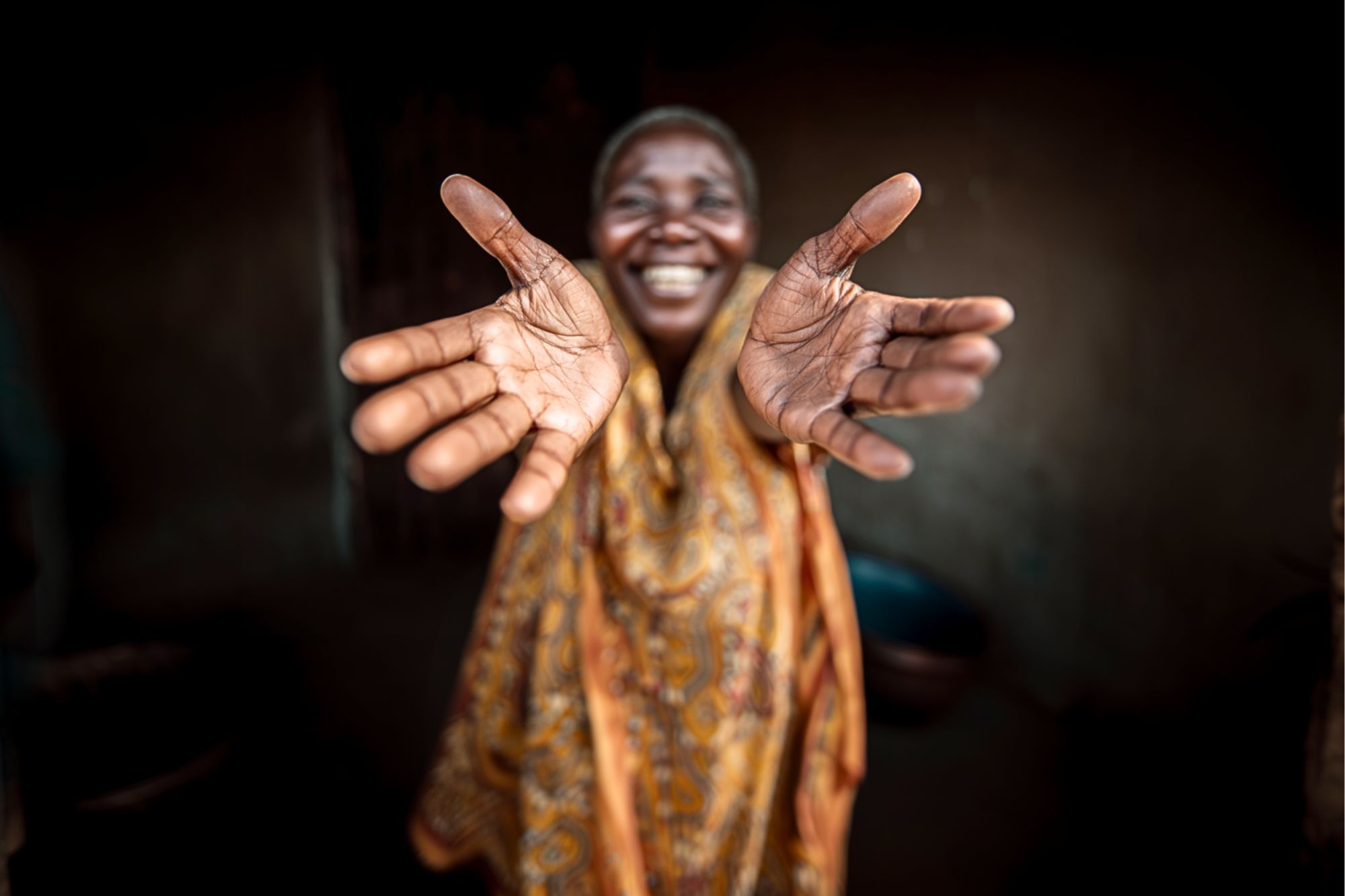
I like to think of myself as a generous person. It’s a trait I actively try to nurture and exhibit. And I know plenty of other generous people, too.
The way we demonstrate generosity varies, of course, with some people focusing on giving money to causes that matter to them, while others give generously of their time and energy. I think generosity in all its forms should be celebrated as equal.
One of the commonalities I see between myself and those other generous people is that giving feels completely natural, almost automatic.
And that’s likely because for us, generosity wasn’t a decision we made as adults. It was something shaped over years, often through experiences we didn’t even recognize as formative at the time.
Psychology has a lot to say about where this quality comes from, and the answers are genuinely fascinating. Some of the pathways make perfect sense. Others may surprise you.
1. They witnessed generosity modeled by a parent or caregiver.
Long before children can articulate values, they are absorbing them. Psychologist Albert Bandura spent decades demonstrating that children learn primarily through observation. Generosity is no different.
The modeling doesn’t have to be dramatic. A grandmother who always sent food home with visitors. A father who tipped generously, even when money was tight. An aunt who showed up whenever someone in the neighborhood needed help. These small, repeated acts leave an enormous impression on a child’s developing sense of what normal human behavior looks like.
What’s particularly interesting is that both performative generosity—the kind done visibly, even loudly—and quiet, unannounced generosity can shape children, but in different ways. Performative giving tends to teach children that generosity is a social act, tied to recognition. Understated giving, on the other hand, tends to build something deeper: the sense that helping others is simply what decent people do, regardless of whether anyone is watching.
In my case, my parents not only gave to various charities, but they also looked after a child with learning difficulties one weekend a month to provide respite to her parents. That was a big thing for my siblings and me. We lived that kindness; it was embodied by a name and a face and a personality. We saw the difference it made to the child we cared for, even if we didn’t realize just how much it must have meant to the parents of that child.
2. They grew up in poverty or experienced financial hardship.
Research from UC Berkeley, led by psychologist Paul Piff, found that lower-income individuals tend to give a higher percentage of their income to charity than wealthier people do. Not more in raw dollars, but more proportionally.
The reason might be that when you have personally experienced not having enough—when you’ve felt the specific anxiety of an empty fridge or the unjustified but often real humiliation of asking for help—you don’t just intellectually understand struggle. You carry it in your body. That kind of empathy is visceral in a way that no amount of education or good intentions can fully replicate.
Growing up without financial security also tends to place you inside communities where mutual aid is simply how people survive. Neighbors share. Families pool resources. Help flows in all directions because everyone understands that one day, the roles might be reversed.
That said, this doesn’t apply universally. Some people who grow up poor become deeply fearful with money in adulthood, hoarding it, protecting it, unable to let it go. What seems to make the difference is whether the hardship was cushioned by community, by mentors, or by adults who modeled generosity even in scarcity.
In other words, the experience of poverty alone doesn’t create generosity. The experience of poverty alongside human warmth often does.
3. They had a religious or spiritual upbringing.
Across virtually every major world religion, generosity occupies a central place. Tithing in Christianity. Zakat in Islam. Tzedakah in Judaism. Dana in Buddhism. These aren’t optional add-ons to religious life—they are foundational practices, woven into the fabric of what it means to be a faithful person.
Children raised in religious households aren’t just taught that giving is good. They’re taught that giving is identity. “We are people who give” is a fundamentally different message from “giving is the right thing to do.” One is a value you hold. The other is a description of who you are.
Studies show that religiously active individuals volunteer and donate at higher rates than their non-religious peers.
Psychologists link this to what they call moral identity—the degree to which being a moral, giving person is central to how you see yourself. Religious upbringings are remarkably effective at building moral identity early, and that foundation tends to hold.
4. They had a strong sense of community or “village” mentality growing up.
Some people grow up with an unspoken but deeply felt understanding: we look after each other here. This sense of communal belonging—whether in a small town, an immigrant neighborhood, or a close-knit cultural community—shapes the way a person relates to generosity for the rest of their life.
In collectivist cultures (those that prioritize group wellbeing over individual gain), helping isn’t framed as a sacrifice; it’s framed as participation. You give because you belong, and belonging means contributing.
What’s especially powerful about this kind of upbringing is the reciprocity mindset it creates. Not the transactional kind—not “I’ll help you because you’ll help me back”—but something broader and more generous: a belief that life works better when people genuinely take care of one another. Adults who grew up with that belief don’t need to calculate the return on their giving. Helping simply feels like the natural thing to do.
5. They experienced a significant loss or grief early in life.
Grief does something to a person’s priorities. When someone you love is gone—a parent, a sibling, a close friend—the things that once felt important have a way of rearranging themselves. Material possessions, personal status, and the small competitions of daily life all tend to lose their grip.
Psychologists Richard Tedeschi and Lawrence Calhoun spent years studying what they called post-traumatic growth—the surprising ways in which profound loss can lead to psychological expansion rather than only damage. One of the consistent findings was that people who had processed grief deeply emerged with a stronger orientation toward human connection and a heightened desire to contribute to the lives of others.
Loss, at its most transformative, dissolves the ego-protective barriers that keep us focused inward. When you’ve sat with the reality that people you love can disappear, your relationship with your own self-interest changes.
Many people who have lost someone early describe a shift that’s difficult to articulate but unmistakable: they simply stopped being as focused on themselves.
That isn’t inevitable, of course. Grief can also harden people. But for those who move through it with support and reflection, it very often opens something up.
6. They had a mentor, teacher, or coach who believed in them and gave of themselves.
Some generous adults can point toward at least one person—usually someone outside their immediate family—who saw something in them and chose to invest in it. The teacher who stayed late to help with an application. The coach who called when things got hard. The mentor who shared their time freely, expecting nothing back.
Receiving that kind of genuine, unconditional investment is extraordinarily powerful. And for many people, it plants a specific psychological drive: the desire to one day be for someone else what that person was for them. Researchers sometimes call this the pay it forward effect, and it’s not as a casual phrase, but a documented psychological phenomenon.
For people who grew up without strong parental models of generosity, this dynamic is especially significant. The mentor fills a gap, demonstrating through direct personal experience that adults can show up for young people selflessly. That experience becomes a template.
Adults shaped by a mentor often describe a feeling that generosity is something they owe—not as a burden, but as a debt they’re genuinely glad to repay through how they treat the people around them.
7. They rejected their upbringing and deliberately chose to do things differently.
Psychologists refer to this as negative identity: defining yourself explicitly against the model you were raised with. Some of the most generous adults likely had parents who were noticeably stingy or emotionally closed off, and the experience of living with that created a kind of fuel.
“I know how that felt, and I will never make anyone else feel that way.” That sentence, in various forms, turns up again and again in the stories of people who became generous almost in defiance of their origins.
What’s worth noting is that this transformation rarely happens automatically. Something usually triggers the conscious break. That might be a therapist, a deeply loving relationship, or a life event that forces reflection.
The pain of the original experience is necessary but not sufficient. The person also has to develop enough self-awareness to see it clearly, name it, and choose differently. For those who manage that, the generosity that follows tends to be remarkably intentional and deeply felt.
8. They grew up in a home where gratitude was regularly practiced or expressed.
Around the dinner table, in evening prayers, or simply in small daily conversations, some families have a habit of naming what they’re thankful for. And according to research by psychologist Robert Emmons, one of the world’s leading experts on gratitude, this habit has a profound and lasting effect.
Gratitude and generosity are more closely linked than most people realize. When you regularly acknowledge what you’ve received—the food on the table, the people who showed up, the opportunities that came your way—your relationship with your resources shifts. Instead of thinking “what’s mine,” you start thinking “what was given to me.” And from there, passing something on feels entirely natural.
Families don’t need to be wealthy for this to work. What matters is the practice itself, the deliberate, repeated act of noticing and naming abundance, however modest.
Children raised this way carry the habit into adulthood. Gratitude becomes a lens, and through that lens, generosity looks less like sacrifice and more like circulation.
9. They were genuinely helped by a stranger at a critical moment.
There are moments that subconsciously rewrite a person’s understanding of humanity. Being helped by a complete stranger—someone with absolutely nothing to gain—is one of them.
Psychologist Jonathan Haidt has studied what he calls elevation: the warm, expansive emotional state triggered by witnessing or experiencing genuine moral beauty. When you receive unexpected kindness from someone who owes you nothing, it doesn’t just feel good. Haidt’s research shows it actually motivates prosocial behavior—people who experience elevation are measurably more likely to help others afterward.
The stranger element is crucial. Help from family or friends can always be explained away as them loving you, or them feeling obligated. But a stranger’s kindness breaks the transactional frame entirely. It suggests that people can simply be good, for no reason other than that someone needed help.
Experiences like these are especially formative during childhood or during moments of genuine personal crisis. A single act of unexpected generosity, received at the right moment, can become a story a person carries for decades—and tries, in their own way, to repeat.
When I was younger, I vividly remember my Dad pulling the car over to help an elderly woman who had fallen on the sidewalk. Even though there were other people on the scene already, we stopped, we got out, and I watched my dad fetch a blanket from the car to put over the woman. We stayed there until the ambulance arrived. My Dad had stopped to help a complete stranger, and that stuck with me.
10. They had an unusual amount of exposure to people different from themselves during childhood.
Empathy—the real, felt kind, not just the intellectual kind—requires imagination. And imagination, when it comes to other people’s lives, is enormously helped by actual exposure.
Children who grow up with diverse friendships, in mixed neighborhoods, in schools that brought together different backgrounds and experiences, develop something that stays with them: a wider circle of “us.”
Neuroscience backs this up. The brain’s empathy circuits activate most readily for people we perceive as similar to ourselves. Exposure to people who are different—genuinely different, not just on a screen—gradually expands that perception.
Research on what psychologists call the contact hypothesis shows that meaningful personal contact with people outside your social group reduces “us vs. them” thinking. The key word is personal. Watching documentaries about other cultures doesn’t produce the same effect as having an actual friend whose life looks nothing like yours.
Generous adults who had this kind of diverse upbringing often describe a simple but powerful result: other people’s struggles never felt entirely foreign to them. That makes helping feel less like crossing a boundary and more like a natural extension of who they already are.
The One Thing This All Points To
Generous people aren’t born that way, and they don’t arrive at generosity by accident. Every path we’ve explored here—whether it was shaped by hardship, love, loss, community, or a single moment of unexpected kindness—points toward the same truth: generosity is learned through experience, and experience has a way of teaching us things we never forget.
You don’t need a perfect childhood or an extraordinary life to become someone who gives freely. You need moments that open you up, that make you feel the weight of another person’s reality, or the warmth of being genuinely cared for, or the quiet power of belonging to something larger than yourself.
Those moments are available to all of us, at any stage of life. And if you’ve had even one of the experiences described here, there’s a good chance it’s already shaping the kind of person you are, and the kind of person you’re still becoming. That’s worth sitting with.