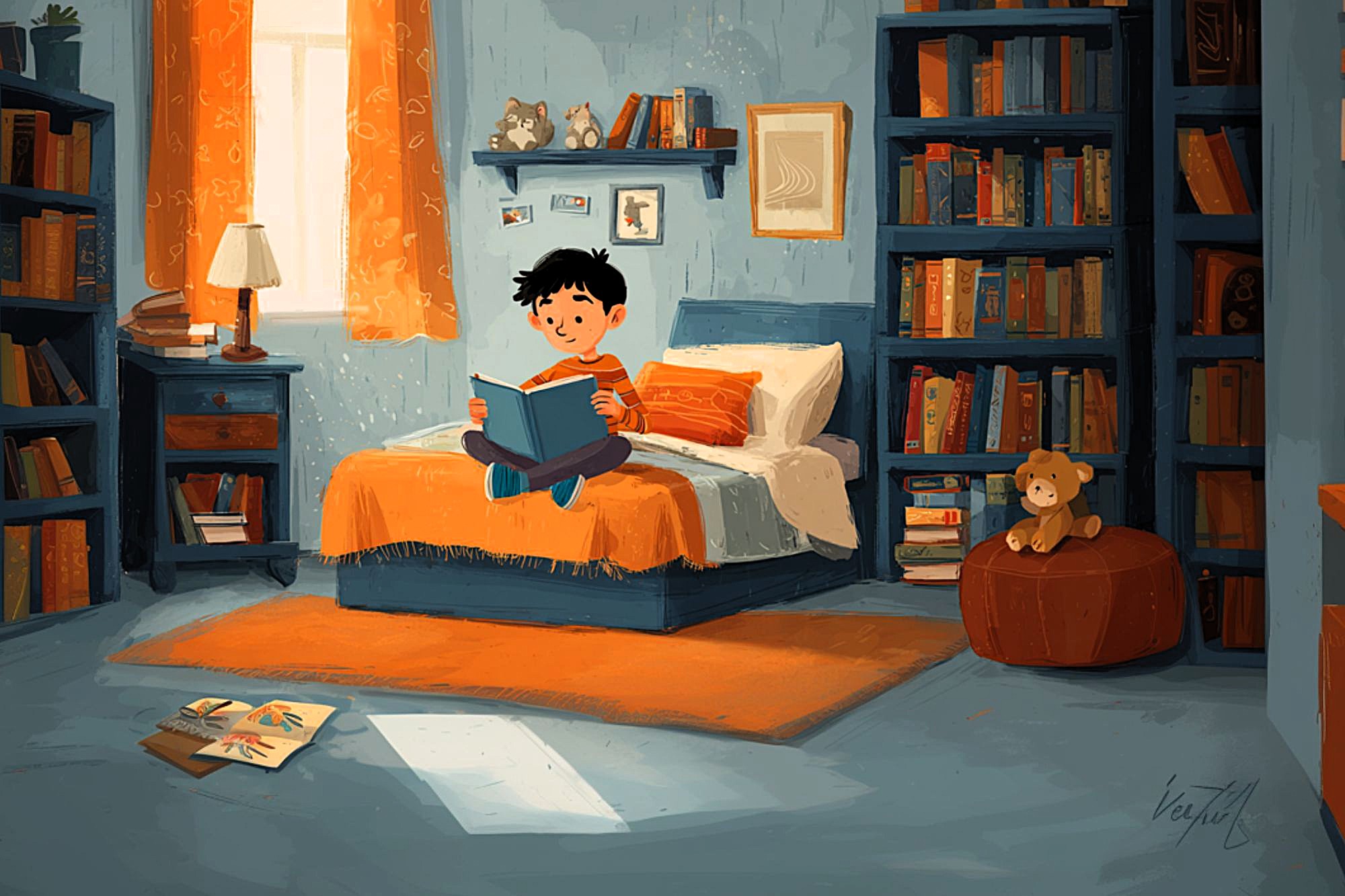
Those of us who are introverted often get asked if we’ve always been this way, or if something traumatic happened at some point in our lives to make us prefer silence and solitude over big parties and socializing. For the vast majority of us, the answer is that we’ve been introverted since day one.
Unfortunately, since extroversion is seen as the human default setting, our behavior was, and is, seen as aberrant rather than simply different. If children in your life exhibit the following traits and behaviors, they’re likely naturally introverted as well. Let them be. After all, trying to fit a square peg into a round hole rarely ends well.
1. A preference for solitude rather than group play.
Whereas extroverted children like to play as a group, with things like cooperative games, playing “house,” tag, and so on, introverted children often prefer activities that they can do by themselves. They’re more likely to enjoy things like arts and crafts, reading, making their own toys, and other types of play that they can do on their own time and on their own terms.
When they do feel like playing with others, they generally prefer to share mutual space or parallel play rather than interacting. For example, when I was a child, I would happily bring a coloring book and colored pencils with me to watch TV beside my nanny on the couch, but I didn’t want to talk to her or do art with her. Your introverted child may not be interested in discussing the show with you, and they need their own space, but they may enjoy your company nonetheless.
2. Strong creativity and imagination.
Most introverted children are immensely creative and partake in various types of imaginative play. Many have rich inner worlds and write stories about the imaginary realms and characters they’ve dreamed up. In fact, if they’re encouraged to cultivate their vivid imaginations, they may hone those skills to benefit them in adulthood.
Some of the best writers, artists, designers, musicians, and filmmakers are introverts. They spend a great deal of their time alone, dreaming up great stories, songs, and/or images, and then bring their imaginary creations to life. In fact, you can be certain that some of your favorite books, albums, and movies only exist because of an introvert’s vivid inner world.
3. Observation before reaction.
Whether they’re deciding to join in a game or not, or trying to determine how they feel about something before responding to it, they’ll take their time to observe and analyze a situation before leaping into action one way or another.
Some introverted children are extremely emotionally sensitive and need to determine whether they feel safe and secure before approaching a situation they feel may harm them. Others are more analytical and like to determine exactly what they think about something before reacting to it. Neither type is particularly prone to impulsive behavior. This can cause parents frustration at times, such as when a child is taking “too long” to order food at a restaurant, or can’t decide which toy they’d like as a gift. When pressured, they’re usually inclined to make the choice that will make others happy, rather than what they actually want.
4. High sensitivity to external stimuli.
Most introverted children are hypersensitive to things like sound, light, and movement. This can make them incredibly uncomfortable in large group settings, such as a crowded classroom. It’s very difficult for them to concentrate when 30 other kids around them are shuffling and snuffling, as fluorescent lighting flickers all around them.
If they don’t yet have the vocabulary to express that they’re feeling overwhelmed and overstimulated, they may act out or experience meltdowns. This often makes other people think that these kids need to be socialized more, which is, in fact, the polar opposite of what they actually need. They need quiet, dim lights, and alone time to recalibrate, after which they usually calm down exponentially. Learning techniques for regulating their emotions can be immensely helpful for both them and those closest to them.
5. A deep love of nature and animals.
It’s very rare to come across an introverted child who doesn’t deeply love nature. Many prefer the company of animals to people and are happiest when spending time with a beloved pet or friendly wild animals. The majority of them aren’t “afraid” of creatures like insects or amphibians, and are fiercely protective of them instead.
These kids often grow up to either work in fields related to natural studies, or they’ll live in a place where they can spend a great deal of time with animals and plants. If they live in an urban environment, they’ll often fill their home with house plants and pets, and are more likely to adhere to a plant-based diet out of compassion for their animal friends.
6. “Shyness”
A startling number of introverted children are perceived as being shy because they don’t initiate conversation, and may be hesitant to talk to people they don’t know well. They’ll often be prodded by those around them to stop being so shy or “rude”, when they’re screaming internally because of how uncomfortable they are at that moment.
In reality, most introverted kids have a few subjects that they’re really interested in, and they’ll come out of their shell to babble about these topics quite happily once they’re comfortable with someone. The key is to give them time to observe and spend time with others so they can learn how to interact with them, rather than tossing them into the social deep end and expecting them to swim.
7. An extensive vocabulary.
Since most introverted children entertain themselves, many of them become avid readers at a young age. As a result, they often end up with vocabularies that are far beyond what’s considered “normal” at their age. Your third grader may refer to backyard animals as crepuscular in their habits, for example, much to everyone’s surprise.
Problems arise when these kids are accused of plagiarism or AI use because others feel that they used words that they shouldn’t actually know at their age. Other issues may include being skipped ahead in school, meaning they don’t have the same emotional maturity as their classmates. They may be very well read, even gifted academically, but that doesn’t mean their emotional maturity level matches their intellectual development.
8. Startling insights that seem well beyond their years.
Many introverted children are referred to as “old souls” by those closest to them. This is often because they offer observations and insights that are normally shared by those much older than themselves.
They may not share their thoughts or feelings too often, but when they do, whatever they’ve chosen to share is usually quite profound. I remember reading about how someone’s quiet, introverted young daughter made the observation that when her baby brother thinks, it must be pure thought because he doesn’t know any words yet. It’s just not something many kids would contemplate.
Final thoughts…
If your child or grandchild seems to be exhibiting introverted behaviors, please don’t try to encourage them to be “more outgoing” or to “not be so shy”. Although we live in a world that values extroversion, it can be damaging to introverts to feel like their natural state isn’t good enough.
Instead, aim to respect and support their need for alone time, and let them come to you when they want to socialize. By encouraging their individuality, rather than insisting that they conform to extroverted behavior, you’re empowering them more than you can imagine.