
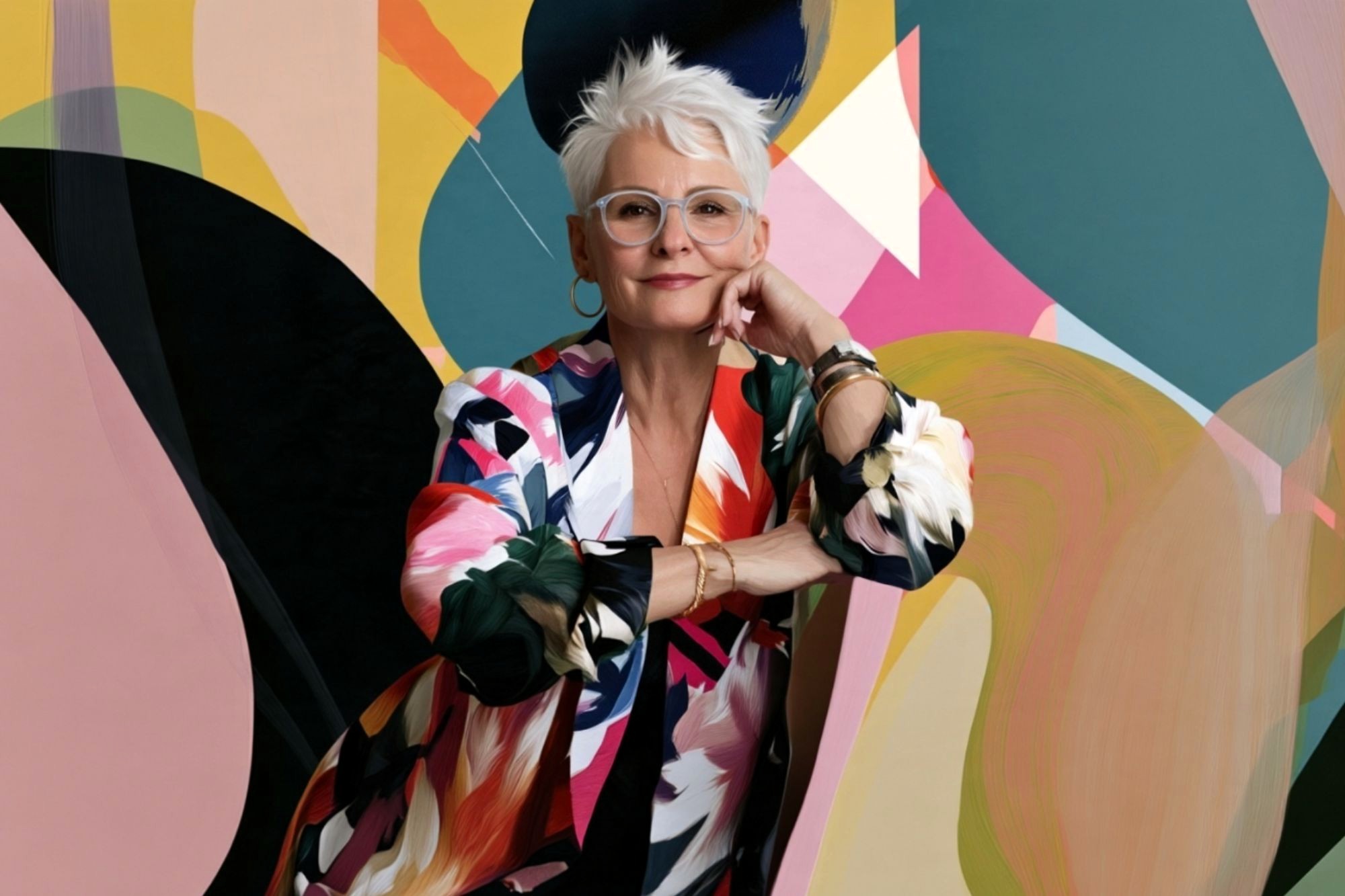
You’ve probably noticed that a great deal of emphasis is placed on the value of youth in our society.
It’s implied that middle-aged people are slowly fading into obscurity, gradually blending into the wallpaper or upholstery, easily overlooked as we become increasingly more irrelevant.
In reality, it’s often in middle age that we finally figure ourselves out.
In fact, many people truly come alive and change direction in midlife, and they often celebrate their newfound awakening with little acts of rebellion such as those listed here.
9 acts that make middle age feel like less of a slow fade and more of an awakening:
1. Allowing yourself to take the rest you’ve denied yourself for years.
If you’ve ever observed a cat lying happily in a sunbeam, or seen videos of bears enjoying sunsets, you likely haven’t condemned them for not doing anything productive.
It seems that humans are the only creatures on this planet that are expected to be constantly busy doing something useful. As such, much-needed rest is labeled as laziness instead of valued as a vital aspect of existence.
But in middle age, we often slow down whether we want to or not. We don’t have the energy that we had when we were younger, and physical limitations may force us to take it easy.
Instead of seeing this as a slow fade, revel in the opportunity to relax, take things at a gentler pace, and enjoy the things that you enjoy rather than fixating on productivity.
Use that downtime to read, do a craft, spend time in nature, or simply sit with your own thoughts without feeling guilty.
2. Embracing freedoms that your younger self didn’t have.
I was watching Midsomer Murders the other day (I’m certainly in the viewer target demographic now!), and someone said the following, which stuck with me:
“Shall I tell you the strangest thing about getting older? You become invisible. When you’re young, you’re something — beautiful, ugly, strong, handsome, threatening, sexy. When you get older, it stops. Nobody gives you a second glance.”
This is true on multiple levels, but that doesn’t necessarily mean that it’s a bad thing.
I struggled with this in my forties, as I had grown accustomed to receiving attention (mostly unwanted) for as long as I could remember. But now that struggle has given way to an incredible sense of personal freedom.
It’s an immense relief to be able to walk down a busy city street and not get catcalled, for example, or to make new friends knowing that they value me for who I am and not just as a potential romantic interest.
3. Prioritizing comfort over expectation when it comes to clothing and other aesthetic choices.
I spent most of my 20s and early 30s dressing like a pinup, complete with heels, corsets, and an astonishing amount of makeup and hairspray.
In all honesty, I’d say that I was uncomfortable about 95% of the time, and suffered through constant blisters, bruises, eating disorders, and scalp burns from dyes and curling irons.
Many other people also place aesthetics over comfort, until such time as they can no longer maintain these standards. At that point, many feel like they’ve somehow “let themselves go” if they allow their greys to grow in or wear comfortable shoes instead of stylish ones.
Drop that perspective immediately!
Instead, take a deep breath and enjoy how amazing it feels to wear clothing that allows you to move comfortably. How happy do you feel being able to walk around, breathe, and eat freely because your clothes aren’t making you claustrophobic?
Use this opportunity to embrace the type of style that pairs extreme comfort with the aesthetics you love the most.
4. Rejecting ideas of “normalcy” with regard to tasks and choices.
Younger people are often expected to hold to “normal” standards of behavior when it comes to household tasks and chores.
For example, it’s expected that they make the bed before heading to work in the morning, and cook a proper dinner every night with “normal” evening ingredients.
Over time, these tasks can become quite a slog, though. After all, if you’re 50 years old and have been deciding what to make for dinner almost every night for the past three decades, that’s nearly 11,000 dinners you’ve planned.
Since decision fatigue can weigh down even the most resilient souls, many people get exhausted by their middle years and don’t want to make those decisions anymore.
There’s no shame in establishing schedules for what to eat and when, in order to avoid this fatigue. Similarly, there’s nothing wrong with eating breakfast foods like cereal or eggs for dinner (aka “brinner”), or warming up frozen pre-made appetizers instead of cooking a full meal.
When it comes to chores and life choices, throw away the rule book and live life on your terms; you’ve earned it.
5. Attending or leaving events on your own terms.
By middle age, many of us can get easily exhausted or overwhelmed when we socialize for a significant period of time.
Whereas we might have been able to dance ‘til dawn in our 20s, or chat for hours with dozens of different people at social functions, we may have neither the energy nor the inclination to do either by our middle years.
That said, we may still want to socialize, but not feel obligated to adhere to someone else’s schedule.
And we shouldn’t have to.
You can let your hosts know that you can stop by briefly but need to leave early, or you can simply make your apologies and exit stage left whenever you feel like you’ve reached your limit.
Go home, make some tea, and decompress as needed. It’s your time, not anyone else’s.
6. Ignoring technological trends that don’t serve you.
Many of us have younger relatives who laugh at us because we don’t have social media accounts on Blork or Fnurp, and we have difficulty remembering what the 300 buttons on various remote controls do.
But instead of feeling pressured to keep up with every new platform, gadget, or technological trend, take this opportunity to choose what technology you partake in. Of course, it’s good to keep your mind as sharp as you can, but that doesn’t have to mean using technology that you aren’t interested in. There are plenty of other ways to keep your mind active.
One of the small rebellions that often comes with middle age is realizing that you don’t need to adopt something simply because everyone else is using it. You can decide for yourself which tools actually add value to your life and which ones don’t.
So decline the latest and greatest phone in favor of a simpler device, and so on. Hell, I haven’t owned a television for over 20 years and don’t miss it at all.
7. Moving your body joyously instead of as a punishment.
How many of us put our bodies through intense exercise regimes in our youth in order to maintain 6-pack abs or “Pilates thighs”?
Many of us spent years seeing exercise like some sort of punishment — we forced ourselves to run daily and hit the gym several times a week, and felt immense shame or self-loathing if we failed to do so.
Emphasis was almost entirely on keeping ourselves looking as attractive as possible for those who wanted access to our bodies, or so we could wear whatever was fashionable at the time.
Middle age offers a shift in many perspectives, and exercise is one of them.
Few of us have the strength or endurance that we had 30 years ago at this point, but we still have the ability to move our bodies joyfully.
As such, consider exploring forms of movement that feel enjoyable and sustainable for you, whether that’s dance, gentle walking, swimming, gardening, or something else entirely. Whatever you choose, the goal is to keep yourself moving as freely as possible well into your older years.
8. No longer caring about what others think of you.
People whose sense of self-esteem was defined by their appearance or mental acuity often feel very lost in middle age.
All of a sudden, the traits that won them other people’s appreciation and respect — as well as their own sense of value and accomplishment — are suddenly fading.
What’s more, those who had sharp minds and memories like steel traps may suddenly find themselves getting mocked for not being able to remember the dog’s name.
This is where learning to become unbothered about other people’s opinions comes in miraculously handy.
Often, this comes from realizing that your value is not tied to your output, success, or beauty, despite what modern society would have you believe. Once you begin to realize that your worth is inherent, other people’s opinions start to lose their grip.
Instead of feeling like you’re losing your shine in others’ eyes, you begin to realize you are gaining something far more valuable: authenticity.
9. Ditching “anti-aging” things.
The cult of youth would have us all doing everything we possibly can to defy the aging process by any means possible. As such, it can be beautifully freeing to refuse to buy into this expectation — either emotionally or financially.
If you stopped spending exorbitant amounts of money on anti-aging creams, dyes, light treatments, and so on, how much would you have available to spend on other things that bring you joy?
Try putting those funds towards well-tailored clothing, great meals, hobby supplies, holidays, and other things that enhance your life instead, and see how much more awakened you feel.
Final thoughts…
I’ve been a gardener for over 35 years now, and if there’s one thing I’ve noticed time and time again, it’s that many plants are at their most vibrant in autumn.
It’s in late summer and early fall that most of them bear fruit, and the bright foliage they exhibit is indescribable.
Similarly, those of us who have reached middle age aren’t fading slowly into oblivion, but are instead ripening and awakening more than ever before.
Don’t allow anyone to tell you otherwise.