Complacency used to be my middle name. Now, it just crops up every so often in the form of making a cup of tea when I know I should be doing something else. I won’t lie, I know I’m doing it, but once that tea is made, I groan and get back to what needs my attention.
And relationships are one of those things that need attention. I think when it comes to costly mistakes in relationships, complacency is always at the root of it in some way.
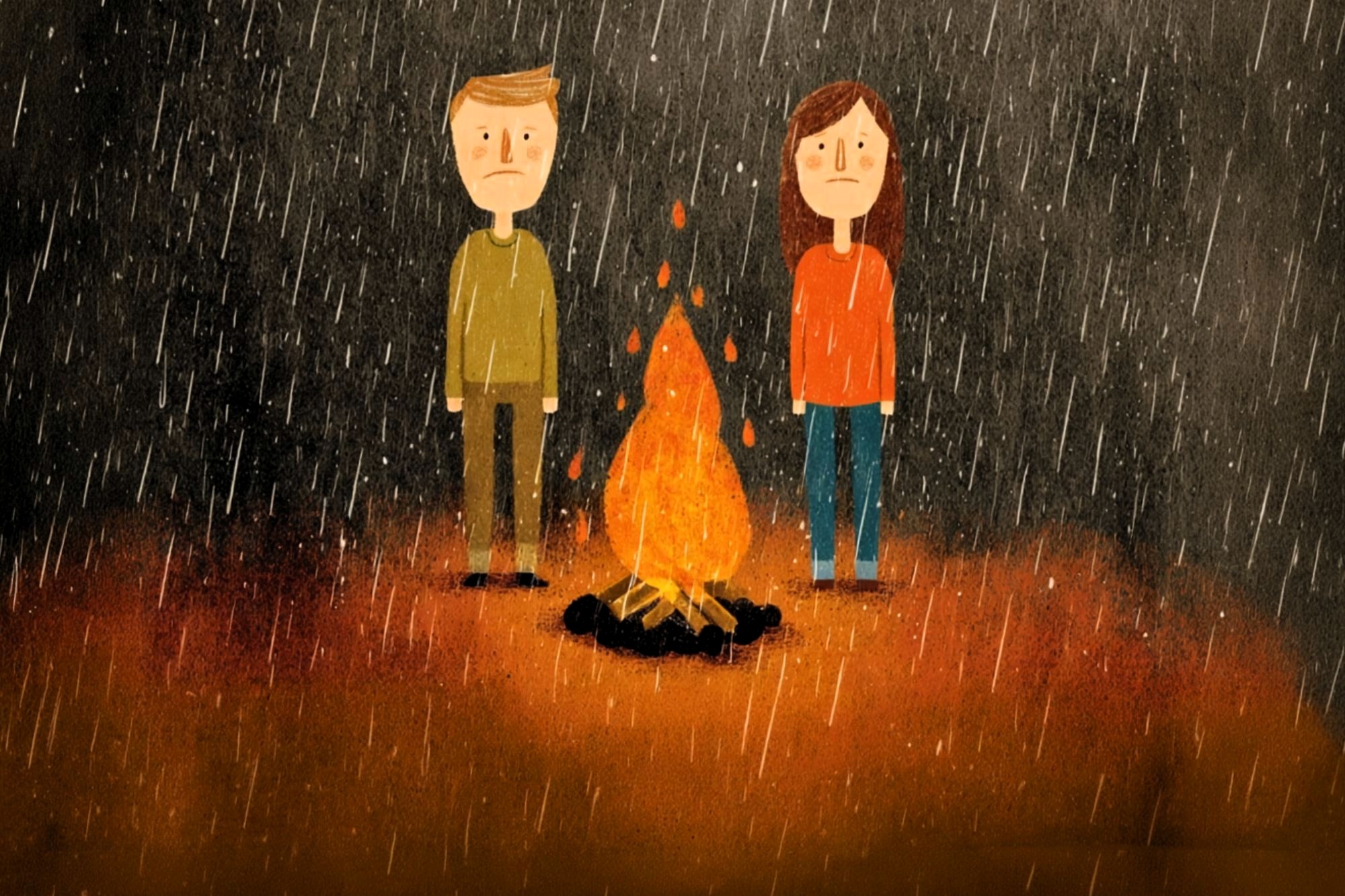
Often that looks like sitting back and believing the fire will keep itself alight, or assuming someone else is tending the flames.
But if you want to keep those flames bright and alive, you can’t ignore them. My suggestion is to divert your attention away from your tea and toward these 8 costly mistakes, and make a mental note to avoid each and every one.
You must steer clear of these mistakes to ensure the fire continues to burn strong in your relationship:
1. Mistaking comfort for connection.
When you met your spouse, I doubt very much you spent your first date sitting in silence, staring at your phones, and refusing to talk about your day.
But fast forward several years later, and there you both are doing it. And it’s not even in a cold or frosty way, but in a way where you are both comfortable.
Sure, you don’t always have to talk, and you’re allowed to use your phone. You don’t have to run through your day like you’re commenting on a football game. But by not doing those things day after day, would you consider yourself to be maintaining the connection you’ve built together?
I don’t think so.
Connections shouldn’t be neglected, not if you want to keep some kind of fire burning between the two of you.
Conversations lead to laughter, understanding, support, and care. But none of that can happen if you’re on your 84th reel of the night.
2. Making everything about the logistics of life.
Yes, logistics need to be discussed, but it’s okay to discuss something else every now and then; in fact, I’d say regularly.
You don’t need to make every conversation about what time Thomas needs to be at karate or what time the new mattress is being delivered. You don’t have to talk over your morning coffee and pastry about how you’ll dig up the driveway next summer to make space for both cars.
I’m not saying these matters don’t need your mutual consideration and agreement, but let the fun in. Be silly. Talk about your dream vacation, or how fun that new show is that you’re watching together.
Logistics can act like a damp blanket if that’s all you ever bring up, and we all know what damp blankets do to fires.
3. Making your warmth something your partner has to earn.
People shouldn’t receive love or warmth just because they’ve behaved how you want them to behave. Yet sadly, too many people fall into the trap of expecting their partner to present themselves in a certain way, when in reality, life doesn’t really work that way.
We have bad days, we have good days, we can snap, we get tired or stressed. These aren’t excuses; this is simply what happens when life asks more of us than we have to give.
Yes, that’s hard to be on the receiving end of, but if you want to keep your love alive, it shouldn’t be met or challenged with the same, or more. Give your partner the grace to be human instead.
If you withhold affection or attention until your partner shows up for you exactly how you want them to, it’ll be more costly to your relationship than you think.
4. Focusing on the scoreboard.
Psychologists call this exchange orientation. In other words, transactional relationships where one or both parties keep track of what they give and what they receive.
And while it’s fair to be fair, it isn’t healthy to tally up what you both do and constantly compare. What’s more, research shows the outcomes for your relationship will be poor if you do.
It can lead to the feeling of obligation rather than love: “I must do something back for you because you did something nice for me.”
When you want to do something nice, it shouldn’t be to gain a point at the end of it or worse, to take one away from your spouse. Relationships struggle when they hit these kinds of seas because resentment often creeps in.
And I think these days we’re falling into this trap more and more, because we see so many grand gestures on social media. Not only are we scorekeeping within our relationship, but we’re scorekeeping with other people’s relationships, too.
We look at our partner and say, “Why don’t you do this kind of thing?”
That’s all it takes for the fire to dim that little bit more.
5. Neglecting spontaneity (or at least novelty).
You can take the word spontaneity and put it into any relationship category you’d like.
From going on a hike together somewhere you’ve both never been before, to whisking your spouse away for an intimate weekend in the city, to learning a new language together, or simply grabbing lunch together midweek if your schedules allow.
There’s no right or wrong way to be spontaneous; it’s whatever suits you and your budgets or interests.
Whilst routines keep things running as smoothly as possible, spontaneity (or at least a bit of planned novelty) is what keeps things exciting and interesting in relationships.
When you stop even the smallest of shifts or surprises, you’re left with only the warm embers of yesterday.
It’s costly – and complacent – to neglect what could otherwise be a great opportunity to remain connected.
6. Don’t treat intimacy as a switch you can just flip on at bedtime.
Clinical Psychologist Dr David B. Wexler describes intimacy as resting on four pillars: safety and security, knowing and being known, affection and likeability, and passion, chemistry, and sex.
Crucially, he says that the fourth pillar (passion, chemistry, and sex) is the most complex, and that it often rests on making sure the first three pillars are solidly constructed.
That’s why intimacy can’t just be a switch that you flick on at bedtime when you want some action, which is what many couples assume intimacy to be.
Intimacy is about how you connect with your spouse on all levels, and how you show them that they’re with somebody they can be vulnerable with, in all ways.
That’s the real fire, right there.
7. Allowing resentment to become part of the furniture.
Imbalance leads to frustration, frustration leads to anger, anger leads to resentment. And before you know it, your home looks like a museum of broken boundaries and unmet needs.
Who wants to live like that?!
Nobody, yet so many do.
Remembering all past mistakes, blips, and emotional loads that haven’t been shared doesn’t resolve them; it just leaves you stuck where you don’t want to be. And if you’re on the receiving end, it’s enough to make you withdraw from the space you once enjoyed living in.
That’s why honest communication is so important. You have to get things out in the open and set clear boundaries on what you’ll tolerate, sooner rather than later. And if your partner won’t respect those reasonable boundaries, then that’s a bigger issue that needs dealing with.
8. Using humor to get out of anything you need to be vulnerable or accountable for.
This always reminds me of Chandler Bing from Friends, who would always use humor as a defense mechanism.
And many people resort to the same in their relationships. When things get challenging, jokes are made to lighten the mood or cut the tension.
That’s all well and good, and it does serve a purpose at times, but then what?
If you’re cracking jokes to avoid holding yourself accountable or leaning into vulnerability, then nothing truly gets resolved.
Dare I say it, but it can even be a little childish to show up in this way, especially if your spouse is desperate to grow together.
Fires go out quickly if you keep watering them with humor that only serves to protect you in that moment.
Final thoughts…
It’s a choice to be in a relationship for the majority of people, so you’d think maintaining fires that keep that relationship thriving would be a priority.
At times, yes, mistakes made will dampen what should remain lit, but your relationship shouldn’t be one long string of mistakes.
I know it’s not always easy to make time for each other, but surely you can always find time to avoid what you know will cause damage in the long run?