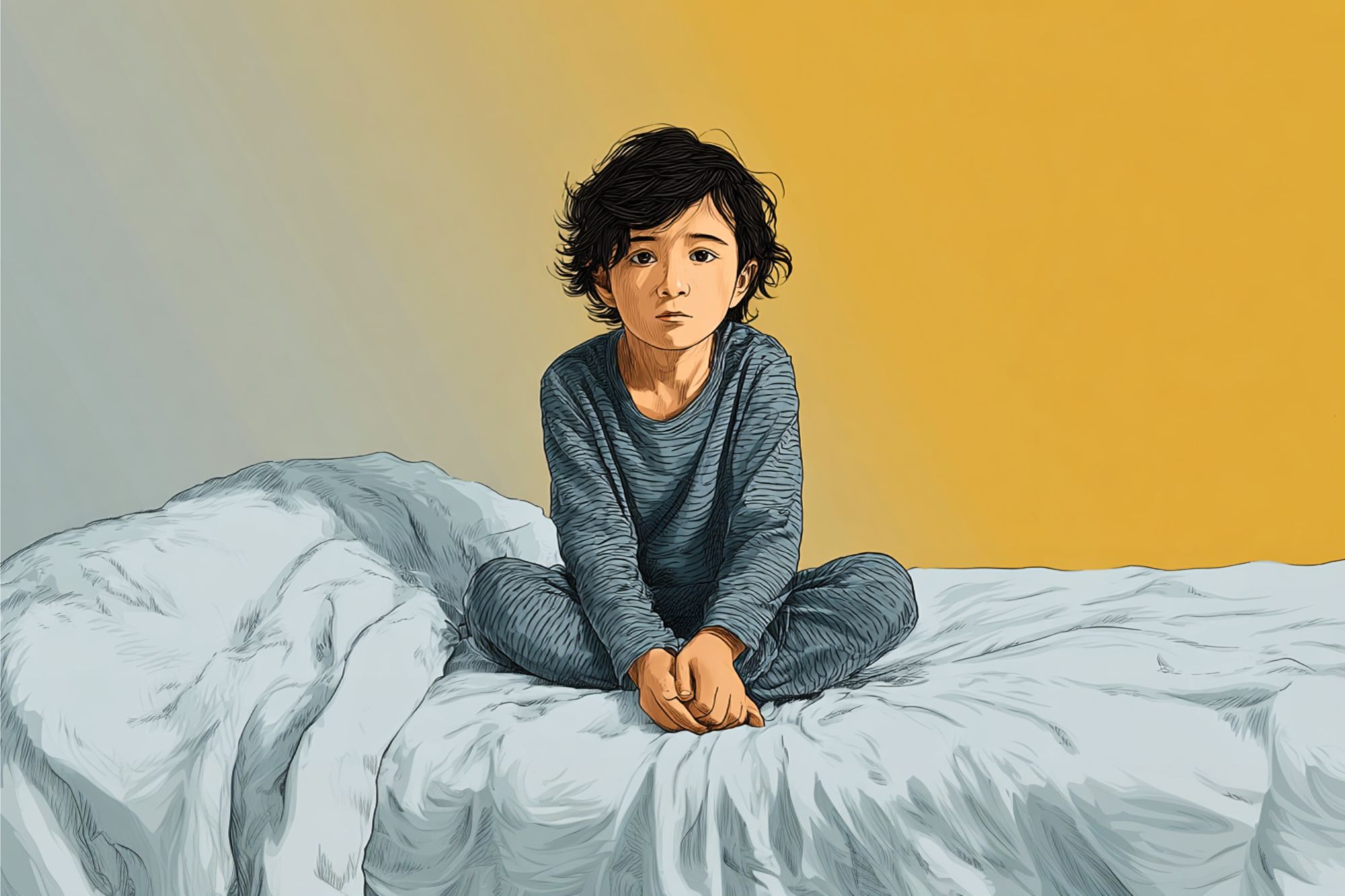
Our childhood upbringing serves as the foundation for everything we know about life and relationships. If we grew up in loving and caring homes, where our parents and caregivers modeled healthy behaviors, we are likely to exhibit those in our adulthood. However, if we grew up in environments where maladaptive or dysfunctional behaviors were exhibited, we will likely manifest these behaviors in our own lives and relationships.
But oftentimes, when we think about abusive, toxic, or neglectful upbringings, we think of the extreme cases. We seldom consider scenarios where the parents are busy working and unavailable to meet the emotional needs of their children. We don’t think about environments where children are being raised with emotionally stunted or unavailable parents who are unable to provide the support they know nothing about, though they provide everything else.
And we don’t consider those situations because they’re not outrightly abusive and not necessarily toxic. However, as with intentional or malicious abuse and neglect, they do inflict trauma that, as adults, causes issues in our relationships. Issues such as these.
1. A sense of low self-worth and self-esteem, which drives all behavior.
As kids, those of us who experienced this kind of emotional unavailability didn’t know or couldn’t understand why we were being ignored. We didn’t know why our feelings and emotions were overlooked and dismissed as unimportant. Why our parents were always leaving the house and not playing with us was a mystery we were unable to solve.
So, we came to our own conclusions.
We assumed the lack of attention was a reflection of our worth or value. According to our child logic, if we had any value, our parents or caregivers would see us. They would hear us. They would take us seriously. Since they didn’t, we must have little to no value to the people who mean so much to us.
Naturally, in adulthood, this can lead to struggles with low self-esteem, which is the driver behind many of the other behaviors on this list.
2. Attention-seeking to get what was missing in childhood.
Are you always the life of the party, whether or not there’s actually a party? Have you been accused of hogging the limelight? Do you find yourself craving attention in situations that have nothing to do with you?
Perhaps you don’t see yourself as an attention-seeker, but you have been accused of being loud…like really loud. Or maybe you’re extremely outgoing? If there’s anyone who’s going to jump off a cliff into the shallow-looking lake below, it’s gonna be you.
Very Well Mind advises that if you grew up in a neglectful home where you were overlooked or ignored, as an adult, you may find yourself inexplicably engaging in attention-seeking behavior. And that’s because the attention you weren’t given as a child, you’re trying to get now to boost your fragile self-esteem.
This could range from mild behaviors, such as interrupting conversations, to constantly shifting the focus of conversations to yourself, to extreme or dangerous behaviors like promiscuity or making inflammatory/offensive statements to cause conflict.
3. A drive for perfectionism and overachievement.
The only time some of us received any sort of attention at all was when we were doing something extraordinary. Maybe we learned how to read by the age of 1, won the nationwide spelling bee in the 3rd grade, or performed a similar feat of outstanding proportions. That’s when we received positive attention. Our parents would attend our program and cheer for us from the stands.
But if we weren’t doing something exceptional, if we weren’t playing in the state play-offs or receiving an award, our caregivers were nowhere to be found. They were busy doing something else. It was only when we were doing something important that we could expect them to be available.
So, we learned to strive for perfection. We pushed ourselves to overachieve at “important” things and set unrealistically high expectations. Because when we did so, we received what we so desperately wanted, the support and attention of our parents.
As adults, we continue to make this “link” between perfectionism and worth, and if we fall short of those impossibly high standards, we’ll rip ourselves apart with criticism instead of compassion.
4. Struggles with trust and intimacy.
The environment you were brought up in strongly influences the development of your attachment style, which impacts your ability to form close relationships.
When you’re raised by people with secure attachment styles, you’re likely to form a similar style — unless outside experiences, like trauma, disrupt that pattern. But when children grow up in settings where their physical or emotional needs aren’t met, their attachment style often shifts away from secure and toward anxious or avoidant.
So what do “secure,” “anxious,” and “avoidant” actually look like in real life? Let’s break them down:
- Secure attachment. When you have a secure attachment style, you’re able to form long-lasting, healthy relationships with other people. You can more easily trust your partner and be emotionally available to them.
- Anxious attachment. With an anxious attachment style, you’re often seen as clingy or needy. You struggle to trust the other person and are terrified they’re going to abandon you. This leads to a constant need for reassurance from your partner that they will not leave you.
- Avoidant attachment. Someone with an avoidant attachment style fears losing their autonomy. So, they prioritize their independence, self-reliance, and emotional distance in relationships. But they do this because they’re certain they will be disappointed and fear rejection.
Ultimately, people with the avoidant and anxious attachment styles both struggle with trust and intimacy, but it manifests in their relationships in different ways.
5. Rejection sensitivity.
No one likes being rejected. But it is a natural part of life. At work, you’ll be rejected by customers, bosses, and colleagues. Single or in a relationship, you’ll face rejection as you navigate the dating pool. In school, your ideas or answers will be rejected. If you’re running your own business, you’ll likely face rejection when pitching your services or products.
At any point in time, there is a high probability that you’ll face rejection. However, experts advise that people who were unseen or unheard in childhood often grow up to be especially sensitive to rejection or anything that resembles it, so they avoid it like the plague.
For example, you won’t ask that person you’re interested in out on a date because they might say no. Or instead of pitching your product or service to the lead for whom it was designed, you make up an excuse not to (e.g., they look busy, they probably don’t need it). Or somehow, you “forget” to send in your resume for that job that would be perfect for you, certain you probably wouldn’t have gotten it anyway.
And when you do experience rejection, you may find yourself overreacting or ruminating on it for weeks. As a child, neglect can easily be mistaken for rejection, reinforcing the painful idea of being inherently unworthy. So it’s understandable then, why rejection as an adult (whether real or perceived) would trigger such intense feelings.
6. An obsession with being in control.
When life got messy in childhood, these individuals were left to figure things out on their own. Whether it was the usual growing pains, loss of a loved one, first heartbreak, or divorce, the people they looked up to and depended on for emotional support were not available. They were busy or unable to deal with their own feelings, much less their child’s. It might not have been intentional. They may have even thought their child didn’t notice the chaos or assumed that it didn’t affect them.
If this is your experience, you likely endured life’s upheavals in solitude, struggling to handle the emotions that came with them. Everything probably felt scary and out of control. You had no idea what to do or how to handle everything life was throwing at you.
As a result, now, you may find you’re obsessed with being in control. You’ve convinced yourself that the only way to avoid the emotional chaos you went through as a child is by being in control of everything. That way, nothing will sneak up on you by surprise.
You attempt to control every aspect of your life and the lives of the people around you (spouse, children, siblings, etc.) because the loss of control takes you back to those overwhelming feelings you wrestled with when you were young.
7. Difficulty expressing their needs or emotions.
When your emotions are neglected in childhood, you may experience difficulty identifying and expressing them in adulthood. You may have grown up thinking that the only appropriate emotion you could have was happiness (but not too happy that it was irritating for others). Anything else should be pushed down or ignored and quickly changed back to happiness.
Let’s take Madeline’s experience as an example. Someone made a huge mistake at work. Madeline immediately went into fix-it mode. She didn’t assign blame, just looked for a solution. It was a couple of days later, after the crisis had been averted, that feelings of anger started to creep up inside her.
The mistake was easily avoidable. What was the colleague thinking? To make matters worse, Madeline was saddled with the responsibility of sorting things out, and none of it was her fault. As all these thoughts were going through Madeline’s head, one question rose to the top: Why did it take two days for her to get angry about it, and why could she still not express it to those who needed to hear it?
If you were silenced when sad, discouraged when angry, or rushed to forgive, then you likely never learned how to handle negative emotions in a healthy way. Those early patterns often follow you into adulthood, leaving you unsure of how to appropriately express what you feel.
Final thoughts…
Childhood emotional neglect is a common occurrence in many households. It’s often overlooked because the wounds it leaves on its victims are not obvious. Also, many forms of emotional neglect have been normalized to the point where we don’t see anything wrong with it.
Unfortunately, feeling unheard and/or unseen as children has left very real trauma that many of us are struggling to cope with today. Some of us might even unwittingly be passing it down to our own children.
If you experienced neglect, for whatever reason, as a child, know that it wasn’t your fault. Take the necessary steps to heal your childhood wounds. Learn better and more healthy ways of coping with any past trauma.