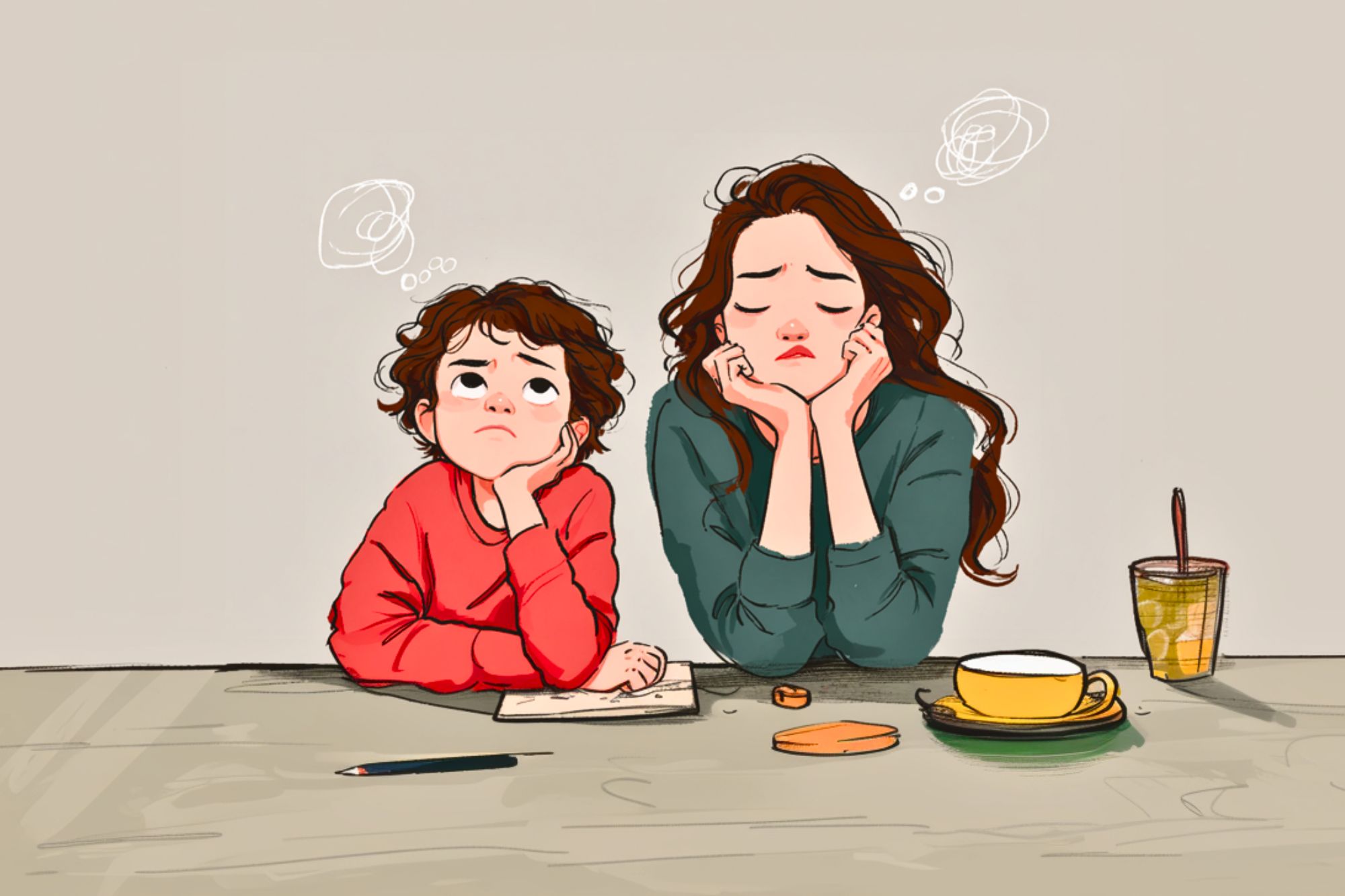
You probably swore you’d do things differently when you became a parent. Then life happened, and suddenly you found yourself saying the exact phrases you once despised, implementing the same puzzling policies, and making decisions that would have baffled your younger self.
The truth is, parenting reveals layers of complexity that children simply can’t comprehend. What once seemed like power trips or laziness often turns out to be carefully calculated survival strategies, protective instincts, and hard-earned wisdom wrapped in exhaustion. Here are 7 such parental behaviors that probably annoyed the heck out of you as a child, yet you still find yourself doing them with your own kids.
1. They said “because I said so” instead of explaining everything.
I swore I’d never use this phrase. I was going to be the parent who explained things to my kids because I wanted them to know they can question things and think independently. Then I had actual children.
Last week, I spent 15 minutes “patiently” explaining to my seven-year-old why ice cream isn’t appropriate for breakfast. Twenty-seven follow-up questions later, I’m discussing the agricultural practices of dairy farmers while my child still hasn’t eaten actual food.
When parents resort to “because I said so,” they’re often drowning in decision fatigue. Every day brings hundreds of micro-negotiations, and while encouraging critical thinking is absolutely valuable, children don’t always need lengthy explanations for every boundary. Nor can they always process them logically.
Sometimes I hear those four dreaded words tumbling from my exhausted mouth when I’ve already explained seventeen things before 9 AM. And that’s ok. The truth is, “because I said so” often translates to “because I love you and I’m protecting you in ways your developing brain can’t yet understand.”
2. They often got it wrong, but did the best they could.
As children, we expect our parents to have all the answers. They’re the adults, right? They should know exactly what to do in every situation, make perfect decisions, control their emotions, and handle everything with wisdom and grace. When they lost their temper or made questionable choices, we judged them harshly. Why couldn’t they just be better?
Then you have your own kids and realize you’re completely making it up as you go along. You’re Googling “is it normal for a three-year-old to…” at 2 AM, second-guessing every decision, and discovering that “expert” parenting advice changes from one day to the next.
You’re exhausted beyond measure, running on fumes and caffeine, trying to be patient when you’re touched out and overwhelmed. And you’ve got your own emotional baggage to lug around. The truth hits hard when you have your own kids: every parent is just winging it, doing their best with limited energy, the knowledge they have at the time, and their own unresolved issues. Our parents didn’t always get it right, and neither will we.
3. They were “too tired” to play sometimes.
Children live in a world where energy seems infinite, so when parents claim exhaustion, it can feel like rejection. Why can’t they just muster energy for one game of pretend? Don’t they want to spend time with you?
Now I understand that parental tiredness goes way beyond physical fatigue. It’s absolute mental and emotional exhaustion. It’s decision fatigue from making 47 choices before breakfast. It’s emotional exhaustion from regulating not just your own feelings but tiny people’s big emotions all day. It’s mental fatigue from the constant background processing – planning meals, remembering appointments, tracking everyone’s needs simultaneously. And that’s without factoring in other things like health issues, work-life balance, mental health issues, chronic pain, or neurodivergence.
4. They had a different set of rules for themselves.
The childhood sense of injustice was real. Why could adults stay up late, eat cake before dinner, swear occasionally, or skip vegetables? It seemed like the ultimate hypocrisy – rules for thee but not for me.
Now I get it. Adult “privileges” aren’t actually privileges – they’re the result of decades of learning how to self-regulate and accept consequences. For example, when I stay up too late, I still drag myself out of bed and function at work and home the next day, even though I feel rubbish.
Don’t get me wrong, I do believe it’s best to model the behavior you want from your child, and I do my best to model “good” choices. But when you become a parent, you realize that sometimes what’s an ok choice for you wouldn’t be an ok choice for your child. And when you do make a less-than-good choice, you generally understand the consequences of that. The reality is, children’s brains are just not developed enough to understand those consequences.
If my seven-year-old stays up until midnight, she’ll be an absolute disaster the next day. If my four-year-old eats cake at 4 pm, he won’t eat dinner. Children need external structure because their internal regulation systems are still under construction. As unfair as it seems, the freedom to make questionable decisions comes with the wisdom and regulation to be able to live with their consequences.
5. They were “busy” during your elaborate performances and stories.
I’m sure we all experienced a time where we spent hours choreographing the perfect dance or crafting an intricate story, only to perform for a parent who was folding laundry or making dinner while we danced our heart out. That half-hearted “that’s lovely” while they weren’t even looking could feel crushing.
I now realize that parents face an impossible equation: children’s need for attention and validation is infinite, while our capacity is decidedly finite. If I stopped everything for every performance, story, drawing, or creative endeavor, literally nothing else would ever get accomplished.
Yes, kids need our attention. No arguments here. But they don’t need our 24/7 undivided attention as much as they need to know we’re aware and we care. Sometimes I’m genuinely listening to my daughter’s elaborate story about her stuffed animals while simultaneously tidying up, and she’s perfectly happy with my “mm-hmms” and “what happened next?” responses. The key is being honest about when I can give full attention versus partial attention, and making sure there are regular times when they get the full spotlight.
6. They said “we’ll see” instead of giving straight answers.
As a child, was there a more frustrating non-answer in the world than “we’ll see”? Probably not. You wanted concrete responses, clear timelines, and definitive yes or no answers about your heart’s desires.
Rather than disappointing you immediately with “no” or making promises they couldn’t keep, a lot of parents found themselves falling back on ambiguity. Is it incredibly non-committal and annoying? Yes. Do you now do it yourself? Almost certainly.
With the wisdom of age and experience, you’ve likely realized that “we’ll see” is actually parental code for “I need to buy myself some time to think this through before I give you a real answer.” It protects everyone from bigger disappointments while properly considering all the factors kids can’t see.
7. They made you go to bed when you “weren’t tired.”
The universal childhood injustice – bouncing off the walls at 8 PM, insisting you were wide awake and could definitely stay up for hours more. Twenty minutes later, you’d be having a complete meltdown because your brother looked at you wrong, proving your parents’ point in the most dramatic way possible.
Children haven’t developed the ability to recognize their own tiredness cues or connect current energy levels to future emotional regulation. When kids claim they’re not tired, they genuinely believe it. They’re living completely in this moment, feeling energetic right now without any concept of what overtiredness will do to tomorrow’s mood.
Parents, however, have seen this movie before. We know that the child bouncing off the walls at bedtime will be an absolute disaster by morning if they don’t get adequate sleep. Bedtime routines serve everyone, but that’s something that we only learn with age.
8. They repeated themselves endlessly.
“Clean your room.” “Brush your teeth.” “Put your dishes away.” These phrases were likely the soundtrack of your childhood, repeated so many times they seemed to lose all meaning. Why couldn’t they just stop nagging you and let you do things in your own time?
Now I hear myself saying “can you get dressed” approximately 847 times each morning, and I finally understand. If I left them to their own devices, things simply wouldn’t get done, and despite what the experts say, no amount of “natural consequences” would teach them the lesson.
Children’s brains are literally wired to forget tasks they don’t enjoy while perfectly remembering every detail about things that interest them. They have no concept of time. These things are compounded even more if your children are neurodivergent or have learning differences. My daughter can recite entire Pokémon episodes, but somehow can’t retain “go downstairs and put your shoes on” despite hearing it daily for three years. The sound of my own, exasperated voice on repeat has given me a lot more compassion for what my frazzled parents had to deal with on the daily.
Final thoughts…
Becoming a parent is like getting a behind-the-scenes look at your own childhood, and honestly, it’s complicated. You realize that so many decisions that seemed arbitrary or unfair were actually rooted in love, exhaustion, and wisdom you couldn’t see at the time.
Of course, understanding our parents’ motivations doesn’t mean they got everything right, and we might choose not to repeat their behaviors. Sometimes the best thing we can do is break the cycles that didn’t serve us while keeping the parts that did.