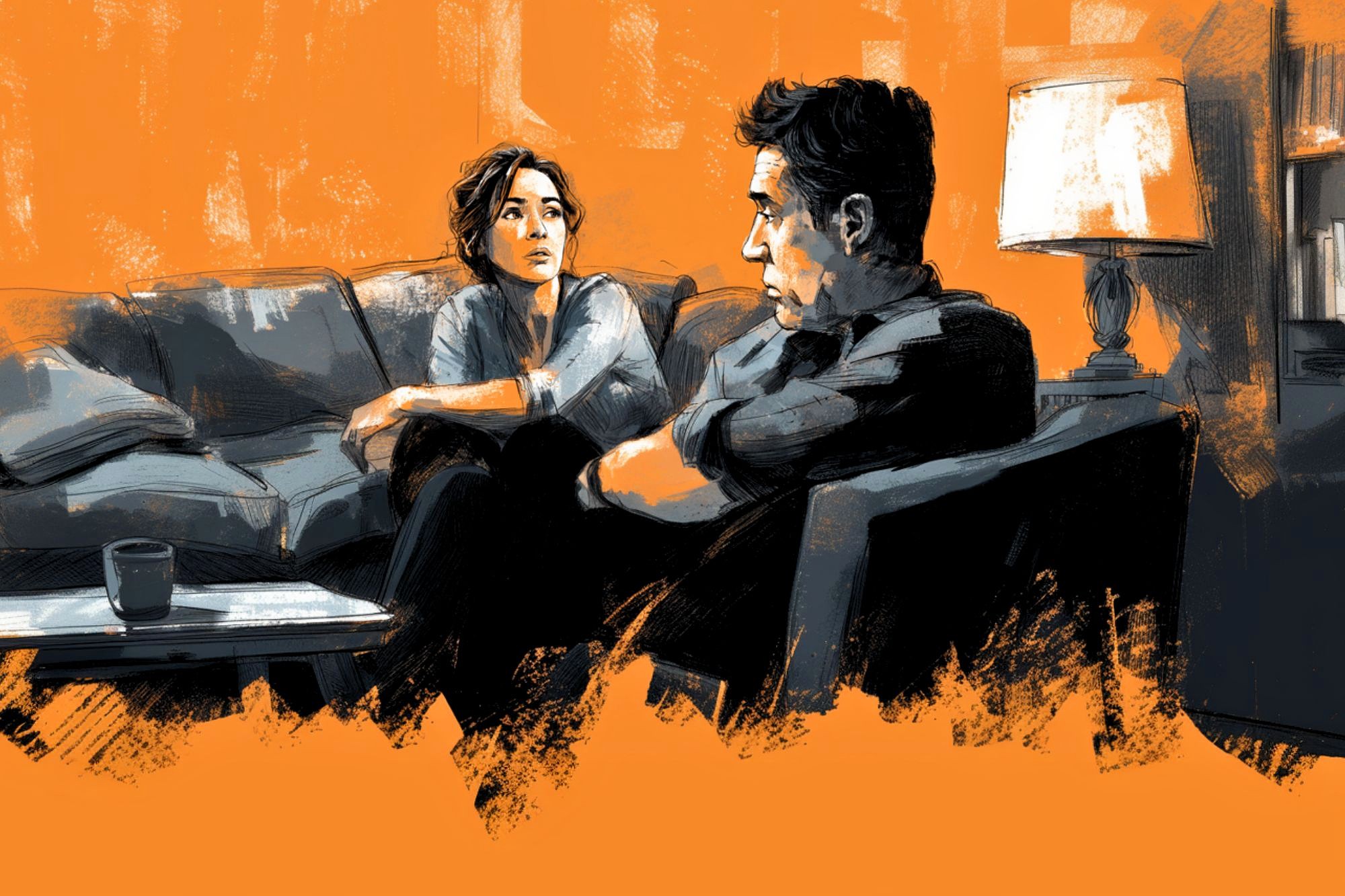
I had a small but poignant moment not long ago. My son said something sharp to his sister — nothing dramatic, but enough to make her shrink a little. It stopped me in my tracks. I know kids argue, but it reminded me how easily disrespect can slip into everyday interactions.
It got me thinking about my own relationships — about the emotionally abusive marriage I left, and the one I’m in now, where respect is woven into each day. Disrespecting your spouse or partner without meaning to happens so easily. Here are some signs to look out for, and what you can do to get back on track if you notice the red flags.
1. Making decisions without consulting them.
One of the most common ways that disrespect shows up is through making small, unilateral decisions. Choosing plans, making financial calls, or committing both of you to anything without asking can feel efficient, but it essentially removes your partner from the equation.
Over time, this creates an imbalance in your relationship, and it signals that their input isn’t necessary. I’ve come to recognize the contrast clearly in my current marriage. I thought disrespecting your partner only involved the big decisions, not realizing that small or inconsiderate choices should be shared, too.
Stop the negative flow by pausing before you make decisions about things that involve or affect you both, so that you can balance the power in your relationship. Ask for their input and thoughts (and actually take them on board), and discuss your differences of opinion instead of simply choosing for them. It may take longer, but you’ll have a much happier, healthier relationship as a result.
2. Overstepping their stated boundaries.
This might be outright ignoring your partner’s reasonable boundaries, or minimizing them to see if they’ll cave in. For example, pushing them when they’re tired, sharing something they asked you to keep private, or brushing off their need for space. You may see this as a small, inconsequential thing, but the repercussions are big.
I’ve seen how this plays out in my own relationships. I sometimes hit a wall when I need quiet to reset. That’s a perfectly reasonable boundary, but my ex treated that need like an inconvenience. Now, in my current marriage, it’s respected, and that shift has made me feel safe in a way I didn’t before.
It shows in other ways, too. I have ADHD, and as such, my work environment is often quite busy with notes and research. That’s just how I work best. My ex used to belittle me about my personal space and my processes, telling me to clean up my office and my brain. Whereas my spouse now tells me how amazing my work process is.
While decluttering might work for some people, it just made my tension worse. Now, my creative space is where I heal, keep therapy notes, and explore growth because my partner respects my unique needs and boundaries.
The key is to remember that everyone has different needs and limits. If your partner’s needs or boundaries don’t harm you, and are important for their wellbeing, then why wouldn’t you respect them?
3. Not truly listening to them when they speak.
Not listening or only half-listening is one of the quickest ways to make someone feel dismissed. Scrolling on your phone or planning your response while they speak sends a clear message about your priorities.
People notice when they aren’t being heard. As a child, I could always tell when my parents were too busy and distracted to hear about my day, and the effects of being ignored still linger today.
When my partner listens to me, I can tell he is applying his concentration to really understand what I am saying and what it means to me. This affects my feelings towards him and how much I feel seen.
When you’re talking, put your phone face down (or better still, out of sight), really focus on what they’re saying, and try paraphrasing what they’ve said to ensure you haven’t misunderstood anything.
4. Making unrealistic demands of them or having unrealistic expectations about them (or the relationship).
Having impossible expectations is also a form of disrespect, as it ignores who the person actually is and what they may be capable of. This often looks like wanting your significant other to meet your every emotional need or change core parts of themselves, and it puts pressure on the relationship.
Though it’s about sibling relationships, this example from my own life demonstrates it well. My son desperately wanted a brother to play with, so he was somewhat disappointed when his sister was born. I had to explain that they would still have fun together, but that he had to meet her where she was, with her age, her likes, and dislikes. He had to learn to show appreciation for his sister as she was, to really find happiness in their relationship, and while they have their moments of disagreement (just like a couple would), they really do love each other.
So ask yourself, have you met and accepted your partner for who and where they are in life? Or are you trying to change them into someone they aren’t or into some ideal version of a partner that simply doesn’t exist? The former is the way to really love, honor, and respect them as you integrate your unique differences into your shared experience, rather than creating dissonance and resentment in your relationship.
5. Taking for granted the seemingly mundane things they do for you every day.
Taking someone for granted doesn’t happen overnight. Slowly, you stop noticing the everyday things they do because of a phenomenon called hedonic adaptation, since the task happens so often that it becomes routine or mundane, and thus no longer seems to matter.
I noticed this in my own marriage. My husband makes me coffee every morning, but recent deadlines meant I was up early for work before him, so there was no coffee. I reached for it, but it wasn’t there. It made me realize that I had stopped thanking him for it and had even stopped enjoying and appreciating the five or 10 minutes spent together before our hectic days started. The next morning, I made him coffee, hugged him, thanked him for always thinking of me, and apologized for not being present lately.
What “coffee” has your spouse or partner made that you’ve been taking for granted lately?
6. Making “jokes” that cause them harm, even if unintentionally.
Even gentle, so-called “harmless” teasing can land as criticism, and joking at your spouse’s expense, especially in front of others, can feel like subtle put-downs. I’ve definitely been guilty of this. In the past, humor was how I dodged big feelings, and it took some reprogramming for me to unlearn this. Now, I pay attention to how things land, not just how I intended them.
Whether or not behavior is playful or harmful has little to do with our intention and everything to do with how it’s interpreted. That’s where you and your significant other should check in and be honest about what you feel regarding such teasing.
If you tease, stop and watch your partner’s reaction. If it hurts, apologize and avoid the topic moving forward. And if they tell you it’s okay, when it clearly isn’t, you should still stop doing it.
7. Comparing them to others.
“I’m not like your ex,” my husband said to me about a month into our relationship. I didn’t realize it, but I had been subconsciously comparing him to the man who had hurt me so badly. While this wasn’t a comparison to an idealized version, it was still about not seeing him for who he was because I was focusing on someone else.
Comparing someone to others, whether that’s an ex, a friend’s spouse, or a perfect version of someone, creates pressure they can’t meet. Plus, the reality is that ultimately, you can only compete with yourself, not with others, because you never really know the person you are comparing to. Social media profiles tend only to show the best and idealized version of people’s lives and personalities, which makes comparing your spouse to them foolish and naive.
Instead, identify a unique quality your significant other has and focus on that. See them for the thing that they excel at and stop comparing apples to fish, because people aren’t the same.
8. Not being present with them.
As someone with adult ADHD, I struggle with presence at times. My mind can be like a freeway during rush hour, but when my husband or my children speak to me, I know instinctively that they require me to focus, rather than to see that I’m stuck in a mental traffic jam.
The same happens if you scroll your phone while having a conversation with your significant other. The message is clear: cats singing (or 900 comments about cats singing) are more important than someone you claim to love.
Of course, it’s natural for people to be busy and for their minds to be distracted, especially in this modern world. We shouldn’t have to just drop everything the minute our partner speaks. In my home, we’ve come up with a rule to deal with this problem.
If we see the other person is distracted or busy, but we need to discuss something, we gently touch, ask if we can have a minute, and then share if they say they are available. And if one of us demonstrates that we clearly want or need to share something, we understand that it’s time to flip our phone over or switch off the TV and pay attention, because they matter, and that’s how you respect them.
9. Minimizing their feelings in an attempt to fix them.
My husband is a darling, but there was one thing he used to do that disrespected me early in our relationship. He would try to fix things, to fix me. For example, when I got upset because my ex had texted me, he would want to drive there to “sort him out.” It took some explaining to make him understand that it felt as though he didn’t trust me to fight my own battles, since he always wanted to save me.
While this may not seem like disrespect, it can be. If you always want to step in, either to solve the problem or minimize your partner’s feelings, it sends the message that your partner isn’t good or strong enough to handle the situation or that their feelings are not valid.
Simply put, it’s not supportive. If you have the fixer mentality, you can set it aside by accepting that you don’t control others, and you can learn more about them and their abilities and needs by being there in a supportive role instead.
10. Not honoring your commitments when you say you will.
When my son promised to play with his sister and chose to watch TV instead, it was another teachable moment that allowed me to reflect on relationships in general. I sat them down and explained that when we say we’ll do something and then don’t, it teaches the other person not to trust us. It undermines their belief in goodness, harms them, and disrespects the relationship.
Consider your own relationship. Have you made a promise to your partner and then backed out? If so, and even if it relates to something trivial, in doing so, you’ve broken the truth of your connection, and that shakes their belief in it. When it comes to trust, consistency matters more than grand gestures.
Your spouse depends on you, and not showing up as reliably as you say you will breaks their trust in you and your relationship. What’s more, it’s disrespectful to them and your union.
Final thoughts…
Healthy, respectful relationships are not about always getting it right; they are about choosing to do better. If you recognize yourself in some of these patterns of disrespect, that’s awareness. It gives you the chance to show up, step up, and make your relationship a safe place. Respect becomes something you feel consistently and never have to question.