
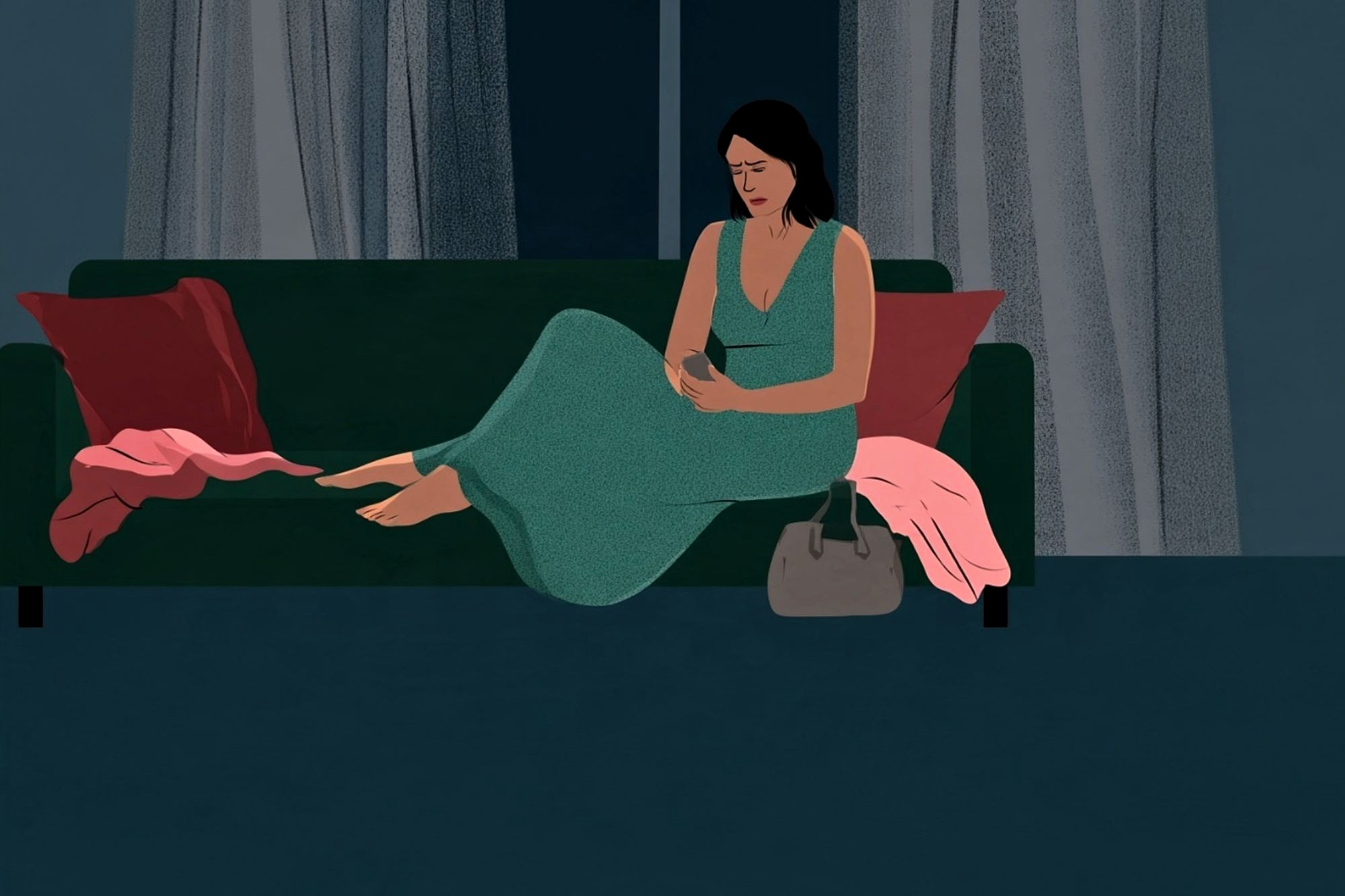
The event or get-together that you’ve been planning on going to for a while is coming up shortly, but instead of grabbing your keys and getting ready to leave, you’re suddenly paralyzed.
You feel a deep-seated need to bail on plans yet again, and you aren’t sure why. All you know is that you’re absolutely certain that you do not want to walk out that door.
If this is something that happens to you regularly, check for the following signs: they may indicate that your avoidance is due to anxiety rather than anything else.
1. You start worrying about all the things that could go wrong when you leave the house.
You might have been looking forward to attending a wonderful event with your partner or friends for quite a while now. You’ve gotten new clothes, made yourself look absolutely incredible, and are just putting the final touches on your ensemble for the night.
All of a sudden, you start thinking about what-if scenarios for all the things that could possibly go wrong while you’re out.
What if there’s nowhere to park, you arrive late, and everyone turns to look at you when you walk in? What if the dog gets out while you’re gone, and nobody notices until it’s too late? What if you get one of your migraines halfway through the night and you’re stuck there with no way to leave gracefully?
You find that these spiraling thoughts are so intense that the only thing that’ll stop them is for you to bail on plans and curl up under a blanket on the couch for the rest of the night.
2. You find yourself overwhelmed by all of your thoughts and feelings.
Many people are constantly barraged by “brain chatter.” This is a stream of words, intrusive thoughts, worries, or negative comments, like a never-ending commentary running in your head.
If you fall into this category, this non-stop internal dialog may be manageable most of the time, but utterly overwhelming when you’re facing the reality of how much output will be required from you at the event you’ve committed to.
While part of your brain is generating implausible warnings about potential danger, another part is trying to anticipate all the social interactions you’ll have, while simultaneously trying to plan and rehearse all the responses you’ll offer to every question asked of you.
The sheer power of all those thoughts and emotions may overwhelm you so much that you’re rendered non-functional. All you can really do at this point is soak in a bath or lie on the floor in the dark until your body and mind have calmed down.
3. You suddenly feel physically unwell.
When I was in my early 20s, I dealt with waves of anxiety due to complex PTSD. For me, these often took the form of physical illness.
Sometimes it made me feel feverish and dizzy, like I was coming down with the flu, and other times it manifested as gastrointestinal issues like nausea or vomiting. I can’t tell you how many times I bailed on plans because I thought I had a stomach bug.
Many people don’t realize that anxiety can manifest in a number of physical ways that go above and beyond the heart palpitations or shakiness that are normally associated with panic.
Some people experience breathing difficulties and chest pain or pressure that can be misinterpreted as a heart issue (although, of course, it’s always advisable to get any chest pain checked out). Others may experience chills and bowel distress.
Either way, plans end up cancelled yet again because these physical symptoms understandably take precedence over socializing.
Unfortunately, as with most forms of anxiety, though, the more you avoid the thing you fear, the worse the anxiety grows.
4. You’re suddenly obsessing over all the things “wrong” with your appearance.
You were happy with your outfit an hour ago, but now that it’s almost time to leave, everything looks wrong.
You’ve changed three times, you’re scrutinizing your hair in the mirror, and you’re convinced everyone will notice that you look tired, frumpy, or out of place.
If you’re extremely critical about your appearance, but this mainly happens when you’re about to face other people, it may be a sign of social anxiety. In fact, you may not even be aware that you’re experiencing anxiety per se: you’re just entirely focused on avoiding having others judge your appearance negatively.
It’s part of a broader fear of being evaluated and found lacking by others.
This can be especially common in people who experienced social exclusion or bullying in their youth because they either didn’t adhere to the trends or norms that their peers were taking part in, or because their parents or caregivers were overly critical about their appearance. As with most things, genetic predisposition can also play a role.
Rather than risk feeling judged or humiliated all over again, cancelling can feel like the only safe option, even if you aren’t consciously aware that’s what’s happening.
Of course, if worries about your appearance follow you everywhere, not just before social events, and they take up a lot of your day, that may point to something beyond social anxiety, and it’s worth mentioning to a doctor or therapist.
5. You get a sinking or lurching feeling in the pit of your stomach.
When you think about going out and keeping these plans that you’d arranged, you suddenly get a sinking or lurching feeling in the pit of your stomach.
It feels like something is warning you against going out, even though you can’t think of anything that could potentially harm you if you went.
This may be confusing to you on many levels, because we’re taught to pay attention to our intuition when it comes to potential danger, as ignoring warning signals may result in rather awful things unfolding. But anxiety is easily misinterpreted as intuition, when they are not the same thing.
Intuition tends to be a calm, quiet nudge about something specific, whereas anxiety is loud and urgent, and shows up before nearly every plan you make, no matter what it is.
Still, it can be difficult to distinguish between the two, and that problem only compounds through repeated avoidance. Every time you cancel, you never get the chance to learn it was a false alarm, which makes it feel even more convincing the next time.
6. You begin shaking so much that you worry other people will notice.
As the time of the event draws near, you may find that your body is shaking or trembling uncontrollably.
Essentially, your body is perceiving the upcoming interaction as a full-blown threat and is beginning the classic fight-or-flight process that’s meant to keep you safe.
Logically, rationally, you know that you wouldn’t be facing a real threat if you kept these plans. But unfortunately, it feels like even if you were to push through the shaking and show up for the plans, you wouldn’t be able to enjoy yourself.
It feels as though you’d spend the entire time trembling and uncomfortable, with people undoubtedly noticing, while you ache for the moment when you could make your excuses to leave.
7. You experience an overwhelming, crushing fatigue.
One minute you’re getting ready to go out, and the next you’re so tired you can barely open your eyes. It takes everything you have just to make it to the couch, and as you sink down into the cushions, blankets, and Squishmallows, you may feel like your very soul is leaving your body.
You were fine literally five minutes before, but now you can barely move.
Furthermore, the mere thought of how much energy would be required to not only interact with other people, but maintain the facade that you’re a functioning human being, completely paralyzes you.
It would be easier for you to do advanced trigonometry in your head at that moment than it would be to put your shoes on.
This can happen because your body has been on high alert for hours, or even days, in anticipation of the event. Running in that state of fight-or-flight burns through an astonishing amount of energy, and your system is responding by shutting down, leaving you utterly drained even though logically you know you’re safe.
8. You feel an immense sense of relief at the thought of cancelling.
Whereas you may feel like vomiting or fleeing to Guatemala at the mere thought of attending this event, the thought of cancelling it and remaining safe at home fills you with an overwhelming sense of relief.
Even though you’re afraid of letting down the person or people you made the commitment to, the idea of being able to remain safe at home, without any obligations on your time and energy, feels like an enormous weight being lifted off your shoulders.
You can deal with the potential fallout from the cancellation at a later date. For now, all that matters is how much better you feel now that you don’t have to make an appearance anymore.
Final thoughts…
Anxiety is something that can seriously impact your quality of life. While it’s normal for just about everyone to be anxious on occasion, if it’s intense enough to prevent you from doing things that bring you joy, and has the potential to isolate you from your social circle, then it’s something that should be addressed — much like any other health issue.
Working with a therapist may help you significantly, and speaking to a doctor to discuss medical options may be beneficial, too.
By taking these steps, you may be able to enjoy a fuller, more fulfilling life with far less worry and panic.