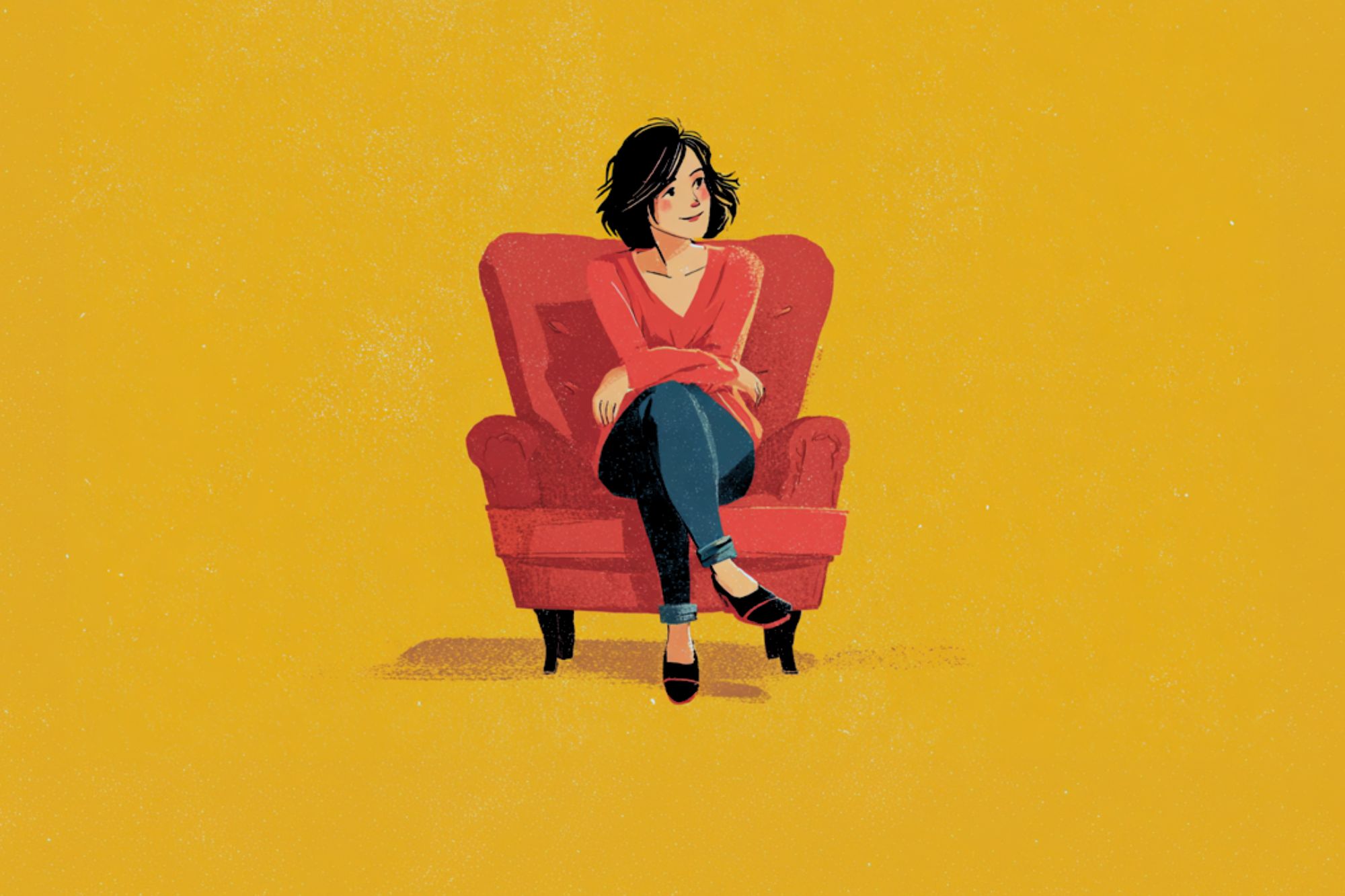
Choosing solitude when others insist you should be more social takes real courage. You’ve probably spent years feeling like something’s wrong with you—like your need for alone time is a problem to fix rather than a preference to honor. Every declined invitation comes with guilt. Every quiet weekend feels like evidence that you’re failing at life somehow.
But forcing yourself to be social when you don’t want to be is utterly exhausting. And it costs you far more than you realize. When you finally stop pushing yourself into a mold that doesn’t fit and start honoring your real, natural needs, things change. Not in some vague, mystical way, but in concrete, tangible ways that reshape your daily existence.
1. You stop apologizing for yourself.
Declining an invitation becomes a simple “no thanks” instead of an elaborate story about prior commitments, sudden illnesses, or family obligations. You’re done crafting excuses that sound legitimate enough to spare you judgment, or explanations that feel like a defense of your right to exist as you are.
Our culture seems to celebrate extroversion as the default setting for healthy humans. People who need solitude get labeled as antisocial, problematic, or emotionally stunted. You’ve previously internalized this bias, treating your own needs as character flaws that require justification.
Something in you shifts when you honor your need for solitude. You realize that “no” is a complete sentence. You start declining without the performance, without the guilt, without the elaborate backstory. Some people don’t understand, but that stops mattering to you.
2. You develop actual interests and hobbies.
Brunch isn’t a hobby. Neither is bar-hopping nor wandering the shops with friends. These are social activities masquerading as interests. The truth is, you might not know what actually captivates you because you’ve never had the uninterrupted time to find out.
Solitude creates space for genuine curiosity. Without the need to make activities socially palatable or Instagram-worthy, you follow threads that lead nowhere profitable. Maybe you disappear into research about medieval architecture or spend hours learning to identify birds by their calls. You might pick up an instrument with no intention of performing, or start writing things that no one will read.
Plenty of people reach their thirties or forties without discovering what truly engages them. But when you honor solitude, you get to be the strange, specific person you actually are. Your interests might seem random or useless to others, but they’re yours.
3. You stop performing and start living.
Every social interaction up until this point has required calculation. You’ve monitored your facial expressions to ensure they match the expected emotion. You’ve adjusted your humor to the room’s temperature, hidden interests that might seem weird, and carefully rationed your opinions to stay likable. The performance is so automatic you barely notice you’re doing it.
Solitude removes the audience. Alone, there’s no one to impress, no reactions to manage, no persona to maintain. You can be boring, strange, serious, silly, or silent without consequence. The first few times you experience this, it might feel uncomfortable—like you don’t know who you are without witnesses.
Eventually, you discover what genuine existence feels like. You stop narrating your life for an invisible audience. You make faces no one sees, laugh at things that aren’t socially funny, and let your natural expressions cross your face uncensored. Paradoxically, this authenticity makes you more genuine in necessary social situations. You’re no longer performing a performance—you’re just occasionally sharing your actual self.
4. Your tolerance for toxic people evaporates.
Desperation makes you tolerant. When you’re starved for connection, you accept people who drain you, dismiss your boundaries, or deliver subtle cruelties disguised as jokes. You tell yourself all friendships require compromise, that nobody’s perfect, that you’re probably too sensitive anyway.
Solitude, however, provides a baseline of peace. When you’re genuinely content alone, you have something to compare against. Suddenly, the person who always makes you feel bad about yourself becomes obviously toxic rather than just “challenging.” The friend who only calls when they need something reveals themselves as a user.
You don’t need these relationships anymore. That sounds harsh, but it’s protective. People who crave solitude often end up as unpaid therapists and emotional support systems because they tend to be empathetic individuals. When you honor your need for solitude, you’re simply not available anymore—not for every crisis, every drama, every person who treats you like a resource.
5. You become comfortable with silence.
Silence makes most people nervous. Observe any pause in conversation and see how quickly someone rushes to fill the gap. You’ve probably internalized this discomfort, feeling responsible for keeping conversations flowing and interpreting quiet moments as personal failure.
Spending real time in solitude rewires your relationship with silence. You discover that the quiet isn’t empty, it’s full of thoughts forming, observations settling, ideas connecting. Silence becomes where you do your best thinking, your deepest feeling, and your most honest existing.
Eventually, this comfort transfers to social situations. Conversational lulls stop feeling threatening. You can sit with people without needing to fill every second with noise. If anything, you become the person others find calming because your ease with silence gives them permission to relax, too.
6. You stop seeking external validation.
Social environments create feedback loops. You post something and check for likes. You tell a story and watch for reactions. You show up to events and gauge whether people seem happy to see you. The constant input becomes addictive—you need regular doses of external approval to know you’re okay.
Solitude cuts off this supply. Nobody’s liking your quiet evening at home. Nobody’s validating your decision to skip the party. Nobody’s confirming that your thoughts or feelings are correct. The withdrawal is genuinely uncomfortable at first.
You’re forced to develop internal metrics. Am I okay? Yes, because I feel calm. Did I make the right choice? Yes, because I’m content. Is this worthwhile? Yes, because it matters to me. These self-referential answers feel shaky initially, like you’re making things up without proper authority.
Over time, they solidify into something unshakeable. You know you’re fine without needing social proof. You trust your choices without consensus. You value your experiences without external validation.
7. You develop a richer inner world.
Children spend hours in elaborate fantasy worlds, talking to themselves, creating complex scenarios with toys or in their heads. Adults often lose this capacity entirely. Constant external input—news, social media, other people’s voices—crowds out the space where imagination lives.
Solitude resurrects your inner world. Without constant stimulation, you start to enjoy being alone with your thoughts. You daydream properly, not just zoning out but actively exploring ideas and scenarios. You have full conversations with yourself, working through problems and processing emotions without external interference.
Mental rehearsal becomes possible. You can think through complex situations, consider different perspectives, and arrive at conclusions through internal dialogue. Your thoughts get to finish forming before being interrupted by someone else’s opinion. Ideas that need time to develop actually get that time.
8. You stop FOMO and start experiencing JOMO.
Fear of missing out has likely governed many of your social decisions for years. You drag yourself to events you don’t want to attend because everyone else will be there. You scroll through social media feeling vaguely anxious about experiences you’re not having. You say yes when you want to say no because what if this is the time something amazing happens?
When you genuinely embrace solitude, FOMO evaporates. Staying home stops feeling like settling and starts feeling like choosing exactly what you want. You experience JOMO—joy of missing out—which sounds made up until you feel it. There’s real satisfaction in a quiet evening as a low-energy person when you know others are navigating crowded restaurants, making small talk, and feeling drained because of it.
You stop measuring your life against other people’s social media highlight reels. You stop treating presence at events as the metric for a life well-lived. You discover that the quiet, unglamorous moments you used to dismiss as “doing nothing” are actually you doing exactly what you need.
9. You realize most social obligations are optional.
The list of supposedly mandatory events is staggering. Distant relatives’ celebrations. Coworker happy hours. Networking mixers. Plus-one expectations. Holiday parties. Milestone events for people you barely know. You’ve treated these as non-negotiable, enduring them with resigned obligation.
One day, you realize that “have to” is almost always a lie. You don’t actually have to attend your coworker’s birthday drinks. You won’t be fired for skipping the office party. Your cousin won’t disown you for missing their housewarming. The consequences you’ve imagined are mostly imaginary.
Breaking free requires distinguishing between genuine desire and guilt-driven compliance. Start asking yourself: Do I want to go, or do I just feel like I should? The answer is usually obvious once you’re honest. Sometimes, you discover you do genuinely want to attend certain events—but you’re choosing them rather than submitting to obligation. That’s a big difference.
10. You stop mistaking stimulation for fulfillment.
Modern life equates being busy with being happy. Empty calendar spaces feel like personal failure. You’ve probably filled your schedule with commitments, mistaking the dopamine hit of constant activity for actual satisfaction.
But excitement is external, temporary, and stimulation-based. You feel it before events, during intense experiences, when trying new things. Contentment is internal, lasting, and peace-based. You feel it when nothing is happening, when you’re simply existing without stimulation or entertainment.
Many people confuse these entirely. You might think you’re a high-energy person who loves adventure when you’re actually just uncomfortable with stillness. The packed schedule isn’t reflecting your personality—it’s avoiding your inner life. You’re running from yourself using constant activity as the vehicle.
When you first embrace solitude and reduce stimulation, it might feel like depression. The absence of constant plans creates a void that seems empty and concerning. But if you sit with the discomfort instead of immediately filling it, something will shift sooner or later. The void reveals itself as space. The emptiness becomes peace. You discover that you don’t need constant input to be okay—you need the opposite.
11. You realize how much of your social life was performance anxiety disguised as fun.
Before events, you stress about outfit choices, whether you’ll be interesting enough, how you’ll be perceived. During events, you’re hypervigilant—monitoring what you say, reading facial expressions, adjusting your behavior to match the room’s energy. After events, you replay conversations obsessively, cringing at perceived mistakes and analyzing how you came across.
You’ve called these events “fun” in the retelling. You’ve posted photos with captions about great nights. But if you’re honest, the primary emotion was anxiety, and the satisfaction came from surviving without embarrassing yourself rather than from genuine enjoyment. When you stop forcing yourself into these situations, you suddenly see how much mental energy the anxiety consumed.
Some socializing might still involve mild anxiety—that’s normal. But the chronic, exhausting performance anxiety that characterized most of your social life reveals itself as completely unnecessary. You weren’t having fun while managing all that internal chaos. You were just getting through it and calling it fun because everyone else seemed to be enjoying themselves.
12. Your actual personality emerges (and it might be nothing like your social persona).
The person people know as “you” might be mostly fiction. Not intentional deception but adaptive behavior developed over many years to navigate social situations successfully.
Solitude strips away this adaptation. Without an audience requiring management, a different version of you emerges. Maybe your social persona is the life of the party, but your actual personality is contemplative and serious. Maybe you perform extroversion brilliantly while being genuinely introverted. Maybe everyone knows you as confident and decisive when you’re actually uncertain and thoughtful.
The disorientation can be unsettling, and the discovery process takes time. You have to sit with the unfamiliar person who shows up in solitude and get acquainted. Some qualities will feel more true than your social persona. Others might just be different facets of a more complex self.
Eventually, you’ll face a choice: Do you bring this real self to social situations, or do you maintain the distinction? There’s no right answer. Some people integrate the two, showing up more authentically even if it costs them social ease. Others keep them separate, treating social situations as contexts requiring a specific version of themselves. Either way, knowing the difference between performance and authenticity is a marked change. You’re no longer confused about why social interaction exhausts you—you’re literally being someone else, and that takes tremendous energy.
The One Thing Standing Between You And This Life
Nobody’s going to hand you a permission slip to live differently. You’ve probably been waiting for external validation that your need for solitude is legitimate, that choosing yourself isn’t selfish, or that you’re allowed to build a life that actually fits. That permission can’t come from other people. You have to give it to yourself.
That feels simultaneously too simple and impossibly hard. Years of conditioning have taught you to defer to others, and to treat your needs as negotiable. Undoing that programming requires daily practice and consistent choices that will probably feel wrong at first.
Start small if you need to. Decline one invitation without elaborate explanation. Spend one weekend entirely alone without filling it with productivity. Sit in silence without reaching for your phone. Each choice builds evidence that you can survive honoring yourself. The guilt will probably show up, along with anxiety about what others think. Let those feelings exist without letting them make your decisions.
Over time, your life will start to reflect your actual preferences rather than everyone else’s expectations. Some relationships will fade. Some opportunities will pass. Some experiences will go unlived. In their place, you’ll find something you’ve been missing: yourself. Not the performed version, not the accommodating version, not the version that makes everyone else comfortable. Just you, in your full, specific, solitary-loving complexity. That person has been waiting for you to stop apologizing and start living.