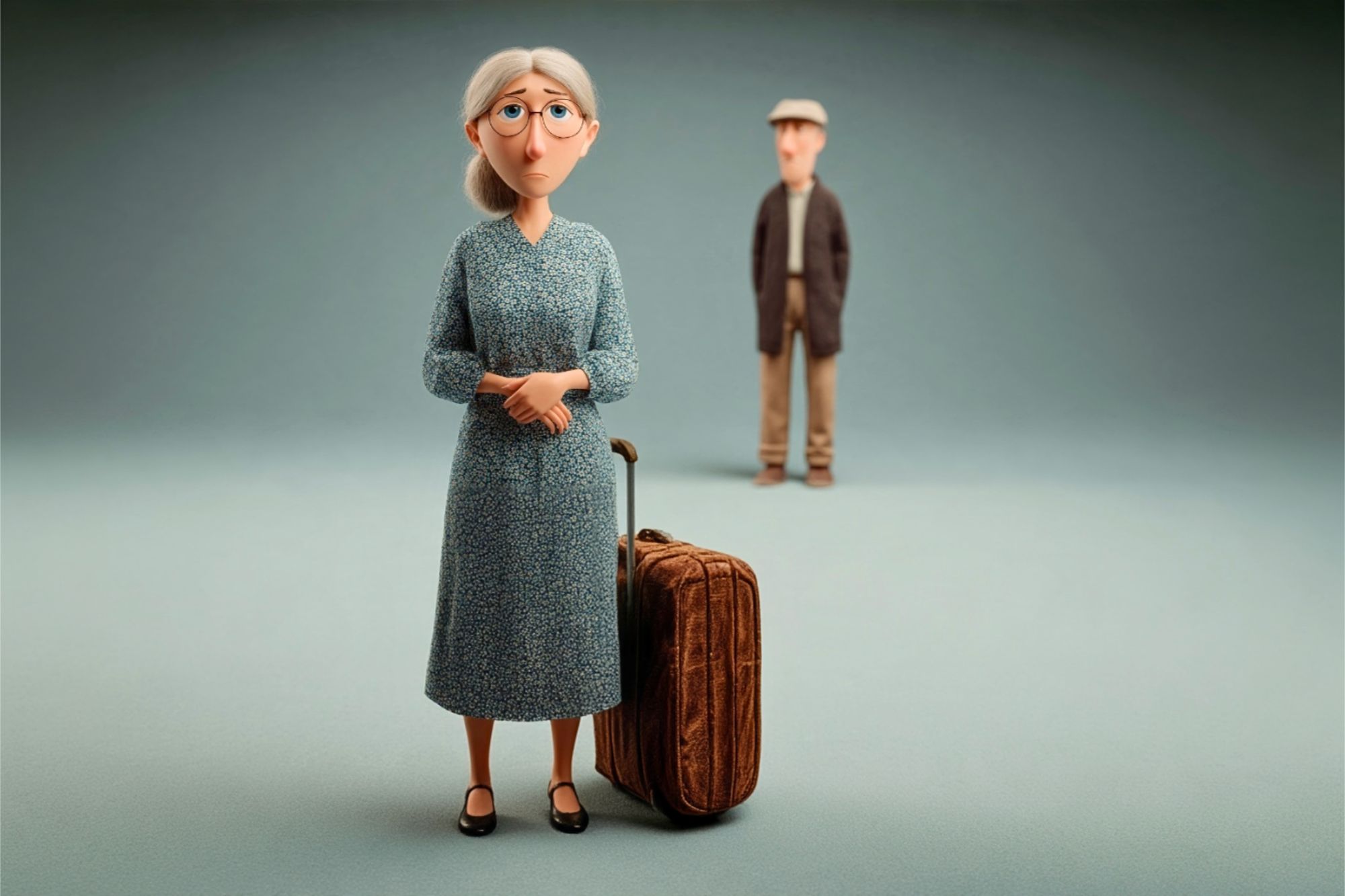
Walking away from a decades-long marriage takes a kind of strength most people never have to understand. The decision comes after years of trying, hoping, and holding on. Nobody gets to twenty or more years and walks away lightly. Every step toward the door carries the weight of shared history, raised children (possibly), and vows made when life looked completely different.
So, when someone finally leaves after all that time, they’ve reached a point where staying feels more painful than the fear of starting over. This is a moment of profound self-awareness rather than failure. These aren’t people giving up. They’re people who’ve spent years enduring what they finally understand isn’t actually love. Here’s what’s going on behind the scenes in the recesses of their minds.
1. The sunk cost fallacy finally loses its power.
Two decades or more of marriage creates an enormous weight of history. You’ve built a home together, maybe raised kids, attended countless family gatherings, and survived illnesses and losses side by side. Walking away can feel like declaring all that meaningless.
This is called the sunk cost fallacy—continuing something because of what you’ve already invested rather than whether it serves you now. For years, maybe you told yourself that leaving would render all that time a waste. Twenty years becomes twenty-one, then twenty-two. Each anniversary makes the prospect of leaving feel even more unthinkable.
Something shifts, though, when you realize those years are gone regardless of what you do next. Staying doesn’t honor them. Staying doesn’t give them meaning. You can’t get them back by sacrificing the years you still have.
Psychologists see this shift as a healthy recalibration. You begin to ask better questions, such as “Do I want the next twenty years to feel like this?” Your remaining time becomes more precious than your past investment. That’s not giving up. That’s finally understanding that your future doesn’t owe your past anything.
2. Empty nest syndrome reveals what was hidden.
Children create noise in all the best and hardest ways. School pickups, sports practices, homework battles, teenage drama—parenthood fills every corner of a marriage with shared tasks and common purpose. You coordinate schedules. You make decisions together. You’re busy being a team.
When the kids leave, silence rushes in to fill the space they occupied. Suddenly, you’re face to face with the person you married, except you might realize you don’t really know them anymore. Or worse, you do know them, and you’ve discovered there’s nothing much there that connects you beyond the children you raised.
Many couples describe this experience as devastating. You were excellent co-parents, but somewhere along the way, you stopped being partners. The conversations that aren’t about the kids feel forced or non-existent. Date nights feel awkward. You’ve been functioning as a parenting corporation for so long that you forgot to nurture the relationship underneath.
The empty nest is a common crisis point for long marriages. The structure that held everything together disappears. What remains is the truth you’ve both been too busy to fully acknowledge. Some couples rediscover each other during this phase. Others realize there’s nothing left to rediscover.
3. Emotional loneliness is more painful than being alone.
Loneliness has a particular cruelty when you’re lying next to someone every night. Being physically alone means you can at least explain your loneliness—you’re single, you live by yourself, you need to get out more. But being desperately lonely while married? That’s a special kind of pain because it suggests that something is fundamentally broken.
The emotional isolation a person feels within their relationship can be just as damaging to mental health as actual solitude. When you’re single, you seek connection actively. You call friends. You make plans. You fill your life with people who want to know you.
Marriage, though, can create a false sense that your emotional needs are being met simply because someone is present. You stop reaching out as much. You assume your partner should be enough. Meanwhile, you’re starving for real conversation, genuine interest, or basic emotional attunement that never comes.
At some point, you do the math. Divorce might mean smaller holidays and eating dinner alone some nights, but would that really be lonelier than years of surface-level exchanges with someone who doesn’t seem curious about your inner world?
Many people who leave long marriages feel less lonely almost immediately, even before they’ve built a new social life. The chronic ache of being unseen by the person who’s supposed to know you best finally stops.
4. They’ve finally stopped prioritizing everyone else’s comfort.
For years, you probably considered everyone else’s feelings about your marriage. Your kids needed stability. Your parents would be devastated. Your spouse would be blindsided. Friends might take sides. The thought of disrupting everyone’s lives felt selfish and cruel.
Women particularly struggle with this—decades of socialization teach them to manage everyone’s emotions and keep the peace at any cost. Men also face it, often feeling intense pressure to provide stability and not “abandon” their families. Either way, you stayed partly because leaving would upset people you care about.
Eventually, though, you realize you’ve spent years protecting others from discomfort while you’ve been quietly suffering. Your kids are grown. Your parents, while they might disapprove, aren’t living your life. Your spouse’s feelings matter, but so do yours.
This shift is a crucial psychological development. Prioritizing your own wellbeing isn’t selfishness—it’s necessary self-preservation. You’ve earned the right to consider your own happiness after decades of considering everyone else’s. The people who truly love you will eventually understand. The ones who don’t might not have had your best interests at heart anyway. Learning to disappoint others in service of your own truth is one of the most difficult and essential skills of a well-lived life.
5. The difference between companionship and connection becomes clear.
Companionship can look like enough for a remarkably long time. You have routines. You watch shows together. You discuss practical matters—bills, home repairs, upcoming travel. You’re polite, even friendly.
From the outside, your marriage might seem perfectly fine. You appear compatible. You function smoothly as household partners.
Underneath, though, you’re aware of what’s missing. Real intimacy means being known, not just known about. Connection requires vulnerability—sharing fears, dreams, the weird thoughts that pop up at 2am. It means your partner is curious about your internal landscape, not just your schedule.
Decades can pass in pleasant companionship that never deepens into genuine connection. You coexist rather than intertwine. Conversations stay surface-level. You’ve learned not to share things your partner won’t understand or won’t care about. You’ve each retreated into private internal worlds.
There is a clear distinction between relationships that provide security and those that provide both security and genuine emotional intimacy. Both have value, but only one feels like love. Recognizing that you’ve been living solely with companionship while longing for additional connection helps explain the persistent dissatisfaction you couldn’t quite name.
6. Midlife clarity replaces youthful optimism.
When you were younger, hope came easily. Problems felt temporary. You believed in potential and growth and the power of trying harder. Your partner would eventually understand you. The distance between you would close. Things would get better with time.
Twenty years provides a lot of data. You’ve watched patterns repeat countless times. The conversation you needed to have fifteen years ago still hasn’t happened. The emotional availability you hoped would develop never materialized. The promises to change resulted in brief efforts followed by a return to baseline.
Hope requires some evidence. At a certain point, continuing to hope despite overwhelming contrary evidence becomes denial rather than optimism. You’re not seeing your partner’s potential anymore—you’re seeing who they actually are and have consistently been.
It’s a painful but necessary acceptance. You’re not giving up on your partner. You’re finally believing them when they show you who they are. Midlife brings a clearer-eyed assessment of reality. You’ve lived enough to know that some things genuinely won’t change. And that’s not pessimism. That’s wisdom born from experience.
You can love someone and simultaneously accept that they’ll never be capable of meeting your emotional needs. Accepting that truth means you can finally make decisions based on reality rather than wishful thinking.
7. They stop confusing loyalty with self-sacrifice.
Marriage vows emphasize commitment through better or worse, in sickness and in health. You took those promises seriously. Loyalty felt like a virtue worth protecting, even when honoring it meant setting aside your own needs.
Cultural messaging reinforces this constantly. Good spouses stay. Strong people work through difficulties. Leaving means you didn’t try hard enough. You internalized these messages, sometimes for decades.
But loyalty has limits that deserve recognition. Staying in a marriage that slowly erodes your sense of self isn’t noble—it’s self-abandonment. You can be committed to someone while simultaneously recognizing that the relationship is harming you both. Sometimes, the most loving thing you can do is release each other.
Healthy loyalty includes loyalty to yourself. When you consistently prioritize the relationship over your fundamental needs for connection, respect, or emotional safety, you’re not being virtuous. You’re teaching yourself that your needs don’t matter.
Leaving is often the harder choice. Staying in an unhappy marriage often provides comfort through familiarity. You know how to navigate this pain. Leaving means facing uncertainty, logistics, financial changes, social complications. People who walk away after decades aren’t taking the easy path. They’re choosing the braver one because staying would require continued betrayal of themselves.
8. The fear of starting over becomes less scary than staying.
Starting over in your fifties or sixties carries real challenges. Dating feels terrifying after decades with one person. Managing finances alone creates genuine stress. Learning to live by yourself after sharing space for so long takes adjustment. These fears are legitimate and rational. For years, they probably kept you frozen in place.
Fear loses its grip, though, when the alternative becomes unbearable. You reach a point where the known pain of your marriage outweighs every frightening possibility that divorce represents. What if you’re alone forever? At least you won’t be living a lie. What if you struggle financially? At least you’ll be struggling toward something better rather than maintaining something hollow.
You can think of it as a shift in threat assessment. Your brain finally recognizes that the danger isn’t out there in the unknown future—it’s right here in the slow erosion of continuing to live disconnected from yourself and others.
Many people who leave long marriages describe unexpected relief. The anticipation of change was worse than the reality. Yes, there are hard days and logistical nightmares. But underneath runs a current of hope they’d forgotten was possible. They’re moving toward something rather than endlessly treading water. Fear of the unknown turns out to be more manageable than the known suffering they’d been enduring for years.
9. They recognize that “good enough” has been stealing their life.
Your marriage probably wasn’t abusive or dramatically terrible. Those kinds of situations create clearer permission to leave. Your situation was subtler and somehow harder to name.
Everything was fine. Functional. Acceptable. Not bad enough to justify the disruption of leaving. You told yourself that countless people had it worse. You should be grateful for stability and basic respect.
“Good enough” sounds reasonable, but it operates like a slow-acting poison. Each year you accept it, you lose a little more of yourself. You stop expecting real joy. You forget what it feels like to be truly seen. You adjust your expectations downward until you’re living a half-life that feels normal because you’ve been doing it for so long.
This is a particularly insidious pattern because it lacks dramatic warning signs. You’re not in crisis. You’re just gradually fading. Your personality becomes muted. Your dreams shrink. You stop bothering to share your real thoughts because you’ve learned they don’t land anywhere meaningful.
Waking up to how much life you’ve lost to “good enough” can feel devastating. All those years accepting mediocrity because you didn’t think you deserved more or didn’t believe anything better was possible. But that same realization creates urgency. However many years you have left, you want them to be fully lived. Good enough stops being acceptable when you understand it’s been stealing the one life you get.
10. They’ve learned that staying for the wrong reasons helps no one.
Perhaps you stayed for the kids, even after they’d grown. You worried about modeling failure or disrupting their sense of family. Maybe you stayed because you promised, and breaking promises felt like a moral failure.
These reasons seem noble on the surface. Underneath, though, staying in a disconnected marriage teaches lessons you probably don’t intend.
Adult children learn about relationships by watching yours. Staying in a marriage devoid of real affection or connection shows them that love means enduring unhappiness. You model that commitment matters more than wellbeing. You demonstrate that their own needs should be sacrificed for the appearance of stability.
But people who stay “for the kids” are often surprised when their grown children eventually say they wished their parents had divorced years earlier. The tension and distance were obvious. The kids knew something was wrong even if nobody talked about it.
Your spouse doesn’t benefit from you staying out of obligation either. They deserve someone who genuinely wants to be with them, not someone enduring their presence. Staying without real love or connection is a kind of rejection that plays out slowly over years. You might think you’re sparing them pain, but you’re actually denying them the possibility of finding something real with someone else, or experiencing contentment in single life.
Leaving creates temporary chaos and hurt, sure. But staying in a hollow marriage creates permanent low-grade suffering for everyone involved. You can end a marriage with respect and kindness. You can acknowledge what was good while accepting what isn’t working. That honesty, however painful initially, gives everyone involved permission to build lives that feel genuine rather than performed.
The Strength You Didn’t Know You’d Need
Walking away from anything familiar requires courage, but walking away from decades of shared life requires something beyond courage. You’ll doubt yourself constantly at first. You’ll wonder if you’re making a terrible mistake. You’ll grieve even as you feel relieved.
People who haven’t lived it won’t always understand. They’ll offer advice that doesn’t fit your situation. They’ll suggest you try harder or give it more time, not recognizing you’ve already given years.
What you’re doing is allowing yourself to want more than survival. You’re trusting that connection matters, that your emotional needs are legitimate, and that love should feel like more than comfortable routine. You’re choosing uncertainty over the certain pain of staying somewhere you can’t fully exist.
Nobody can tell you when the right time is. You’re the only one who knows when endurance has stretched as far as it can go. Some people recognize it earlier, some later. Whenever you arrive at this understanding, your willingness to honor it represents profound self-respect.
You’re not giving up on love. You’re finally insisting on it.