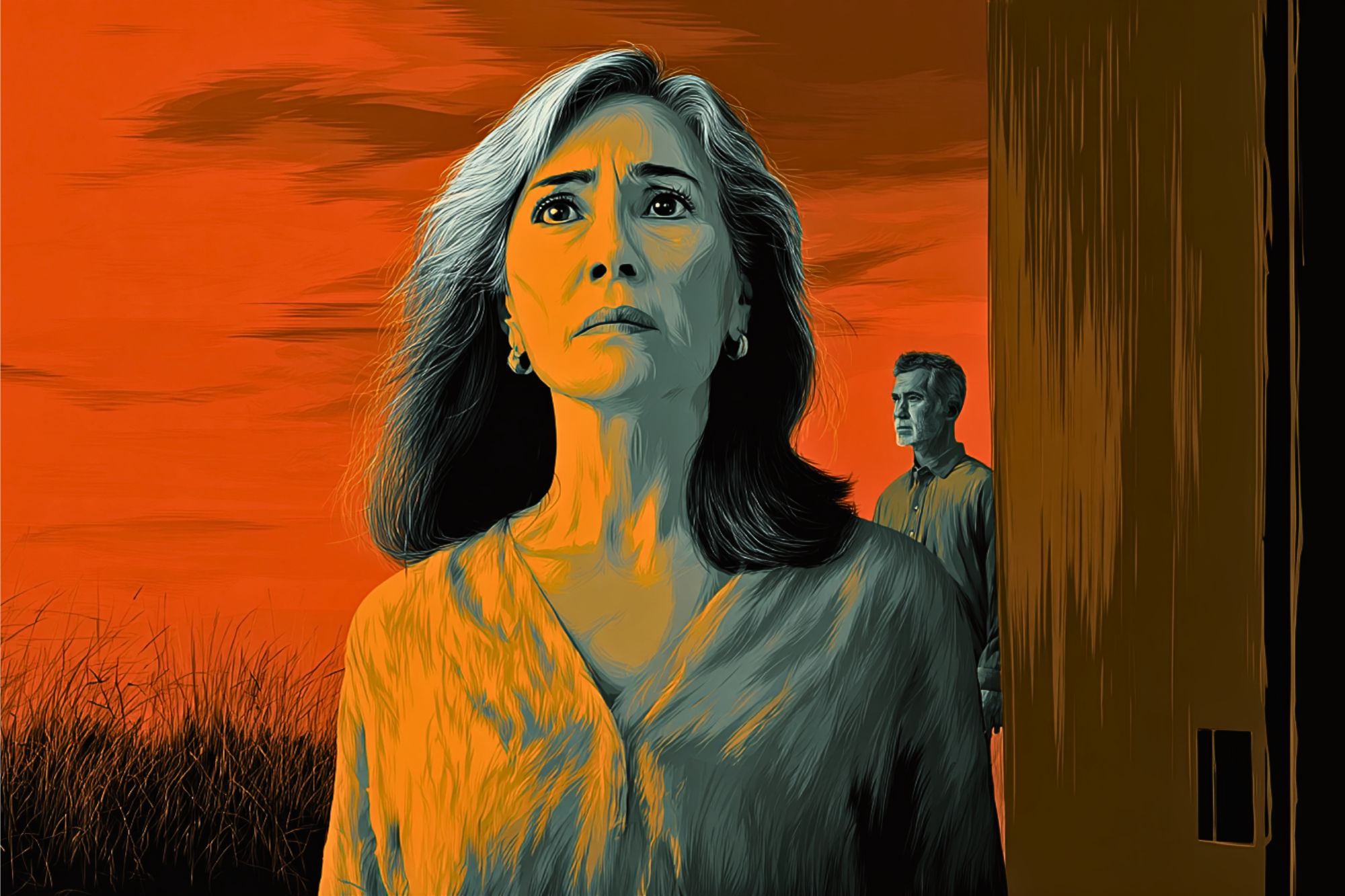
Loneliness inside a marriage is a most disorienting experience. There is someone beside you—legally, physically, socially—and yet you feel an absence that you can’t quite explain to yourself, let alone to anyone else.
What makes this kind of loneliness so painful is that it tends to grow in the dark, unacknowledged and unspoken, while life continues normally on the surface.
If something in the back of your mind has drawn you to this article, that is revealing. And you deserve to understand what you’re feeling.
1. You feel more alone in their presence than when you’re actually alone.
There’s a real difference between solitude and loneliness, and most people feel it the moment it’s named.
Solitude—the kind you choose—is restorative. An evening alone with a book, a long drive by yourself, a quiet morning before anyone else wakes up. That kind of aloneness has air in it.
Loneliness, especially the kind that lives inside a relationship, is something else entirely. It’s suffocating. It sits in the room with you, even when your partner is right there. Sometimes, especially when your partner is right there.
When the person you share a home and a life with makes you feel more isolated than their absence would, something important is asking to be noticed. Not judged. Just noticed.
Many people in this situation might experience an unsettling but eye-opening moment: realizing that they feel genuine relief when their partner leaves the room, or when they get an evening to themselves.
That relief isn’t about needing space. Needing space is healthy and normal. It’s the mental exhale from being able to ignore, for a little while, the fact that your marriage is lacking true intimacy. That unspoken reminder of what’s missing is deeply troubling.
2. You don’t feel seen, known, or truly understood by your spouse.
Being known is one of the deepest needs we carry as human beings. Not known in the sense of someone remembering how you take your coffee or what you don’t eat. Known in the sense of someone understanding your fears, your evolving beliefs, the things that keep you awake, and the ways you’ve changed.
What’s difficult is that your partner may know you very well…or, rather, the version of you from five, eight, ten years ago. The preferences, the habits, the stories. But people change, and without consistent, intentional connection, those changes go completely unwitnessed.
Both people in a relationship grow and shift over time. But if no one is paying close enough attention, the person standing in front of your partner is essentially a stranger wearing a familiar face. And that stranger is YOU.
The loneliness this creates is particularly acute because there’s no obvious breach. Nobody did anything wrong. Life simply moved forward while the intimacy stayed still.
What you are suffering isn’t rejection. It’s the ache of being present and unrecognized at the same time, which is one of the harder hurts to explain to anyone who hasn’t felt it themselves.
3. Arguments have been replaced by indifference.
Most people assume that a marriage without conflict is a marriage in good shape. That’s somewhat understandable—conflict is unpleasant, and its absence feels like relief.
But relationship researchers, including the well-known work of John Gottman, have found that indifference is far more damaging to a marriage than healthy conflict.
Conflict, strange as it sounds, is a form of investment. Arguing means you still care enough to fight for something—your perspective, your needs, the relationship itself. When disagreements simply dissolve not because they’ve been resolved but because neither person has the energy to care, that’s a very different thing.
Contempt and stonewalling do more lasting damage than an argument ever could. And indifference is their quiet cousin.
There’s a meaningful difference between two emotionally mature people who have learned to navigate disagreement with calm and respect, and two people who have simply stopped engaging. One is growth. The other is a slow withdrawal from each other.
The telltale sign is whether resolution actually happens, or whether the topic just gets abandoned because neither of you wants to go there anymore.
4. You’ve started filling the silence with screens, busyness, or other distractions.
Evenings that used to involve conversation now involve two phones and a television nobody is really watching. Weekends that could be spent together somehow fill themselves with separate errands, separate hobbies, and a social calendar so packed that genuine downtime requiring you to actually be with each other rarely appears.
None of this looks alarming from the outside. Busyness feels productive. Screens feel like relaxation. But for many married couples, these things function as something more specific: a way of not sitting with the discomfort of emotional distance.
Distraction is a coping mechanism. A very human one.
Ask yourself honestly: if all the noise were removed—no screens, no plans, no busyness—would what remains feel like companionship or like an awkward silence between two people who’ve run out of things to say?
5. Routine and reliability have become a substitute for closeness.
A well-functioning household can look, from almost every angle, like a happy marriage. Dinners get made. Schedules get coordinated. Bills get paid. There’s a rhythm, a dependability, a shared life that runs smoothly.
This is two people operating an efficient life together while experiencing very little actual emotional closeness. And the reason so many people don’t name this as loneliness is straightforward: nothing is visibly wrong. Nobody is cruel. Nobody has betrayed anyone. On paper, the marriage works.
But working isn’t the same as connecting.
The structure of a relationship includes the routines, the shared responsibilities, the predictable patterns. This structure is genuinely valuable. Stability matters. Reliability matters.
The problem comes when those things become the entirety of the relationship rather than its foundation. When the closest you come to genuine connection on a given day is deciding what to have for dinner or checking in about school pickup, the structure has filled the space where substance should be.
Many people in this situation feel a vague, persistent sadness they struggle to justify. Everything is fine, they tell themselves. Which is precisely what makes this particular kind of loneliness so hard to acknowledge… and so worth naming.
6. Supposedly celebratory or connecting moments now clearly reveal the disconnect.
Few things sting quite like feeling alone in a moment specifically designed for togetherness.
A vacation where you spend the whole time surrounded by beautiful scenery but feeling like strangers. A birthday dinner that is pleasant enough but lands emotionally flat. An evening of physical intimacy that leaves you feeling more isolated afterward than you did before it started.
These moments are particularly painful because society has no language for them. You were supposed to feel close. The occasion demanded it. Instead, what you felt was a sharp, clear absence.
A psychological concept known as the contrast effect is at play here. The gap between anticipated connection and actual experience amplifies the pain. And because these moments are supposed to be joyful, there’s often an added layer of shame or confusion—a sense that something must be deeply wrong with you for feeling this way.
7. You regularly display anger, criticism, or contempt toward your spouse.
Loneliness that goes unnamed and unexpressed doesn’t simply stay contained. For many people, it finds an outlet. And that outlet is often anger, chronic criticism, or a cold contempt that has gradually replaced warmth.
A partner who constantly finds fault, who snaps at small things, and who has become dismissive or cutting, is not necessarily a difficult or unkind person by nature. They may be someone with unmet needs who doesn’t quite realize that fact.
When a core emotional need goes unmet for long enough, it tends to surface sideways. The longing for connection gets rerouted into frustration at the person who isn’t providing it.
Recognizing this in yourself or in your partner isn’t an excuse for unkind behavior. Rather, it’s a reframe that can shift something in the way you see the situation. Beneath the criticism, beneath the sharpness, there is very often a person who is hurting and doesn’t know how to say so.
Understanding that doesn’t fix the problem, but it changes the starting point for addressing it. Judgment gives way to something closer to compassion, which is where any real change must begin.
8. Your spouse is dismissive when you raise the state of your marriage because they feel perfectly content.
One of the more painful experiences in a lonely marriage is when you try to discuss it—to name the distance, to reach across it—and your partner looks at you with genuine confusion. “What are you talking about? We’re fine.”
Marital loneliness is frequently asymmetrical. One person can feel isolated while the other experiences the relationship as entirely adequate. This isn’t necessarily dishonesty or cruelty on the part of the content partner. People come to relationships with different emotional needs, different attachment styles, and vastly different thresholds for the kind of intimacy they require to feel close.
The person who needs more depth, more emotional availability, and more intentional connection often ends up feeling like the problem. Like they’re too demanding. Like something is wrong with them for needing what they need.
Know this: needing emotional connection in a marriage is not a character flaw. It is a deeply human requirement.
What makes this dynamic so exhausting is the additional layer of invisibility it creates. You’re not just lonely in the relationship; you’re also not believed about your own experience of it. And having your reality dismissed, even gently, by the one person who should understand it most is a kind of isolation that compounds everything else.
9. You suppress parts of yourself to make the marriage palatable.
Over years, sometimes without any clear turning point, some people in lonely marriages make a series of small compromises that add up to something much larger.
An opinion left unsaid to avoid tension. An ambition quietly shelved. A part of their personality—perhaps the loud part, the passionate part, or the questioning part—gradually toned down to keep the peace or meet an unspoken expectation.
The cost of this is that you end up lonely not just within the relationship, but from yourself. The experience of actually being who you are is its own form of companionship. When that authenticity has been eroded, an internal loneliness develops that no amount of external company can touch.
Reconnecting with those suppressed parts of yourself—your real opinions, your actual needs, your unlived ambitions—is the prerequisite for genuine intimacy within it. You cannot truly be known by another person if you have stopped allowing yourself to be known to yourself. That’s where the work often has to start.
10. The marriage you thought you were going to have weighs heavy on your mind.
Therapist and researcher Pauline Boss coined the term “ambiguous loss” to describe the grief of losing someone who is still technically present. A lonely marriage is textbook ambiguous loss, and yet most people experiencing it have never once framed it as grief.
The wistfulness. The low-grade sadness that’s hard to explain. The way certain songs or memories land with a weight that seems disproportionate. These aren’t random emotional fluctuations. They are grief responses for the partnership that was promised, imagined, or once genuinely felt real.
This grief is hard to carry because it has no ritual. When a marriage ends in divorce, there is at least a recognized moment of loss. When someone dies, there are structures to hold the mourning. But grieving a marriage that hasn’t ended, that functions on the surface, or that nobody outside it would identify as broken? There is no language for that. No acknowledged moment. No one bringing casseroles.
So, the grief goes unnamed, and unnamed grief has a way of seeping into everything—your energy, your mood, your sense of self, your capacity for joy.
Allowing yourself to name this as loss is an act of self-honesty. The marriage you imagined deserves to be mourned. And in the mourning, something shifts. Clarity becomes possible. So does, for many people, the first real conversation about what they actually want the marriage to become.
Final Thoughts
None of what you’ve read here is a verdict. Loneliness in a marriage is not proof that the marriage is over, or that it was a mistake, or that anything is irreparably broken.
What it is, unambiguously, is information. Real, important, human information about what you need and what is currently missing.
Neuroscience has something useful to offer here: naming an emotional experience reduces its intensity and restores a sense of agency. You stop being at the mercy of a feeling you can’t identify and start being someone who understands their own experience. That shift, small as it sounds, matters enormously.
You are allowed to want more from your marriage. You are allowed to need connection, depth, and the feeling of being truly known by the person you chose. Those needs are not unreasonable. They are not too much. They are the whole point.
Whatever comes next—a conversation, a decision, a new kind of honesty with yourself or your partner—it starts here. With the willingness to see clearly.