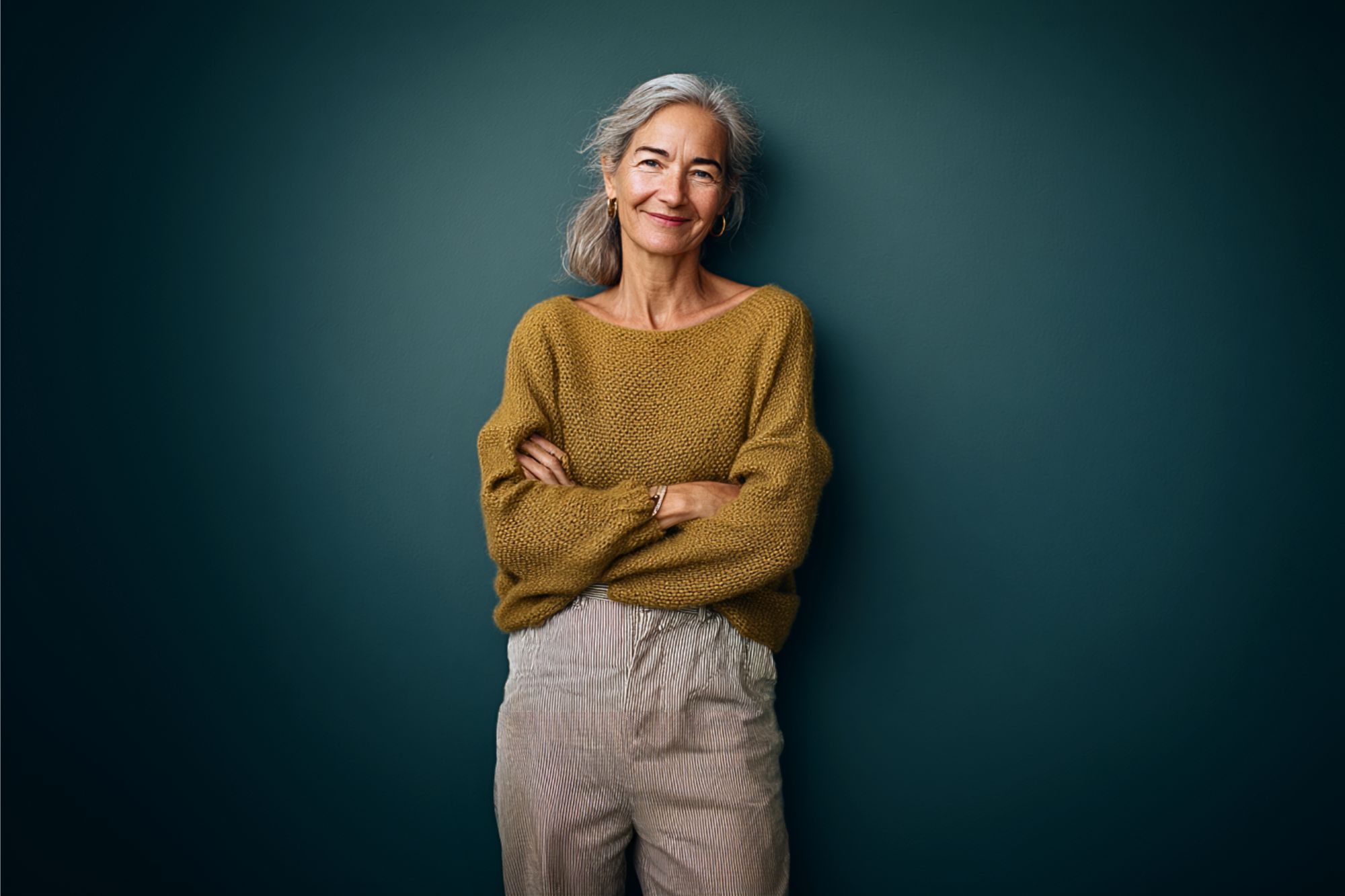
Some people reach their 60s and hit their stride in a way that has nothing to do with luck. They have energy, warmth, and a sense of direction.
They seem—there’s no better word for it—engaged. Not because life has been particularly kind to them, and not because of genetics, but because of how they’ve chosen to live it.
The habits that seem to produce this aren’t dramatic. They don’t require an overhaul or a conversion experience. They’re small, consistent, and available to anyone. But taken together, they add up to something.
Here’s what those habits tend to look like.
1. They move their bodies in ways they enjoy.
A lot of us absorbed the idea that exercise has to be scheduled, effortful, and slightly miserable to count. Decades of gym guilt and abandoned fitness plans will do that.
What vibrant older adults tend to understand is that the type of movement matters far less than whether you’ll keep doing it. Dancing in your kitchen, a long walk with a friend, swimming, cycling with no particular destination: all of it counts. All of it works.
The research supports this clearly. People who engage in physical activity they find pleasurable are significantly more likely to sustain it. In your 60s and beyond, consistency is what matters most. Thirty minutes of movement you enjoy, most days, does more for your energy, your joints, your mood, and your cognitive health than a punishing session you dread and eventually stop turning up for.
If every exercise option you’ve tried has disagreed with you, the answer isn’t to try harder at things you hate. It’s to find movement you like.
2. They treat sleep as a priority, not an afterthought.
Many people arrive at their 60s still operating under the belief that fewer hours sleeping means more hours to get things done. The most vibrant people at this stage have largely let that go.
Sleep does change with age, becoming lighter and sometimes more interrupted, but dismissing poor sleep as an inevitable part of getting older is where serious trouble begins.
Vibrant older adults take sleep seriously. Consistent wake times, including weekends. A proper wind-down routine. A cool, dark bedroom. Cutting back on alcohol, which disrupts sleep quality, even when it seems to help at first.
What makes this worth the effort is what good sleep protects: cognitive sharpness, emotional steadiness, immune function, cardiovascular health. The people who feel most alive in their later years aren’t grinding through fatigue. They’re rested.
And there’s a certain self-respect in treating sleep as something worth protecting, rather than something to be squeezed in around everything else.
3. They stay curious about the world around them.
Ask a vibrant 68-year-old what they’re interested in right now, and they’ll almost always have an answer ready. It might be a period of history they’ve been reading about, a language picked up after a trip, or a craft that turned into something more serious. The specifics vary; the engagement behind them doesn’t.
Curiosity keeps the brain forming new connections. Neuroplasticity doesn’t switch off at a certain age, but it does need genuine stimulation. Pursuing an interest, wrestling with something unfamiliar, following a question somewhere unexpected: these keep the mind sharp in ways that passive entertainment doesn’t.
There’s an emotional dimension to this, too. People who are interested in things have a reason to get up in the morning that goes beyond habit. They have something to talk about, something to look forward to, and an active sense of being engaged with the world rather than waiting for it to pass. At any age, that’s not nothing.
4. They have people in their lives they look forward to seeing.
Maintaining friendships after 60 takes deliberate effort. Geography changes, schedules shift, and loss—of friends, partners, colleagues—becomes part of life in ways it wasn’t before. Many vibrant older adults will tell you directly that their social world requires consistent tending to stay alive.
What they’ve prioritized is quality. Not a packed calendar, but a handful of relationships that are reciprocal, honest, and sustaining. People they can be straight with. People who make them laugh. People who are interested in how things are going and who expect the same in return.
The evidence on social connection is substantial. Loneliness is among the strongest predictors of early cognitive and physical decline. Conversely, people with close social ties live longer, recover from illness faster, and report considerably higher wellbeing in their later years.
Reaching out first. Making plans even when it takes effort. Showing up. These aren’t incidental social gestures. They’re foundational to how vibrant people at this stage actually live.
5. They’ve made peace with things outside their control.
By your 60s, life has delivered many things you didn’t choose: health problems, relationships that didn’t last, plans that fell apart, losses that left their mark. The people who feel most vibrant at this stage aren’t the ones who avoided hard things. They’re the ones who found a way to carry them without being ruled by them.
To be clear: acceptance isn’t indifference. You can grieve something fully and still decide not to let it dominate the rest of your story. Vibrant older adults tend to have developed a practical relationship with uncertainty, not because they’re unusually resilient by nature, but because they’ve lived long enough to know that fighting the unchangeable is exhausting and achieves nothing.
What that shift frees up is attention. When you’re no longer spending energy on what can’t be altered, you become more present to what’s in front of you: the people around you, the day that’s going reasonably well, the ordinary pleasures that register more clearly when you’re not looking past them.
That reorientation, from what’s been lost to what remains, is one of the subtler habits on this list, and one of the most powerful.
6. They eat in a way that’s sustainable, not punishing.
Extreme diets burn bright and burn out. The people who feel well in their 60s and beyond typically aren’t following complicated protocols or eliminating food groups (unless absolutely necessary). What they tend to do instead is eat in a way that has become second nature.
Mostly whole foods. Plenty of vegetables, not out of obligation, but because they’ve noticed they feel better for them. Reasonable portions without obsession. Staying hydrated. The occasional meal that’s purely for pleasure, and no guilt about it.
What vibrant older adults often share is an ease around food. The punishment mindset has been replaced by something more straightforward: paying attention to how food makes them feel, and making mostly decent choices without treating every meal as a test they might fail.
Nourishment and enjoyment don’t need to be in opposition. The people who’ve worked that out tend to feel, and look, better for it.
7. They have something they’re working toward.
When you ask someone what they’re looking forward to, you learn a great deal about how they’re doing. People who feel vibrant in their later decades almost always have an answer: a project underway, a skill being developed, a trip being planned, a person or cause they’re showing up for consistently.
Purpose doesn’t have to be grand. It doesn’t require a mission statement or a late-life reinvention. For some people, it’s a vegetable garden they’re determined to finally get right. For others, it’s mentoring someone younger, writing something they’ve long-postponed, or picking up an instrument and accepting from the start that mastery isn’t the point. The scale of the goal matters far less than the feeling of moving toward something.
This becomes especially important after major life transitions: retirement, children leaving home, a career ending. The structures that once gave life shape and forward momentum can disappear with surprising speed, and the absence of something to work toward is something vibrant people tend to address directly rather than drift through.
Having a next thing isn’t a small comfort. At this stage of life, it may be one of the most important things you can give yourself.
8. They don’t wait until they feel ready.
Waiting for the right moment is a convincing trap. There will always be a reason to delay: the timing isn’t right, the money isn’t quite there, the confidence hasn’t arrived yet. People who feel vibrant in their 60s have largely stopped falling for this con.
What tends to replace the waiting is a kind of practical courage. Not fearlessness; the uncertainty is still there. But a decision to act anyway, because they’ve lived long enough to know that readiness rarely turns up on schedule. The trip gets booked. The difficult conversation gets had. The class starts before they feel entirely sure of themselves.
Not every decision of this kind pays off. But people in their later years often report that the things they didn’t do weigh far heavier than the things they tried and got wrong. Inaction, it turns out, ages badly.
There’s a freedom that comes with beginning before you’re ready. And it doesn’t require confidence first.
9. They’re not trying to feel 30 again.
Chasing a younger version of yourself is a race with no finish line, and the most vibrant people in their 60s seem to have stepped off that track entirely. What they’ve found on the other side is, by most accounts, considerably better.
A settledness becomes available later in life that wasn’t accessible earlier. Less energy spent seeking approval. Clearer boundaries. A sharper sense of what matters, and, equally usefully, what doesn’t. People often describe their 60s as the decade when they finally stopped performing and started living.
Vibrancy at this stage looks different from the relentless forward motion of younger years, and that’s precisely the point. It tends to be calmer, more deliberate, more present. The things that get prioritized are the ones that have been tested over time and found worthwhile, not because they look good or because someone else thinks they should matter, but because experience has made the distinction clear.
This isn’t consolation. For a great many people, it’s the most alive they’ve ever felt.
Final Thoughts: What These Habits Have In Common
Every habit on this list is, at its core, a decision to stay engaged: with your body, your mind, the people you care about, and the life you’re still in the middle of building.
Feeling vibrant in your 60s and beyond isn’t something that happens to you. It’s made, steadily and without fanfare, through choices repeated often enough to become a way of living.
None of it requires perfection. The people who feel most alive at this stage aren’t the ones who get everything right. They’re the ones who keep returning to what matters when they’ve drifted from it. That persistence, more than any single habit, is what makes the difference.
Pick one thing from this list that feels true to where you are right now. Give it your full attention. The rest has a way of following.
You may also like: