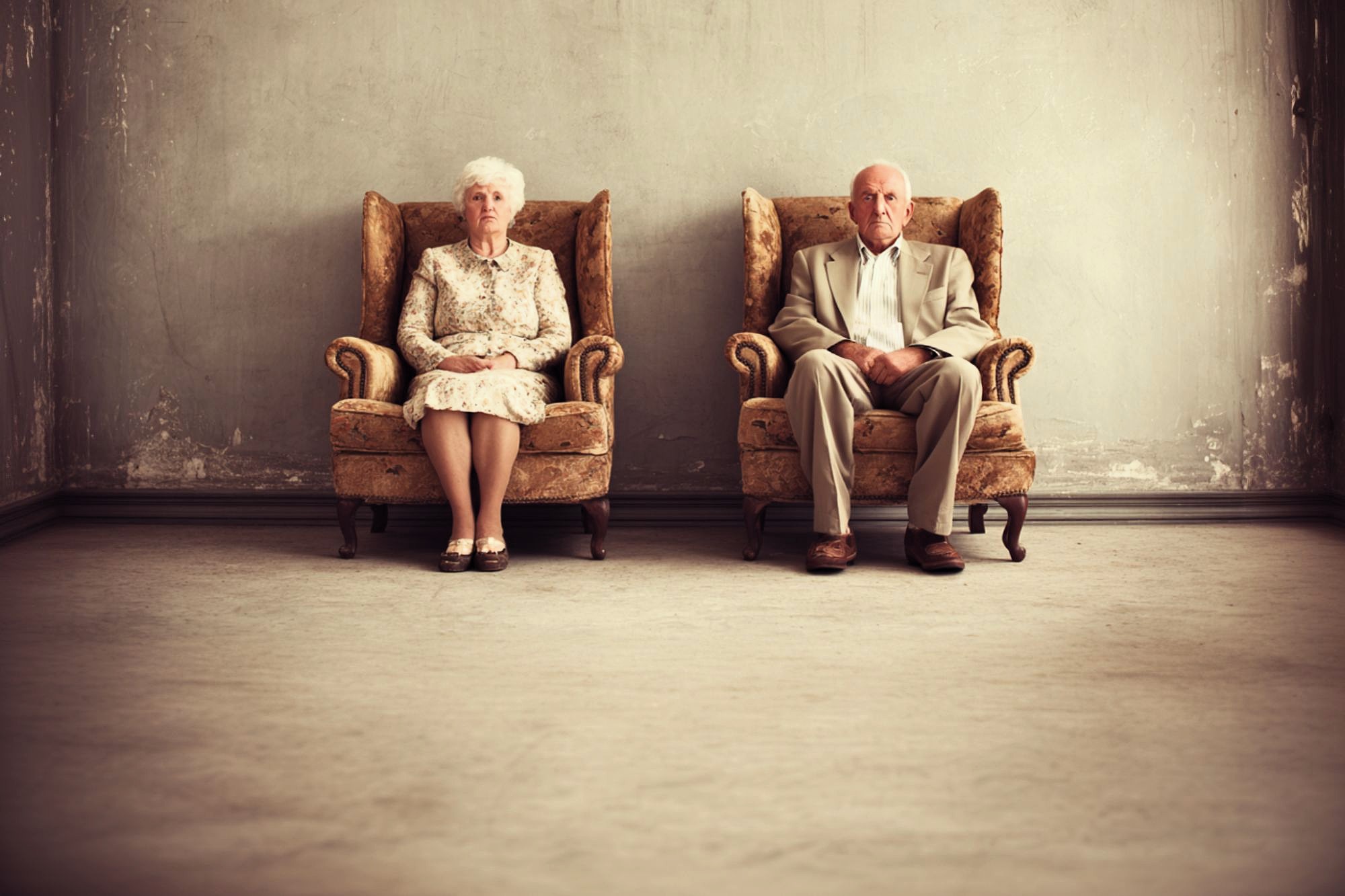
Most people who have spent many years together in a beautiful marriage or long-term relationship know each other inside and out. That said, retirement can change their dynamic quite dramatically, especially if changes in their time together create some measure of upheaval between them.
The things listed below are some missteps that many couples make after retirement. While they may not be intentional, they can certainly cause even the closest people to end up as strangers to one another if they aren’t careful.
1. Not identifying a shared purpose beyond providing for their family.
A lot of people married young and started families almost immediately. As a result, they might have spent upwards of 20 years together, focusing almost entirely on raising their kids. They worked to support the family, coordinated everything from medical appointments to holiday get-togethers, along with all the other responsibilities that come with providing the entire family with support and stability.
As such, when the kids have flown the coop, and they aren’t working anymore, many couples don’t quite know what they have in common other than comfortable familiarity. They don’t have a shared purpose beyond the work they did to provide for their family, and they may not even know who they are outside of their domestic roles. This can lead to awkward interactions between people who suddenly discover that they’re essentially strangers to one another, as well as to themselves.
2. Filling their time with too many individual pursuits.
It’s completely understandable that newly retired people dive into all the pursuits they were unable to enjoy when they were working because they didn’t have the time or energy to do them. Many retirees fill their days with crafts, socializing, volunteering, entertainment, and catching up on all the books and films they weren’t able to enjoy while working 40+ hours a week (plus commuting, in many cases).
The problem with all of these individual pursuits is that they don’t leave much time to spend with their partners or spouses. Suddenly, the loving, devoted life that they’ve built together is taken for granted as an ever-present foundation instead of a garden that needs tending in order to thrive. When both partners spend all their time doing their own thing instead of doing things together, they may grow apart and end up as housemate-like strangers who just happen to be sharing a domicile.
3. Abandoning date nights and other special occasions because they’re always together.
“Absence makes the heart grow fonder” holds true for many people. We look forward to our spouses coming home from work because we’ve missed them all day, and small periods of distance (such as business trips or similar) make us realize just how much we love and appreciate each other.
In retirement, however, there’s significantly less opportunity to miss each other because both partners are always around. As a result, it’s difficult to get enthusiastic about things like date nights because the prospect of uninterrupted time together isn’t something to look forward to anymore: it’s a mainstay, and might even be seen as annoying and smothering by some.
4. Neglecting to talk about the changes they’ve experienced (or not paying enough attention to them!).
Dynamics between people can change significantly as we age. If spouses don’t talk to their partners about the changes they experience, they may not be fully aware of all the things each other is dealing with on a regular basis. This is especially true for those who tend to suffer in silence, not wanting to burden their partner with details about things they’re struggling with.
For example, people who have experienced changes in physical desire and capability may be hesitant to share details about their struggles with their spouses because they’re embarrassed. This can lead to emotional distance between them as well as physical distance, wherein they continue to pull away from one another without any explanation why.
5. Getting irritated with each other due to a lack of boundaries.
Most people thrive when they have some sense of routine in their lives. Married couples create routines during their work years that they grow accustomed to and even depend upon.
For example, one might know that they can have undisturbed alone time during evenings when their spouse is working the late shift, while the other has long-standing weekend plans with friends.
When both partners retire, these routines often fall apart. They’re constantly in each other’s company, so they may feel entitled to intrude on each other’s time and space whenever they like.
If they don’t establish strong boundaries, they may grow resentful and even abusive towards one another. It may get to a point where they don’t even recognize the person they’re with anymore, because they’re so different from the way they were when they were both working full-time.
6. Not adjusting to new roles within their relationship dynamic.
My aunt was a homemaker who spent her entire married life raising children, cooking, cleaning, doing errands, and essentially running the household singlehandedly while her husband worked full-time. When he retired, he was shocked and upset when she asked him to help her shoulder the household tasks now that he was home as well.
In his mind, my uncle figured that he would be able to spend his retirement relaxing in comfort, since he had “done his time” working for over 40 years. But my aunt had been working just as long, taking care of everything else. She wasn’t allowed to retire, but was expected to keep on shouldering the household burden alone, as she always had.
As you can imagine, this created a massive amount of disharmony between them because he wanted to maintain the status quo, and she realized that she had only been seen as a housekeeper rather than a partner.
7. Needing more and more time apart.
After retirement, couples tend to be in each other’s spaces pretty much all the time. Instead of just sharing living space in the evenings and on weekends, they’re in each other’s pockets day and night. This causes encroachment into each other’s free time and personal space, especially if one is making more demands on the other’s time and energy.
The more time they spend together, the more time they want apart. This can create an ever-widening rift between them until they finally realize that they’re essentially living as strangers who don’t even want to see each other, let alone share meals or plan the rest of their future as a team. Identifying the problem early on and creating a healthy balance between time together and time apart is crucial to avoid ending up in either extreme.
8. Constant miscommunication because they each become background noise.
One thing that can often happen after retirement is when partners tune each other out. Maybe one of them is a chatterbox who always wants to share gossip they’ve heard from their social circles, and the other is a grumpy curmudgeon who complains nonstop about everything.
As a result, they treat each other’s conversations like intrusive noise and disassociate from it. When asked a direct question, they may simply grunt a response and get back to whatever they were doing a moment before.
This inevitably results in strife because, amongst the juicy gossip and snide remarks, there are important bits of information shared between them. Later, when asked if they’re ready for X medical appointment, or if they picked up something vital at the pharmacy, they’ll say “no” because they didn’t hear it. In reality, they stopped paying attention to what was being said and treated their partner like a noisy armchair instead.
Final thoughts…
You’ve probably heard it a thousand times, but the most important factor in any relationship is communication, and it’s even more vital when couples reach retirement age. Their dynamics can shift significantly, and this can result in tension and resentment if they don’t discuss how they’re feeling, establish protocols, and so on.
The vast majority of tensions that couples experience in later life can be avoided through open, honest, and loving dialogue. You chose each other to be life partners, and this new life chapter is a great opportunity to renew your vows and celebrate the rest of your lives together, rather than becoming strangers who share a house.