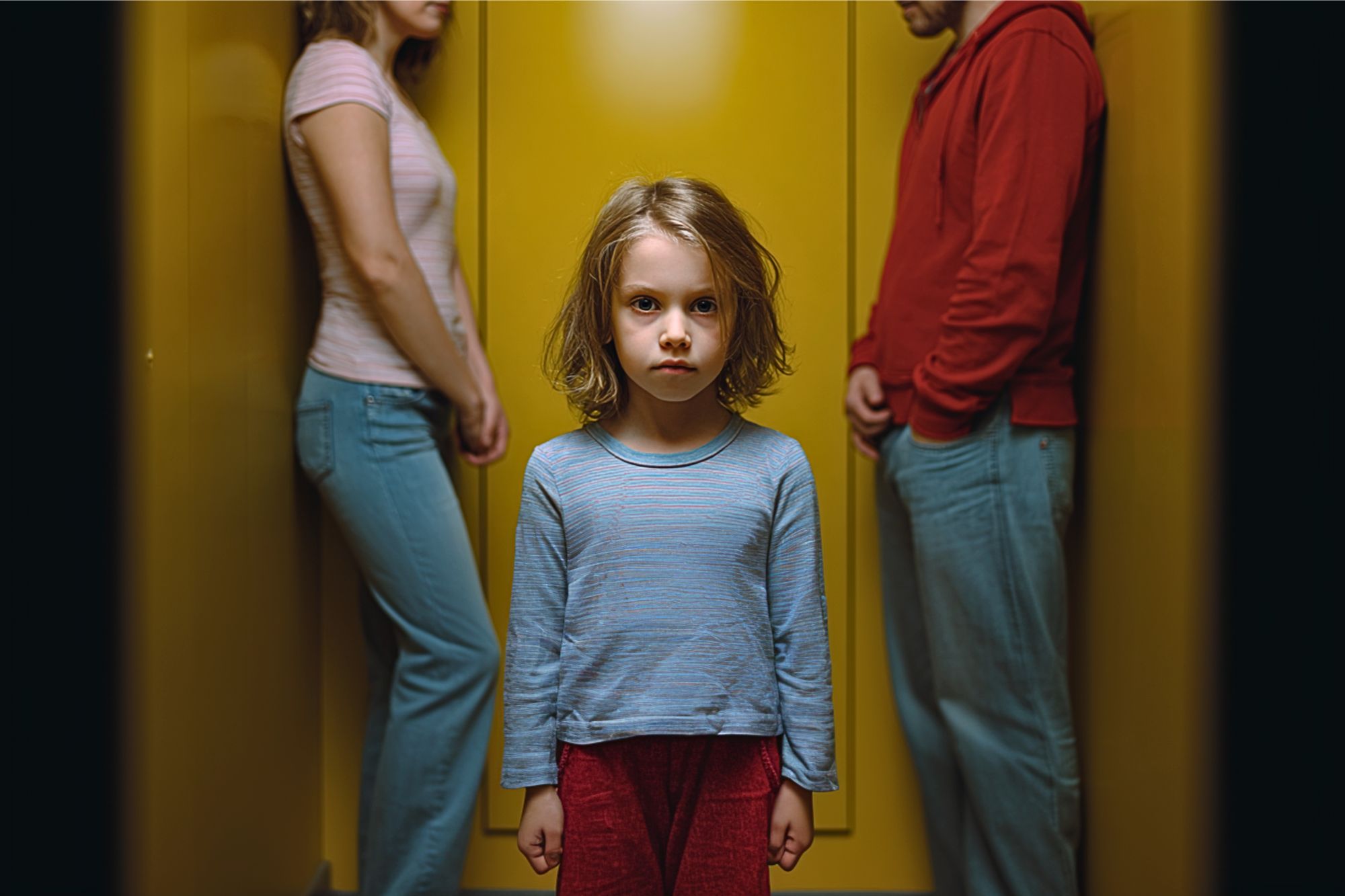
Parenting in the modern world feels like walking through a minefield of judgment. Every choice we make seems to attract criticism from somewhere—family members, other parents, or that voice in our own heads questioning if we’re doing enough.
What’s particularly frustrating is how often behaviors that demonstrate real emotional intelligence get labeled as “soft parenting” or “being too permissive.” Emotional intelligence means being able to recognize, understand, and manage your own and other people’s emotions.
While critics might call this emotionally intelligent parenting namby-pamby nonsense, they often miss something crucial: raising emotionally healthy children requires connection, not compliance.
Let’s explore 8 such parenting strategies that often get a negative rap.
1. Validating children’s “negative” emotions.
When a child has a meltdown because their tower of blocks fell over, emotionally intelligent parents acknowledge their frustration. They may crouch down to their child’s level and say something like, “You worked really hard on that, and it’s disappointing when it falls down.”
Cue the eye rolls from the tough love onlookers who think the child needs to just suck it up and get a grip.
But here’s what these critics don’t understand: validation doesn’t mean agreement or indulgence. Parents aren’t telling their child that blocks should never fall or that their reaction is proportionate. Instead, they’re teaching children that emotions have names, that feelings are information, and that someone they trust can hold space for their experience without trying to fix or dismiss it immediately. Research shows that these are important tools to help develop emotion regulation later in life.
What’s more, the opposite approach, that is, reprimanding kids for their feelings, doesn’t teach them how to manage disappointment or upset better; it just teaches them to suppress it. And the harms of bottling up our feelings are well established.
Children who feel heard are much more likely to accept comfort, learn coping strategies, and move forward. The goal isn’t to eliminate difficult emotions but to help children navigate them with increasing skill.
2. Apologizing to their children.
Some people are of the view that admitting your mistakes to a child is a one-way ticket to chaos and disrespect.
Yet when parents snap at their child, as we all do, and then later pull them aside to say, “I’m sorry I raised my voice earlier—that was about my bad day, not about you,” they’re demonstrating something crucial: accountability. Being accountable for your less-than-desirable behavior doesn’t diminish your authority; it transforms it into something much more powerful: trustworthiness.
Children are remarkably perceptive. If adults pretend their mistakes didn’t happen, kids notice the disconnect. And this teaches them that grown-ups are hypocrites, that admitting wrongdoing is shameful, or that they can’t trust their own perceptions of events. Worse still, they may develop a skewed sense of relationships where the person with more power never has to take responsibility for harm caused.
As parents, we all do the best we can with the knowledge we have at that time. We don’t know what we don’t know after all. But when we have more knowledge and realise the way we’ve been parenting isn’t what’s best for our child, it’s ok (and right) to admit that. As a parent to a child with additional needs, I’ll be the first to say that I parented in a way I wish I hadn’t once I learned more about my child’s unique disposition.
A sincere and proper apology doesn’t need to be elaborate or self-flagellating. It just needs to acknowledge that you understand you need to do better, and that you’ll commit to doing that. This models that everyone deserves to be treated with respect, that mistakes are part of being human, and that relationships can be repaired when someone takes responsibility.
3. Allowing children to experience natural consequences.
Experts describe the concept of natural consequences as a behavior strategy that naturally teaches children to do or not do something. For example, if your child forgets (or doesn’t complete) their homework, the natural consequence is that they may fail their assignment.
It’s an emotionally intelligent strategy, yet it gets flak from all sides. On the one hand, you’ve got the people who say you need to be stricter and enforce abstract punishments as consequences. And on the other hand, you’ve got those who think it’s cruel, and if it were their child, they would swoop in and save the day.
But what these critics don’t see is the emotional work happening. Parents using this strategy are often choosing long-term learning over short-term comfort—both theirs and their child’s. What’s more, in many situations, natural consequences teach kids that their choices matter in ways that lectures or grounding never could.
Of course, parents need to distinguish between consequences that teach and situations where children genuinely need help. Emotionally mature parents know the difference and are not going to let their kids come to harm to “teach them a lesson.”
4. Setting boundaries without shouting at their kids.
As parents, I’m sure most of us have been in that uncomfortable situation where our child has had an epic tantrum in a grocery store, arching their backs and screaming because we won’t buy them something they want. And if you’re a parent to a child who is autistic, ADHD, or both (AuDHD), or who has other difficulties with emotion regulation, you’ve probably experienced far more than your fair share of public meltdowns. No doubt you’ve experienced some disapproving looks, and if that were my child…” comments.
But if you’ve managed to stay calm without giving in to their demands (assuming those demands are actually unreasonable), you’re demonstrating impressive emotional intelligence.
Bystanders might interpret a calm demeanor as weakness. Where’s the authority? Where’s the immediate compliance? But what they don’t understand is that staying regulated when children are dysregulated is one of the most challenging and important things parents can do.
Children learn emotional regulation by watching how adults around them handle stress. If parents meet their big emotions with equally big reactions, they’re inadvertently teaching that overwhelming feelings require overwhelming responses.
As someone with a lot of experience dealing with meltdowns (and who doesn’t always get it right), let me tell you that the strength required to remain calm when it happens in public is immense. Parents manage their own embarrassment, worry, and frustration while simultaneously providing emotional support to someone who’s temporarily lost their ability to self-regulate. If that’s not a sign of emotional intelligence, I don’t know what is.
5. Allowing children to express disagreement rather than expecting blind obedience.
Many people believe that when it comes to parent-child relationships, respect equals obedience. And that anything less than complete compliance with requests is an act of disrespect that should be punished.
But respect and blind obedience are entirely different concepts. You can respect someone and still disagree with them, and teaching children otherwise not only shows a lack of emotional intelligence, but it sends a worrying message about autonomy.
When parents create space for children to voice their thoughts—even disagreeable ones—they teach that different perspectives have value, that healthy relationships involve negotiation, and that kids can advocate for themselves respectfully.
Of course, this doesn’t mean twelve-year-olds get to dictate all family decisions. Emotionally mature parents negotiate or compromise where it’s safe and reasonable to do so, but will enforce rules when necessary, whilst still respecting the child’s right to feel and voice their disagreement.
6. The parent taking breaks when they’re feeling overwhelmed.
No one prepares you for the emotional onslaught of having kids. They prepare you for the sleepless nights and diapers, but they don’t tell you that long after those newborn years, your patience will be tested to its limits. Day after day.
So when you find yourself reaching snapping point and needing a break from your kids, it can leave you feeling like some sort of failure, telling yourself, “Good parents don’t need breaks from their children. This is selfish.” And society reinforces this message constantly. Mothers especially are expected to be endlessly available, infinitely patient, perpetually nurturing.
But we’re not. We’re human, and we need space from time to time.
Parents who can identify when they’ve reached their limit and need to step away from their kids are not neglectful. They are emotionally intelligent. They know that to stay would do more harm, and that stepping away is the most regulating thing they can do for everyone involved in that moment. They don’t just walk off, but will usually announce something like, “I need to take a five-minute break to calm down. Stay here and I’ll be right back.”
Not only are they prioritizing everyone’s emotional safety, but they are also modeling healthy coping strategies to their children and teaching them that taking space when overwhelmed is responsible, not selfish.
Crucially, though, they come back, and when they do, they can respond thoughtfully rather than reactively. Problems that seemed insurmountable minutes earlier become manageable again, and everyone’s emotional regulation benefits.
7. Discussing difficult topics age-appropriately.
When children ask about divorce, death, or disturbing news events, many parents’ first instinct is to deflect or oversimplify. Yet some parents, myself included, choose a different path. Some people criticise me for giving too much information, but my seven-year-old is extremely inquisitive and won’t be satisfied with evasive answers.
Of course, these conversations unfold carefully. I gauge my child’s emotional capacity and provide just enough information to address their fears without being overwhelming.
Critics worry these approaches expose children to too much too soon. “Let kids be kids,” they argue. “They don’t need to know about all the world’s problems.” But children are remarkably aware of adult emotions and conversations happening around them, and experts advise it’s much better to talk to kids about the difficult things that are happening around them.
When parents avoid difficult topics, kids often fill in the gaps with their imagination—usually creating scenarios far worse than reality. The child who overhears hushed conversations about their Grandpa’s illness might imagine he’s dying tomorrow rather than understanding he’s sick but receiving good care.
Age-appropriate honesty builds emotional resilience and trust. Children learn that they can bring their biggest fears and questions to their parents rather than carrying them alone or seeking answers from unreliable sources. This can help them to process complex feelings and develop coping strategies, and begin to understand a world that includes both beautiful and difficult realities.
8. Showing their own emotions (appropriately).
Traditional parenting wisdom seems to suggest that children need parents to be emotional rocks—steady, unflappable, and always in control. But why? Humans experience a wide range of emotions on a daily basis, and as a parent, what does denying that reality teach our children?
When parents allow children to see appropriate emotional expression, it gives their child permission to have their own feelings too.
Of course, there is a difference between emotional expression and emotional dumping. Sharing that you’re disappointed about a cancelled vacation? Appropriate. Detailing all your financial worries and marital stress? Too much information for young minds to handle.
Research shows that children who grow up with emotionally expressive parents develop richer emotional vocabularies and better regulation skills. They see that adults have feelings too, that emotions are temporary and manageable, and that it’s possible to function while experiencing difficult feelings.
But perhaps most importantly, these children learn emotional honesty. They understand that relationships involve sharing feelings appropriately, that vulnerability strengthens rather than weakens connections, and that emotional expression is part of being human.
Final thoughts…
These often criticized behaviors share a common thread: they require parents to manage their own emotions while guiding their children through theirs. This work is invisible to critics who mistake calm consistency for weakness or emotional validation for indulgence.
But children raised with emotional intelligence don’t become entitled or disrespectful adults—they become thoughtful, resilient, and emotionally aware. Trust your instincts when they lead you toward connection, understanding, and authentic relationships with your children. The criticism may sting, but you’re raising humans who will navigate the world with emotional wisdom and genuine self-confidence.