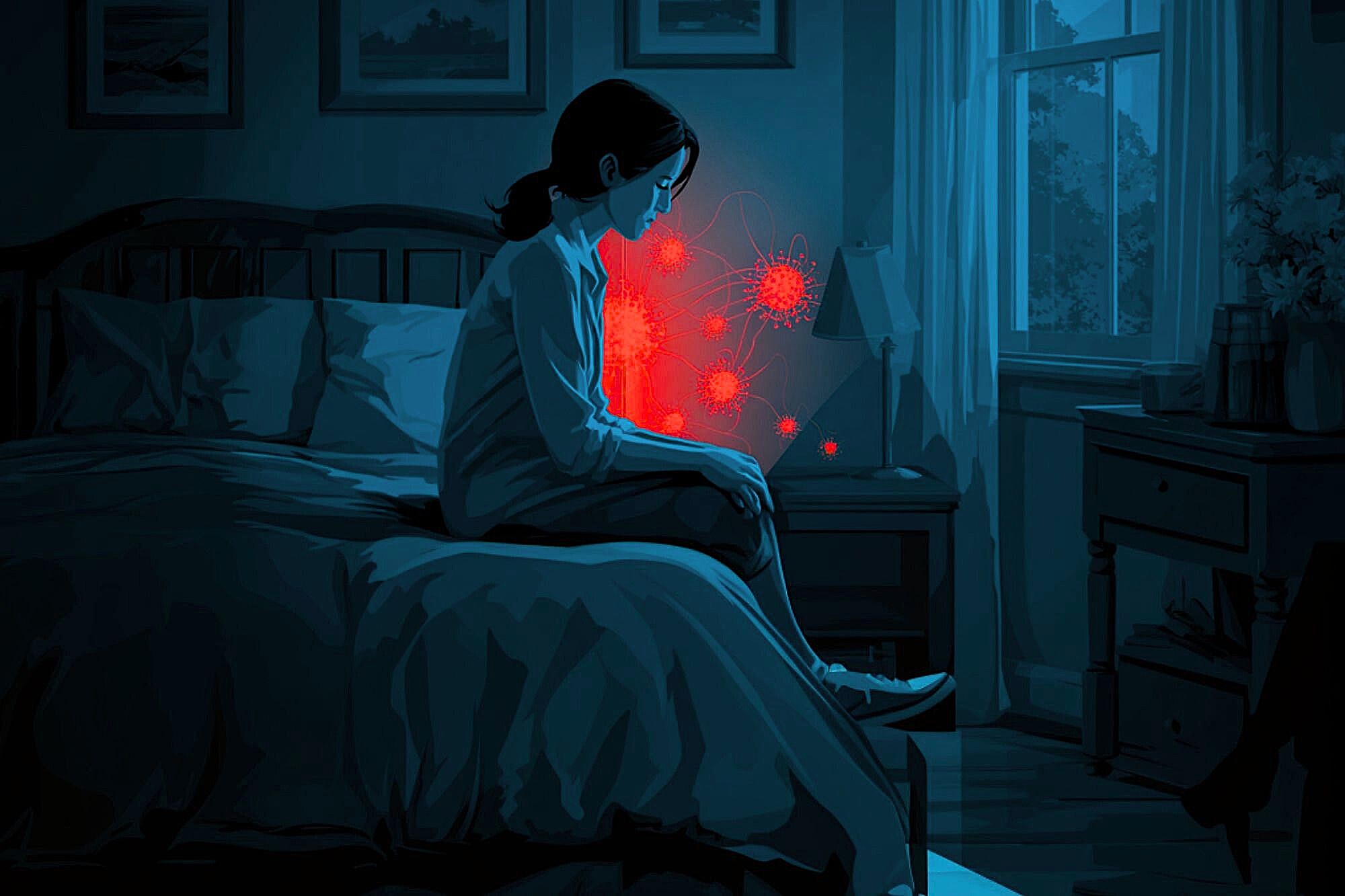
It took six years, countless doctors, and more dismissals than I can count before someone finally looked at my hypermobile joints, my chronic pain, my litany of other symptoms, and said: “I believe you, and I know what’s wrong.” Six years of knowing something was deeply wrong while being told it was anxiety, stress, or all in my head. The diagnosis—hypermobile Ehlers-Danlos Syndrome (hEDS)—brought relief and grief in equal measure. Relief at finally being believed. Grief at the permanence of it.
But what I soon began to realize was that the misunderstanding didn’t end with the diagnosis. Chronic illness remains widely misunderstood, and that gap in understanding creates isolation that makes an already difficult reality that much harder. Here’s what we’d love people to understand.
1. We’re not exaggerating or being dramatic.
When someone tells you they’re in pain, believe them. I spent six years knowing something was profoundly wrong with my body while doctors dismissed me. When even medical professionals don’t believe you, you start to doubt yourself. Am I making this up? Maybe I am being dramatic. But I can barely get out of bed. That’s not normal, is it?
The medical gaslighting was particularly insidious because it was gendered, though not always overtly so. Sometimes it was direct—like being told it was anxiety. But often it was subtler: the slight eyebrow raise when I listed my symptoms, suggesting I was getting carried away researching too much online. The patronizing tone. Everything being attributed to hormones. The dismissive “Let’s wait and see” when a male patient with the same symptoms would likely have gotten immediate testing.
And outside of medical settings, it’s not much different. But what healthy people don’t understand is that our pain scale is calibrated differently. My five is probably your eight. I’ve learned to function through levels of pain that would send most people to the emergency room because I have no choice. When we say we’re struggling, we’ve already pushed through more than you realize. We’re not complaining or attention seeking—we’re simply stating facts about our reality.
2. “But you don’t look sick” isn’t the compliment you think it is.
People say this with genuine warmth, as if they’re offering you encouragement. But what we hear is: “I don’t believe you’re as sick as you say you are.”
An invisible disability creates an impossible double bind. Look too healthy, and you’re doubted. Look too sick, and you’re pitied or avoided. My hEDS isn’t visible in my joints, but that doesn’t mean my connective tissue isn’t failing. The exhaustion of performing wellness in public—smiling through pain, moving carefully to avoid tripping over due to poor balance and proprioception, pretending I’m fine—uses energy I desperately need for actual functioning.
I’ve been glared at for using a disabled toilet. I’ve been challenged when sitting in priority seating. I’ve put on makeup because I wanted to feel human, only to hear “You look great! You must be feeling better!” No. I just put on mascara, and now I’m exhausted.
Health isn’t always visible. You can’t see diabetes, multiple sclerosis, lupus, or chronic pain. Just because someone doesn’t fit your mental image of “sick” doesn’t mean they aren’t drowning.
3. We’re not lazy—we’re literally running on empty.
Everyone gets tired. Chronic fatigue is different. Imagine your phone perpetually on three percent battery while everyone else starts each day at full charge. That’s what many people with chronic illness are working with, except we can’t just plug in overnight and reset.
My hEDS affects multiple systems simultaneously because it’s a connective tissue disorder—and connective tissue is literally everywhere in your body. That means no part of my body gets away unscathed. There’s always some symptom going on somewhere draining my metaphorical battery.
People with chronic illness make choices every day that seem absurd to healthy people: shower or make breakfast? Go to the event or have energy for work tomorrow? The calculations are constant and exhausting in themselves.
Yes, I may have gone to that birthday party. But I could barely function for three days after, even though I didn’t drink and left early. You only see the event, not the two days of rest beforehand or the week of recovery after.
When we cancel plans, we’ve literally run the numbers, and we’re in deficit. We’re not disrespecting you—we’re respecting our health.
4. “Have you tried [mainstream treatment]?” Yes. Obviously yes.
We know you mean well. You care about us, and you want to help. People hear about something that works for pain or fatigue and genuinely want to help by sharing it. But do you really think after six years of seeing specialists that I haven’t tried physical therapy?
“Have you tried seeing a doctor?” Yes, and a team of medical professionals who specialize in managing chronic pain. “What about pain medication?” I’ve tried it, became dependent on it, even though it barely touches the pain and isn’t actually recommended for chronic pain, thanks. “Maybe you need to exercise more?” I have a carefully managed exercise program designed specifically for hEDS.
Even if you mean well, the unintentional message behind “have you tried [insert thing here]” is: you’re not trying hard enough to get better. Or worse: this is somehow your fault for not doing the obvious thing.
We’re not sitting at home suffering, enjoying our misery, without seeking help. We’re actively managing our conditions as best we can. For hEDS and many other chronic conditions, there is no magic cure. There is no cure, full stop. Learning to manage and accept the condition is the treatment.
Of course, there’s a difference between genuine information sharing, for example, “I read about new hEDS research, want me to send it?” (yes, please), and prescriptive, unsolicited advice that assumes we haven’t even tried to “get better.”
We are not passively suffering. We are actively managing. If basic treatments worked, we wouldn’t be chronically ill.
5. Our “good days” don’t mean we’re cured (and we’ll pay for them later).
Chronic illness isn’t linear. It fluctuates, sometimes wildly, and I understand that’s confusing if you haven’t experienced it. I might wake up relatively functional and by noon be unable to walk. If it’s a really good day, I might only experience moderate pain all day.
The problem is, when we have good days, we’re excited too. We want to do things, see people, feel normal. But that doesn’t mean we’re better. We’re borrowing from tomorrow’s energy, and we’ll pay interest on that loan.
This creates the “good day trap.” You may see us at a lunch looking relatively okay and assume we’re “all better now.” What you don’t see is that we’re strategically using every bit of energy we have in that moment, knowing we’ll crash hard afterwards.
6. We’re not being antisocial—we’re managing our energy and symptoms.
Most people with a chronic condition or invisible (or dynamic) disability desperately want connection, but we physically can’t always manage it.
During my diagnostic journey, many of my friendships faded. People understandably got frustrated with cancellations, stopped inviting me, or couldn’t understand why I couldn’t commit to plans. These lost connections hurt, but I didn’t have the energy to maintain relationships on top of everything else.
And when I do socialize, there’s a lot of invisible preparation that goes on: strategic rest before events, careful consideration of energy expenditure, choosing which social obligation gets my limited resources. Many people with chronic conditions are managing sensory overload, physical accessibility concerns, and symptom unpredictability while trying to maintain connection.
This is what we want you to understand: When we cancel last minute, it’s not because we’re unreliable or don’t care about you. It’s because we woke up in a flare. When we leave early, it’s because we’ve hit our limit, and pushing through will cost us days of recovery. When we turn down invitations, we’re grieving that loss too. Please keep inviting us. Be flexible. Understand that low-key, local, or at-home hangouts are often easier. And know that if we spend our limited energy with you, you matter enormously to us.
7. Medical care is exhausting, expensive, and often traumatizing.
For many people, being chronically ill is essentially a full-time job. Managing chronic illness often means coordinating multiple specialists, chasing referrals and test results, fighting for necessary treatments, keeping track of medications and symptoms, and spending hours in waiting rooms. The actual appointments often happen during flares, requiring energy we don’t have. Depending on where you’re based, the financial burden is crushing—medical bills even with insurance, having to go private because of waiting times or a lack of specialism, treatments not covered, mobility aids and adaptive equipment, travel to specialists, lost income from reduced work capacity.
For me, personally, the emotional toll is worse. The medical gaslighting. The years wasted because in this day and age, doctors still don’t take a woman’s pain seriously. The hope and disappointment cycle with each new treatment.
The trauma from those years has fundamentally changed my relationship with healthcare. I now avoid doctors’ appointments when I really should go because the thought of facing another dismissal is unbearable. When I do have to go, the anxiety is overwhelming—elevated heart rate, nausea, bordering on panic attacks in the waiting room.
And then once I’m actually in the appointment, and the doctor starts their usual dismissal routine, I lose the ability to advocate for myself. I freeze. I minimize my symptoms. I apologize for taking up their time. Years of being told I was exaggerating have trained me to doubt myself in the exact moments when I need to fight hardest.
This is what medical gaslighting does—it doesn’t just delay diagnosis, it breaks down your ability to seek care even after you finally have answers.
8. Our illness is real even though you can’t see it.
Our entire medical system, our social structures, even our language around illness, is built on visible markers. If you can’t see it, it struggles to exist in the collective understanding. My hEDS means nothing to most people. My joints look mostly normal. I don’t use a mobility aid (yet). I’m relatively young. I don’t fit the mental image of “disabled.”
This creates constant legitimacy crises: disability services questioning if we’re disabled enough, parking permit judgment, accessing accommodations at work, and people thinking we’re faking it or milking it. The inconsistency makes it worse. Many people I know with hEDS use a mobility aid some days but not others. I can do something today, but not tomorrow. This looks like proof that we’re exaggerating, but it’s actually just the nature of many chronic conditions.
And the years without a formal diagnosis meant my illness wasn’t “real” even to the medical system. No diagnosis meant no legitimacy, no accommodations, no understanding.
I love this slogan from EDS UK, “Invisible illness, not imaginary illness.” Pretty much says it all.
9. Saying “At least it’s not [worse condition]” isn’t comforting; it’s invalidating.
People genuinely think the “It could be worse” mantra provides a helpful perspective. This isn’t exclusive to chronic conditions, of course. They’re trying to make you feel grateful for what you do have, to help you feel better about your situation. And whilst I’m all for the science-based power of gratitude (and I practice it daily), pain and suffering are not a competition. The fact that someone else has it worse doesn’t make my experience any less valid or difficult.
When I finally got my hEDS diagnosis, the “at least” responses started immediately. “At least it’s not the vascular type.” “At least it’s not cancer.” “At least you can still walk.” Yes, all true. I am grateful for all those things. But that doesn’t make chronic pain, fatigue, and disability any easier to live with.
By the “at least…” logic, only one person on earth—the person with the absolute worst condition—is allowed to struggle. Everyone else should just be grateful. Always. That’s absurd. And all it does is invalidate our experience, make us feel guilty for struggling, and shut down honest conversation about how we’re actually doing.
I can be grateful for what I have and acknowledge that my situation is difficult. The two things aren’t mutually exclusive.
10. We’re grieving the life we thought we’d have.
For many people, chronic illness isn’t just physical. It’s the loss of their imagined future, their former self, their capabilities, and their independence. I spent six years watching my life shrink while searching for answers. When the diagnosis eventually came, the relief of finally having an answer was inseparable from the grief of permanence. hEDS doesn’t go away. This is forever.
The layers of grief are complex: the career you can’t pursue, the activities you loved that you can’t do anymore, the spontaneity you’ve lost, the version of yourself who was capable and energetic. The small losses compound: not being able to carry my own shopping, needing help with basic tasks, feeling like a burden to the people I love.
Then there’s the toxic positivity we talked about: “At least you’re still alive.” “It could be worse.” Yes, and that doesn’t erase the grief. I can be grateful to be alive (and believe me, I am) and simultaneously upset by what I’ve lost. What we wish you understood: let us grieve. Don’t try to silver-lining it. Just acknowledge that this is really hard.
11. We’re experts in our own bodies (even if doctors disagree).
Doctors have medical training and expertise, which is valuable and necessary. But they don’t live in my body. I do. After almost eight years of chronic illness, I’ve developed a different kind of expertise that deserves respect.
I knew something was wrong for six years while doctors dismissed me, ran the wrong tests, offered the wrong diagnoses, and told me it was in my head. I knew my body better than they did, but I had no authority. Medical training teaches doctors to be skeptical of patient self-reporting, and sometimes that’s appropriate. But it often means genuine expertise is dismissed because it comes from the patient, not the provider.
The best medical care happens when both patient and provider expertise are respected. When we say, “this doesn’t feel right” or “I think it might be this,” we’re not playing doctor. We’re sharing expertise gained from thousands of hours living in this body. Please listen to us. Believe us. Work with us.
12. We’re not “letting ourselves” be defined by illness—it’s literally affecting every aspect of our lives.
People say “don’t let your illness define you” as if it’s empowering advice. But it fundamentally misunderstands the reality of chronic illness. We’re not choosing to focus on illness or letting it define us. Chronic illness, by its nature, touches every single aspect of daily life. We can’t compartmentalize it because it doesn’t work that way.
My hEDS isn’t just joint pain I experience sometimes. Pain affects my sleep, which affects my energy, which affects my ability to work. Fatigue determines whether I can wash my hair, make lunch, or socialize. POTS symptoms affect standing, walking, and thinking clearly. MCAS symptoms affect what I can do in case something triggers a reaction. Every single choice involves a careful calculation.
What people don’t see is the enormous effort we put into not letting illness consume everything—the energy spent appearing “normal” (whatever that means), maintaining interests, preserving relationships, all while building a life around chronic illness.
Final thoughts…
The gap between living with a chronic condition and witnessing it from the outside is vast, and I don’t expect you to fully understand something you haven’t experienced. But effort matters. Small changes in understanding can make enormous differences in the lives of those you know with chronic illnesses.
When you believe us, include us, and treat us as whole people managing difficult circumstances rather than tragic figures defined by illness, you’re building bridges across that gap. We’re not asking for pity or special treatment, just recognition that our experience is valid, our expertise matters, and we’re still the interesting people we’ve always been, just navigating a reality that’s a lot harder than it looks.