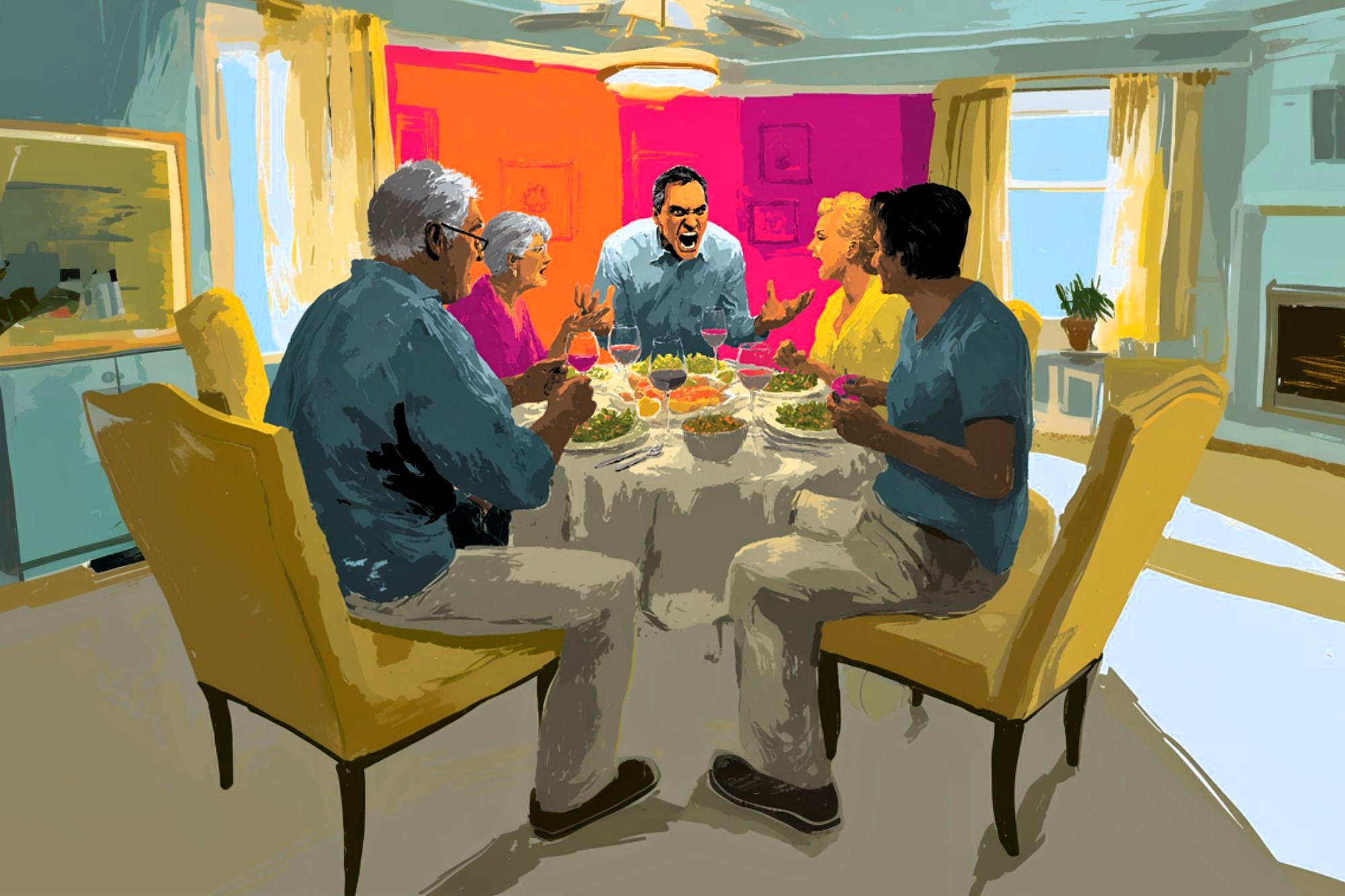
Family disagreements can spiral into anger and hostility when you don’t have healthy communication. Yes, sometimes we can’t just sit down and have a polite conversation, particularly when emotions are running high. Plus, no one can quite get under your skin like a family member when they really want to.
But healthy communication is necessary for any good relationship. Learning to engage respectfully helps ensure everyone is able to express themselves and be heard. Let’s look at some tips to do that.
1. Slow your pace.
For many, a fast pace is often synonymous with aggression and anger. Consider heavy metal music, a genre of music that is hard and heavy, that inspires passion in its listeners. You can accidentally do the same thing with the way you speak or argue. If you start rapid-firing responses at the other person, they may feel attacked.
Instead, slow the pace down. Be measured in your words, what you say, and how you say it. That way, you don’t accidentally shift the tone and force others onto a defensive footing. That’s when a disagreement will start spiraling into an argument.
I have this problem, myself. I have a naturally deep voice, and I tend to start speaking faster when I get excited or upset. I have to be measured in how I speak when I’m angry; otherwise, other people can feel intimidated and get defensive. But, after my own therapy and working on it, I’ve found it so much easier to have a disagreement or discussion by staying mindful of my cadence.
I speak methodically, calmly, and I stop to take a breath if I feel like I’m starting to get agitated too much. It keeps the overall environment calm and placid. And it’s helped my relationships a lot.
2. Use “I” statements.
A venerable piece of advice in communication is to use “I” statements instead of accusatory “You” statements. You can keep the energy lower by making a disagreement about how you feel and how it affects you, instead of making accusatory statements. Any accusatory statement can be interpreted as an attack, which can escalate the conflict beyond what you would expect.
“I feel disrespected when the dishes don’t get done like we agreed” will be received much differently than “Why don’t you ever do the dishes?” Granted, it’s a perfectly valid question, but that method of confrontation can blow up. So if your aim is actually a calm discussion and positive resolution, avoid it wherever possible.
3. Reflect back their words.
Instead of responding to a statement, if you feel at all unclear or you’re unsure of what they’re talking about, try rephrasing what they said. Then, speak it back to them to double-check to ensure that you are understanding the problem correctly. By doing this, you can help eliminate miscommunications that result in hurt feelings and more arguments.
“Okay. You feel like I don’t respect you because I agreed to do the dishes, and I’m not keeping up with it.” Once you identify the root issue, it’s much easier to develop a solution. You can’t solve a problem if you don’t understand what it is. And so many arguments are caused by misunderstandings and miscommunications. This helps you better understand the problem.
4. Don’t dredge up the past.
Nothing can fire an argument up faster than dredging up past actions. Granted, past actions can be relevant if someone is doing the same wrong things. For example, if someone is practicing weaponized incompetence, then they are going to repeatedly make the same mistake because the goal is to get you to stop asking them to do it.
However, if the past issue is not relevant, you should absolutely avoid it. Also, avoid absolute statements like, “You always do this!” Absolute statements are never 100% accurate, and you can rest assured that your family member is going to latch onto the times when it wasn’t. That, in turn, derails the entire discussion and shifts the focus of the conversation onto how you aren’t being reasonable.
5. Care more for the relationship than winning.
Instead of approaching a disagreement as you versus a family member, frame it as you and your family member versus the problem that you’re having. By doing that, you can help keep it from exploding into a full-on, adversarial conflict between you. If you focus on winning, that means someone has to lose, and that may not be a desired outcome.
“Losing” an argument, especially when you know you’re in the right, plants the seeds of resentment. It communicates to your family members that you don’t care about how they feel nearly as much as you care about winning. That’s not a good feeling to have from someone who claims to love and care about you.
6. Approach the disagreement with curiosity.
Communication is about getting the words flowing so everyone can meet in the correct place. So instead of drawing a hard conclusion and going in with that, go into the discussion with curiosity. If you don’t understand what the problem is, just say that and ask for clarification. “I’m not understanding what the problem is. Can you explain it another way for me?”
That way it gives them an opportunity to fully think about their issue and put their feelings to words. It also helps to eliminate miscommunications that happen when people start getting frustrated.
7. Know when to take a break.
There’s an old piece of advice that goes something along the lines of, “Don’t go to bed angry.” It’s an overly simplistic piece of advice that isn’t actually helpful in a lot of situations. What if you’re arguing because you’re tired? Or hungry? Or frustrated? Sometimes you need time to reset, clear your head, and come back to a discussion.
It’s alright to say, “Hey, I’m feeling overwhelmed. Can we take a few minutes to cool off and come back to it?” Some people conflate this with the silent treatment, but it’s not. It’s emotional regulation. The silent treatment is when you impose silence on your partner against their will. A mutual agreement to take a break is not the same thing.
8. End the conversation with respect.
Let’s say you have your disagreement, but you can’t seem to find a solution or common ground. Sometimes, you need to be willing to agree to disagree. You can respect what other people believe, if their beliefs aren’t harming anyone, and still disagree with them. What’s right for you may not be right for your family member, and vice versa.
That’s okay. There’s nothing wrong with that. In fact, having different perspectives can be incredibly helpful. Sometimes you need a different perspective to get a clearer view of a situation.
Final thoughts…
Healthy communication with your family should be a goal. The world outside is hard enough as it is; we shouldn’t want to make it any harder behind closed doors. Yet, so many people struggle with that. They bring their problems from the outside world into their homes, or don’t value their family members as they should.
But you can avoid that by taking the time to work on your communication skills. Disagreements don’t have to be knock-down, drag-out fights. They don’t need to be screaming or unkind. It can be as simple as having a conversation when you work together.