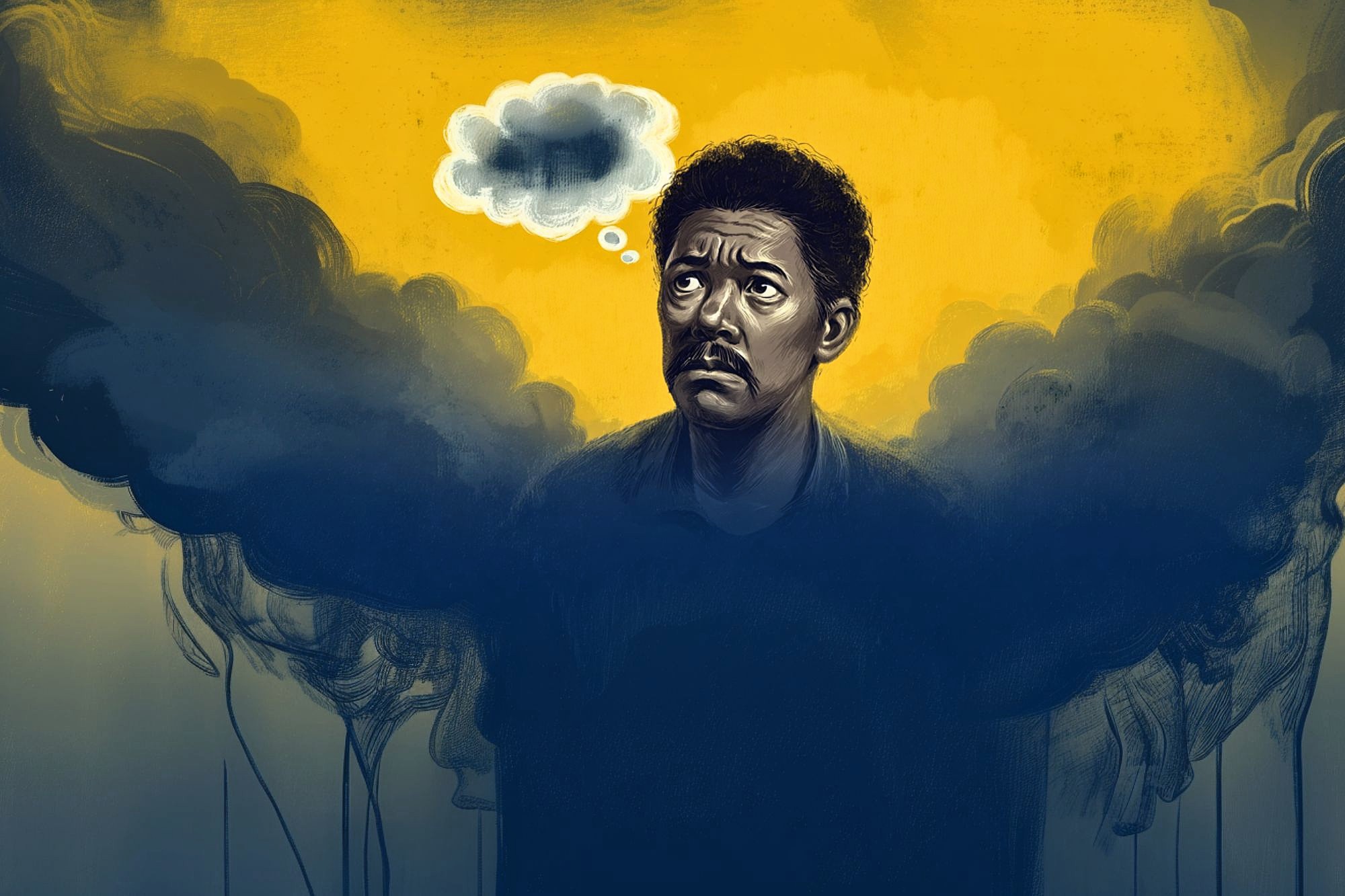
Depression is a catch-all term that’s used to help put a name to the feeling of emptiness that so many people struggle with. However, it’s not exactly a helpful word when it comes to understanding why you may be feeling that way in the first place.
Unfortunately, I know depression all too well. I’ve been living with severe depression for over 30 years now. I’ve done medication, therapy, and pulled my brain apart to understand it. What I learned is that it is important to try to drill down to something more specific. That way, you can address the issue causing it.
Let’s look at some common reasons why you’re no longer looking forward to anything, which are more specific than “depression.”
1. You are burnt out and tired.
Life is busy and hard. In this economy, a lot of people are under constant stress, working multiple jobs, and stuck in survival mode. Furthermore, they may struggle to keep up with the regular duties of life, like maintaining their home and doing laundry. Not to mention whatever other responsibilities have fallen on their plate.
We need time to recover after a stressful or busy season in our lives, but we rarely get that. There’s always something more to do, another bill to pay, another function to attend, another chore that needs finishing. Sometimes, you’re just tired, and you don’t have enough time to recover. As such, it’s no wonder you’re not looking forward to anything.
2. You’ve disconnected from the reward of effort.
There’s nothing more disappointing than realizing your efforts were in vain. Many people struggle with this in regard to their education and career. They spent all this time earning a degree or working hard at a job, and it doesn’t pay off for them. Instead, they’re saddled with debt they can’t manage or a paycheck that doesn’t cover the bills.
At some point, you may just start wondering, “What’s even the point?”
I’m old enough to remember the messaging of “go to college to get a good job or else you’ll be flipping hamburgers.” I was inundated with that messaging all throughout my youth. Now, college graduates are competing to flip hamburgers because there aren’t enough jobs to go around.
When your efforts aren’t rewarded, it’s not surprising that you’d feel disconnected from them, and from life in general.
3. You don’t trust good things.
Disappointment can poison future appreciation. If you have something good in your life, and it gets taken away, you may find that you stop trusting the good feelings. Instead, you come to identify those good things as a precursor to loss. Instead of appreciating what you have in the present, you don’t let yourself get emotionally invested because it’s going to end anyway.
I understand that mentality. I was that way for a long time. However, I made significant strides when I finally accepted one universal truth – everything changes. Yes, that good experience or thing you have going on right now is going to end, sooner or later. But so are the bad things. Everything does. The answer isn’t to separate yourself from good things. It’s to enjoy the good thing for as long as it’s here.
4. You don’t feel in control of your life.
There are few things worse than feeling out of control of your own destiny. We are pushed in so many directions by outside forces like responsibilities and bills. You may find that you get yanked completely off-course from what you desire, that it completely disheartens you. Like, why am I bothering to work so hard for an outcome that I don’t even care about?
Sometimes, we have to take drastic action to get ourselves back into alignment. As psychotherapist Sharon Martin writes, when life feels out of control, we need to focus on ourselves. That can mean leaving relationships or friendships behind, changing opinions, or learning new things. It can mean putting your effort in a different direction, which may take you closer to where you want to be.
It’s not easy. Change is often hard, especially when it’s necessary.
5. You’re overstimulated, yet underfulfilled.
Modern society is full of superficiality. Unfortunately, the superficial cannot provide the kind of intellectual and emotional nourishment that’s needed to help maintain a healthy person. We feed our minds with junk from mass media, doom-scrolling, and constant bad news, then wonder why we’re miserable.
It’s like trying to live off of nothing but instant noodles and candy. Sooner or later, you’re going to fall ill from malnutrition. The same thing is true for the brain when we don’t feed it nutritious information. After a while, your brain stops gaining whatever slim benefits it was getting from the superficial, and depression can follow.
6. You expect nothing to avoid disappointment.
This was a mistake I made for about two decades. I thought that having no expectations would lead to freedom and happiness. After all, if I didn’t expect anything, then I wouldn’t be disappointed when it didn’t work out, or when it ended. The problem is that looking forward to things helps feed into positive emotions.
It creates hope, inspiration, and happiness by looking forward to something that is positive. Yes, you can disconnect the negative by dropping expectations, but your brain can’t choose one and keep the other. It’s all or nothing. Either everything disconnects, or nothing does. A better approach is to instead maintain reasonable expectations.
7. You’ve cut off parts of your identity without realizing it.
Depression can set in when we start to feel too disconnected from who we actually are. Sometimes, we don’t even realize that we’re losing pieces of ourselves until we stop to look at them and realize what’s missing. For example, many people find themselves in a relationship with the wrong person who doesn’t appreciate them for who they are.
They start severing pieces of their own identity to make their partner happy. They may change behaviors, give up hobbies and interests, or completely change their life’s goals because they want the love and approval of their partner. What they don’t realize is that they are laying the groundwork for their own depression by disconnecting from what makes life enjoyable for them.
Healthy relationships nourish and encourage growth. Unhealthy relationships cut away at you.
8. You’ve experienced so much loss that you can no longer imagine something better.
Disappointment and struggles can cause us to focus so much on the present that we lose sight of the future. Plus, it’s hard to hope for or want things when you’ve experienced serious loss in your life. You know that having something to hold onto will eventually give way to losing that thing. Thus, you stop setting goals or looking forward to new things.
That’s a bad rut to fall into because it’s hard to get out of. People need hope. They need something to look forward to, to aspire to, to be better for, even if it’s only for themselves. Hope is hard to find once you’re plunged into the black of depression. There’s just no light to be found there. That’s the unfortunate reality for far too many people.
In closing…
Depression is a catch-all term that we use to describe different feelings of despondence, sadness, and emptiness. But having a name for it doesn’t necessarily help you to identify exactly why you feel depressed. People fall into this kind of depression for several reasons.
Some people, like myself, have a genetic predisposition for it. Others have it forced on them by their life circumstances. Identifying the cause of the depression is the key to finding the remedy. If you’re unsure, talking to a therapist may be a step in the right direction.