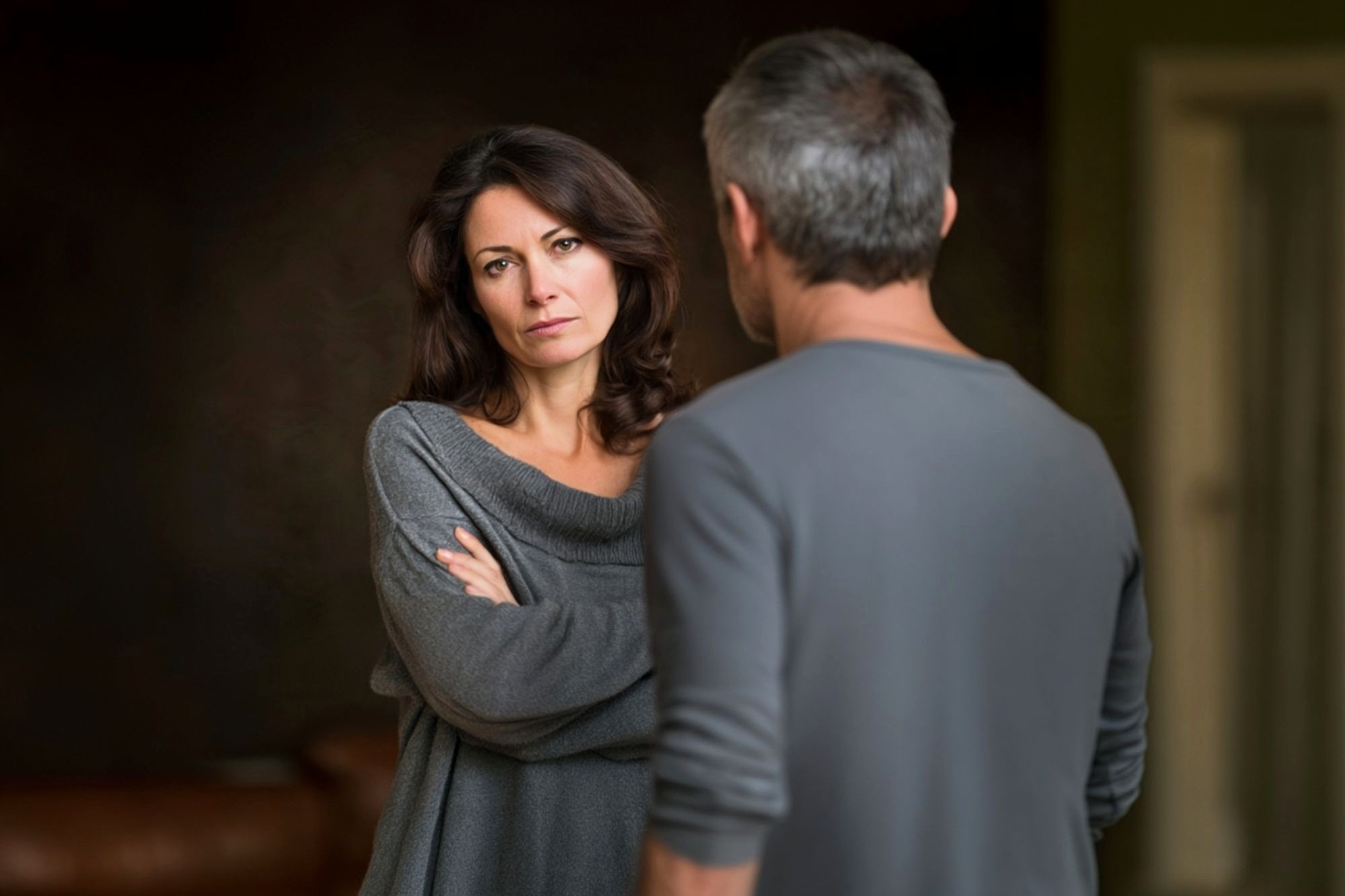
When you have a choice between being passive-aggressive or being honest in your relationship, what do you choose?
I don’t think many would openly admit to choosing passive-aggression. It would feel too vulnerable for them to even suggest they’d be that way inclined. Yet they do choose it.
They choose it for these 7 revealing reasons, and I personally think each one comes with a layer of sadness that may just surprise you.
If you’re ready to find out, I’m ready to explain exactly what I mean.
6 reasons people choose passive-aggression over honesty in their relationships:
1. Being direct felt unsafe at some point.
Was there a problem somewhere along the line with being honest?
For some people, yes.
If that honesty involved an opinion or belief that the recipient didn’t like or approve of, they’ll have learned the hard way to keep quiet and choose a route that released their frustration more indirectly.
Cue passive-aggression!
The point here is that a person may desperately want to speak up, but feels that doing so will result in more bad blood, or a confrontation they’re not equipped for.
That’s where lines such as “I’m fine,” “Nothing’s wrong,” and “Sure, whatever,” come from. That’s where the big sighs and the silent treatment can come from.
As a person who now wears their heart on their sleeve (sometimes probably a little too much), it hurts to imagine other people still feel unsafe expressing their feelings.
Relationships are meant to be safe spaces, and opening up should feel like a way to strengthen that trust and intimacy. Not something to be afraid of.
2. Confrontation is majorly intimidating for them.
Survival response: triggered.
People in these situations will do whatever it takes to steer clear of disagreements, no matter the cost.
This often stems from the belief (or experience) that all confrontation is bad or overwhelming. But believe it or not, people can discuss the nitty-gritty without shouting or creating a war. It’s quite revealing when a person doesn’t know what that is like.
Feeling intimidated isn’t comfortable, but neither is trying to repel it with passive-aggression. Ultimately, you end up feeding your own triggers by trying to protect yourself.
I think it’s also pretty ironic to be someone who indirectly insults and upsets other people and not necessarily worry about that.
Passive-aggressiveness can be equally intimidating, as the recipient is unsure of what signs they’re receiving and why.
I know someone close to me who behaves this way daily, and I often wonder if it is his way of trying to avoid the traumatic confrontations of his past.
It might be a survival strategy, but I don’t think that works well in any relationship.
3. They learned that direct communication made you “The bad guy.”
Bad guys start fights. Bad guys entice people into arguments. Bad guys create drama. Bad guys speak their minds without worrying what the consequences will be.
For many people, that belief is a learned behavior. They grow up believing that being direct automatically makes you the villain of the story.
Yet they may not know or even understand why they do what they do; they do it because it’s what they were somehow taught along the way.
Perhaps they grew up in a home where direct communication was punished or criticized, so they absorbed that speaking up makes you the problem — even when you’re simply expressing a need.
Or they watched their parents, perhaps even heard one say, “I don’t want to be known as the bad guy around here,” while also watching them behave passive‑aggressively as if that’s the safer, more acceptable option.
Feelings, needs, and opinions were swapped for this weird set of behaviors that came with ready-made excuses: the slammed door was “the wind,” the heavy sigh was because “you were tired or felt unwell.” Passive‑aggression became a way to express frustration without being the bad guy.
And you guessed it… The time will come when those kids are adults and get into relationships of their own, and they will repeat the same pattern without fully understanding why.
The sad part is that they genuinely don’t want to be seen as the bad guy, yet the passive‑aggression they use to avoid that label often makes them come across as unfriendly or cruel anyway.
4. Rejection is a big fear of theirs.
“If I speak my mind, there’s a strong chance I will end up being rejected.”
If you honestly believe that, and keep your thoughts to yourself, then resentment will quickly build. And the result? Your true thoughts are far more likely to seep out in the form of passive-aggression.
Underneath it all lies a person who is afraid to speak their mind in case the other person knocks them back.
People who fear rejection fear not being liked. They fear being abandoned or not fitting in, but most interestingly, they fear being alone.
Knowing this makes so much sense when it comes to relationships of all kinds. It’s no wonder you’d take an indirect approach rather than being completely and openly honest.
Imagine what it’s like to be close to someone who never opens up or shares their honest feelings, and I mean any at all. Instead, they unintentionally and subtly sabotage what you have with ever-growing resentment.
All because, at the root, they are very afraid.
5. Vulnerability triggers them.
Listen, I know how much it can take even the least passive-aggressive people to open up. I’m not here to shame anybody, but I am here to highlight just how much willingness and bravery to be vulnerable can transform all relationships.
It takes one step forward to get started, no matter how small that step may be. But for some, that’s an inherently impossible task because they find it so triggering.
There may have been a time in the past when they did open up and were mocked, dismissed, or ignored altogether. “I’m never doing that again” is their motto, and they stick with it.
What goes on instead is a resentment-filled approach of passive-aggression that they just become comfortable with and used to.
Unfortunately, that never bodes well for relationships, though, because it acts as such a huge wall that is constantly up around that person. You just can’t have a healthy relationship without vulnerability.
6. They think their feelings won’t be taken seriously.
Why? That’s the big question I want to ask here, because we should live in a world where anyone gets laughed at or dismissed for expressing their honest thoughts.
Did you ever speak up and receive a nonchalant ‘you don’t matter’ wave of the hand, as you were shooed away? I can recall times growing up when that happened to me with one particular person in my life. It made me feel angry that I wasn’t allowed an opinion or that my opinion was viewed as unimportant.
I know that with this person in particular, it was because I was a young woman and he was a man who apparently knew better, and it did make me react passive-aggressively toward him over time.
We aren’t in contact anymore, thankfully, but it just goes to show how much people can affect how you think and behave, and in turn how that later affects your own relationships with people.
Final thoughts…
For some people, honesty in relationships is an absolute no-no. They don’t, because they can’t, and they can’t because fear of speaking up has been woven into the fabric of their very being.
Passive-aggressiveness is like a safety blanket, worn around those who want to be protected from something, but can’t yet admit what.
But maybe, just maybe, it’s time to hold that fear and accept it, rather than hide it any longer. You won’t be able to have a meaningful, healthy relationship if you don’t.