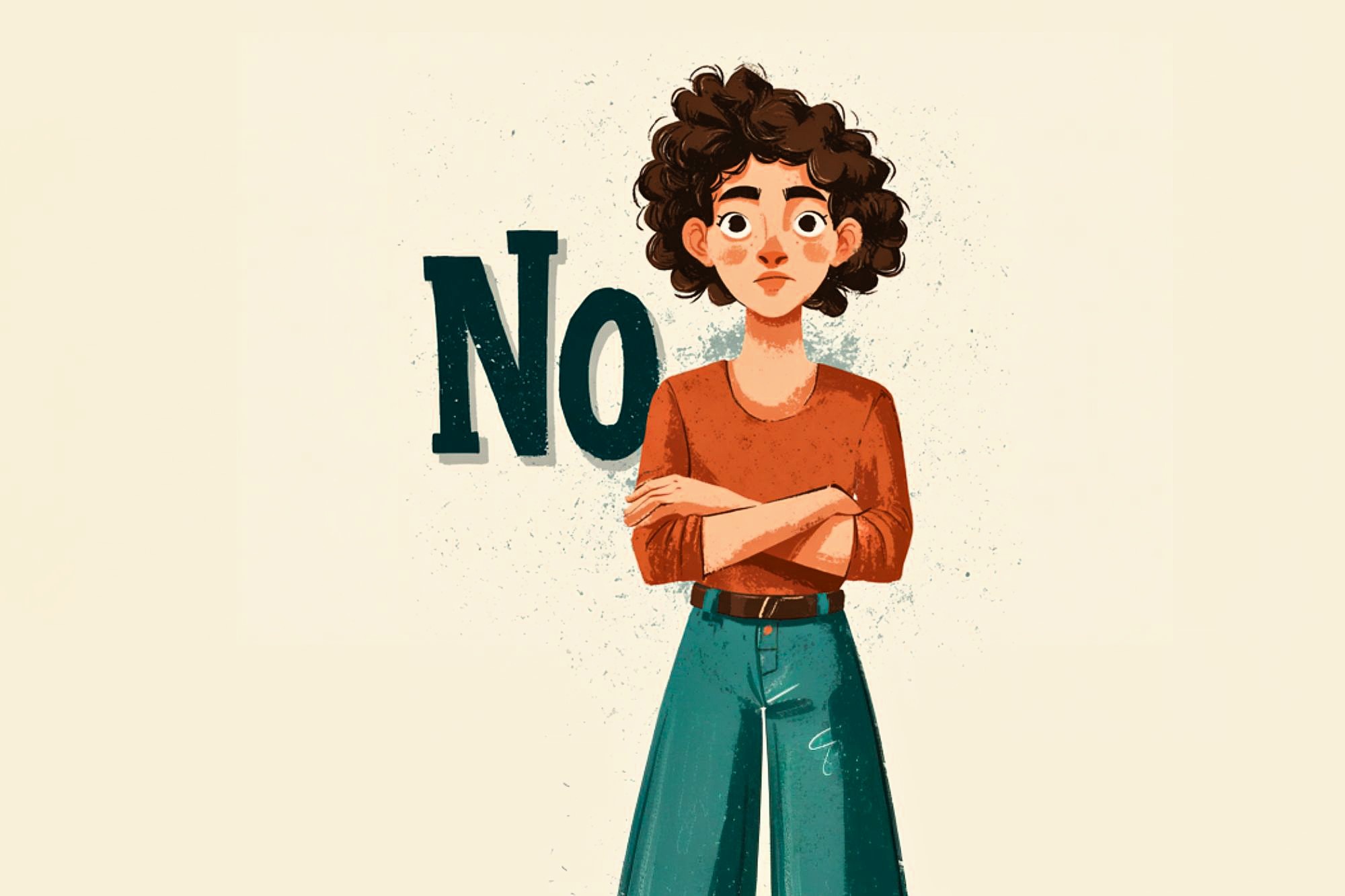
There are many small moments in life when you need to say no to protect your space and peace of mind. The ability to say “no” demonstrates that you value and love yourself, because not every situation is going to be right for you.
Healthy boundaries are reinforced with the word “no”. It’s the simplest way to communicate that something is not okay with you, and that you don’t appreciate your boundaries being pushed any further. However, it’s not always the big, loud times where “no” matters. In fact, it’s often the smaller times. Times like these:
1. When someone asks for a quick favor that turns out not to be quick.
“C’mon, it’ll just take a few minutes.” Next thing you know, it’s four hours later. Few things are more annoying and disruptive than someone who doesn’t respect your time. I had this problem with a friend for a long time, because they never felt it was worthwhile to try to make an accurate time assessment about how long an activity would actually take.
As someone who is autistic and highly values structure and predictability, that few minutes turning into four hours is something that bothered me a lot. Particularly since I put much effort into making sure I don’t do that to other people. If I say it’ll be an hour, it’ll probably be an hour, or I won’t hold it against you if it’s taking longer and you have to go.
It’s just a matter of respect. If someone takes advantage of your good nature like that, then it’s only reasonable for you to value yourself over their inconsideration. In the case of my friend, I eventually told them I wasn’t available to help them anymore for exactly that reason. They opted to discontinue the friendship, and that was fine with me. It was clear they didn’t value my comfort or respect my boundary.
2. When you’d be saying yes just to avoid their disappointment.
There comes a point when you need to learn to be okay with letting other people be disappointed that you didn’t conform to their wishes. Now, it’s important to view that as a different thing from being disappointed in you as a person. They’re not the same thing.
Typically, manipulators will be more concerned that you aren’t agreeing to their requests or demands. They want you to feel bad about saying no so that they can take advantage of your time, effort, and energy. That’s different than someone being disappointed that you actually did something wrong, as opposed to not being available.
It’s okay to let people down sometimes. It’s an act of self-love to put yourself first if your needs are more important at the moment.
3. When you’re offered something that looks good, but feels wrong.
Intuition can play a major role in your life if you learn to listen to your gut. Of course, that’s easier said than done. Sometimes, it’s easy to confuse intuition with anxiety. For example, you may have bad vibes about an offer, but that may be due to anxiety or fear of the unknown, particularly if it’s a big opportunity. Thankfully, experts share information on how to separate the two from a research-oriented perspective.
Personally, I find that intuition tends not to be as loud as fear. Intuition is more of a quiet feeling of wrongness, like “this seems too good to be true” or this person is only offering this to me to get something out of me later. That’s worth listening to. If your gut is telling you that something is wrong, there’s no shame in looking for more information or just saying no.
Learning when to say no is one of the biggest contributors to success. Otherwise, you just end up wasting a bunch of time on things that don’t matter to you and your goals.
4. When you’re the “responsible one” in the group.
The people who are wired to make things happen often get saddled with a bunch of unappreciated labor and responsibility. Other people see that they are willing to step up, so they step down. At some point, though, the responsible one in a group usually needs to set some boundaries for their own well-being. Takers will take for as long as givers will allow them. Takers don’t have limits, but givers do.
Sometimes, you just have to say no and decline to do the labor for the group. Maybe that’s planning a big function for you and your friends, or family gatherings, or picking up the slack at work. Of course, unreasonable people will get mad at you for establishing boundaries. Those are the people that you want to keep an eye on. There’s a good chance they’re taking advantage of you or that they don’t appreciate you.
5. When you feel like a joke crosses one of your lines.
Nowadays, there is a whole lot of vitriol and cruelty hidden between the lines of so-called jokes. You’re not overreacting if a joke makes you feel wrong or uncomfortable. It’s okay to speak up about that and call the person out if you feel like what they are doing is harmful. Malicious people hide behind the plausible deniability of humor because they tend to think everyone else is stupid.
They deflect. They say things like, “It’s not that deep,” or “You’re taking this way too seriously.” And you know what? Maybe you are, but it is your right to do that if you’re made to feel uncomfortable by another person’s jokes.
It could also just be that you’re around the wrong people. Like, my sense of humor can get pretty dark, but that’s because it was a coping mechanism for some dark things. I don’t expect everyone to like dark humor, and I only share dark humor in spaces where it’s appreciated. I am aware that some people may find those kinds of jokes upsetting, and that’s okay. Other people’s feelings matter too. And your feelings matter, regardless of how others may try to make you feel.
6. When you simply don’t want to do the thing.
You don’t owe anyone your agreement. If you don’t want to do something, you are well within your rights to say no for whatever reason you want, including none at all. It’s alright to say, “I don’t want to do that,” and not offer an explanation if you so desire. You don’t have to have a reason.
Unfortunately, other people are generally going to struggle with that unless they are emotionally intelligent. Some people might take offense to it. Others may think it’s some kind of ploy, or that they should be trying to convince you to step past the boundary you just set. That’s not a healthy approach or outlook from the other person.
They should feel more inclined to respect your wishes and desires than not. Unfortunately, that isn’t always how it works out.
Final thoughts…
It’s okay to value yourself and your peace over what the rest of the world demands of you. It’s true that we’ll inevitably end up sacrificing much of ourselves over the course of our lives. Once you have a family, there are always demands and responsibilities that you can’t necessarily ignore.
However, you are entitled to have your own time and space. If you don’t want to do something, and you value yourself enough to say no, then other people can just deal with it. That’s the way it has to be sometimes, unfortunately.