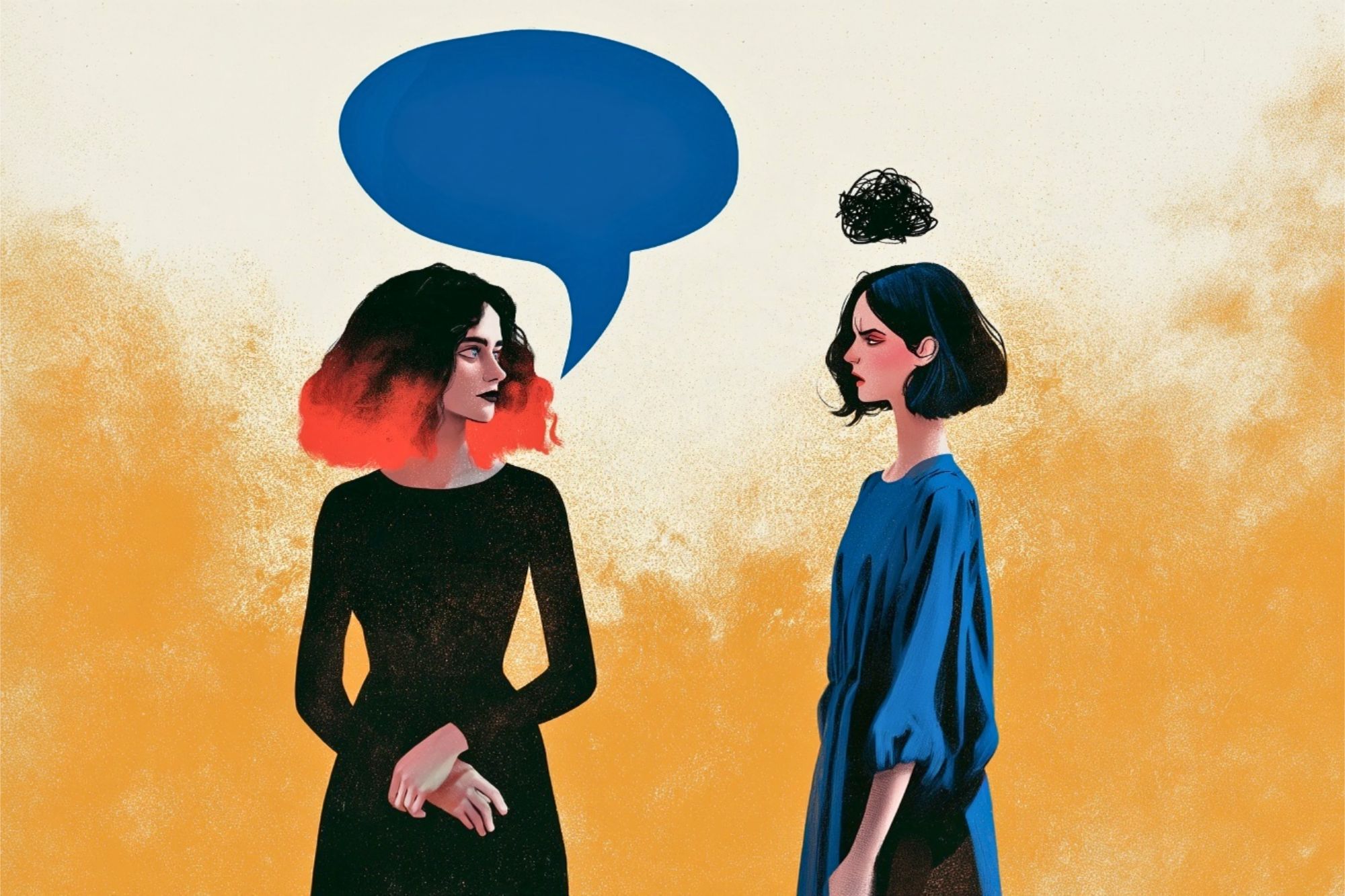
People who have low emotional intelligence don’t just have difficulty recognizing and regulating their own emotions: they also have problems with recognizing, acknowledging, or validating what other people are feeling. They often lack empathy and get irritated when others show emotions that they either can’t relate to or don’t want to deal with.
As a result, they may use phrases such as the ones listed here, which can be incredibly hurtful to those around them — especially when those people are already dealing with difficulty.
1. “That’s your best effort?”
People have different capabilities, and one individual’s best may be another’s worst. For example, a person who has dyscalculia will never be able to do maths because they can’t, but someone who’s great at algebra can’t comprehend this. As a result, if they lack emotional intelligence, they’ll assume that the people who are struggling are simply being lazy.
This phrase is usually accompanied by a generous side helping of sarcasm and scorn. This unhelpful offering can put the brakes on even fairly resilient individuals if it catches them at a vulnerable moment, as it isn’t taking their efforts into context at all. It shows that this individual thinks that belittling others is acceptable and that whoever doesn’t match their abilities isn’t worth their time.
2. “That’s just how it is, get used to it.”
An invalidating phrase like this demonstrates a complete lack of empathy or compassion. Yes, bad things happen, but it doesn’t take much to offer a few words of kindness or reassurance to a person who’s experiencing them.
A perfect example of this was when my best friend died: I reached out to my dad about it, and his response was simply: “People die. Get used to it.” The unspoken message here was that neither my friend nor I was worth any kind of attention or effort, and told me that I was simply an irritation and nothing more.
Interestingly enough, not two weeks after this occurred, a close friend of my mum’s passed away, and my dad was upset with me for not expressing a sufficient amount of sympathy to the family for her passing. This hypocrisy made it clear that I’m not a person in his eyes, and was yet another nail in the coffin of our relationship.
3. “You’re just being dramatic.”
Those who have little tolerance or understanding for other people’s emotions will often tell others to calm down and stop being dramatic whenever they express feelings that they don’t want to deal with, or that they feel aren’t warranted in a situation. It never occurs to them that there’s any truth behind these reactions: they simply seek to control or silence whatever doesn’t serve them and their wants in the moment.
These are the same people who will brush off truly offensive or disrespectful behavior as “just a joke” and imply that the person who didn’t like having food smeared in their face or their new belongings set on fire has no sense of humor and is getting upset for no valid reason. They might even seek to punish that person for embarrassing them by not playing along with their “joke”.
4. “I’m sorry you feel that way.”
This type of non-apology is a way that people with low emotional intelligence avoid accountability for their poor behavior. It implies that the person who’s upset is the one who’s in the wrong, and that they’re simply being humored for their silly little outburst.
What makes this phrase particularly insidious is that it masquerades as an apology while actually being anything but. A genuine apology acknowledges wrongdoing and takes responsibility: “I’m sorry I hurt you” or “I’m sorry for what I did.” But “I’m sorry you feel that way” shifts the blame entirely onto the hurt person’s emotional response, as if their feelings are the problem rather than the behavior that caused them.
It’s a manipulative tactic that allows someone to appear reasonable and conciliatory on the surface while refusing to engage with the real issue at hand—their own actions and the impact they’ve had on others.
5. “Why are you/aren’t you doing X, Y, Z thing?”
When someone asks you, often over and over again, why you are training, painting, or doing whatever it is you have chosen to do, they are going out of their way to interfere with what you are doing and wasting both of your time for no benefit.
The truth is that they feel uncomfortable with your life choices. But instead of thinking “That’s their choice, it’s not for me to decide, or it’s beyond my scope,” people with low emotional intelligence instead try to deter you from doing what you’re doing to make themselves feel more comfortable.
The same goes for a person who asks why you aren’t doing X, Y, or Z. They can’t seem to conceive of the idea that other people aren’t interested in the same things that they’re into. This can range from having kids to watching certain TV series, buying property, and so on. People take part in what they’re into and avoid what they aren’t. End of.
6. “Be quiet now, the adults are talking.”
This phrase is immensely disrespectful and condescending, as it implies that the person being shushed isn’t mature enough to engage in conversation and that their input is too infantile to be welcome in the discussion. People with low emotional intelligence use this phrase to dismiss those they feel are inferior to them, while simultaneously implying that they’re better and more mature than the one they’re trying to silence.
It’s often used by those who want to impress people around them by showing off how terribly superior they are to someone they’ve made the butt of their negative attention. It’s usually done by people who need to make others feel small to feel big themselves. But those who say this phrase don’t often realize that they’re actually losing others’ respect by doing so.
7. “You’re not high value.”
We see phrases about “high value” bandied about online nowadays, and it implies that people are things that can have monetary price tags attached to them. Telling someone that they aren’t a worthy human being because they don’t hold the same value as a fancy watch or a car is dehumanizing and shows complete disregard for truly important traits, such as grace under pressure, nobility of spirit, kindness (even when it’s difficult), and protection towards the vulnerable.
Expensive belongings and flawless bodies don’t make a person a decent individual. Who are they without these things? If they lost their wealth and physical fitness, would they even be tolerable to spend time with?
Those who see the world in terms of monetary worth believe that certain things and people have no intrinsic value to anyone, but are instead defined by status and belongings. The thing is, an ornate armring doesn’t make someone a chieftain — the ability to lead and protect their people does, as well as the resolve to sacrifice themselves if necessary for the good of their tribe.
Final thoughts…
Quite often, it isn’t phrases like these per se that are so hurtful, so much as their repetition. When someone who claims to care about you says these things over and over again, they make it abundantly clear that you — and your emotions — are not all that important to them. Or, even more sadly, that they don’t have the emotional capability to treat you as you deserve. While some people with low emotional intelligence may develop it in time, the majority of them stagnate and can’t understand why they keep pushing people away.