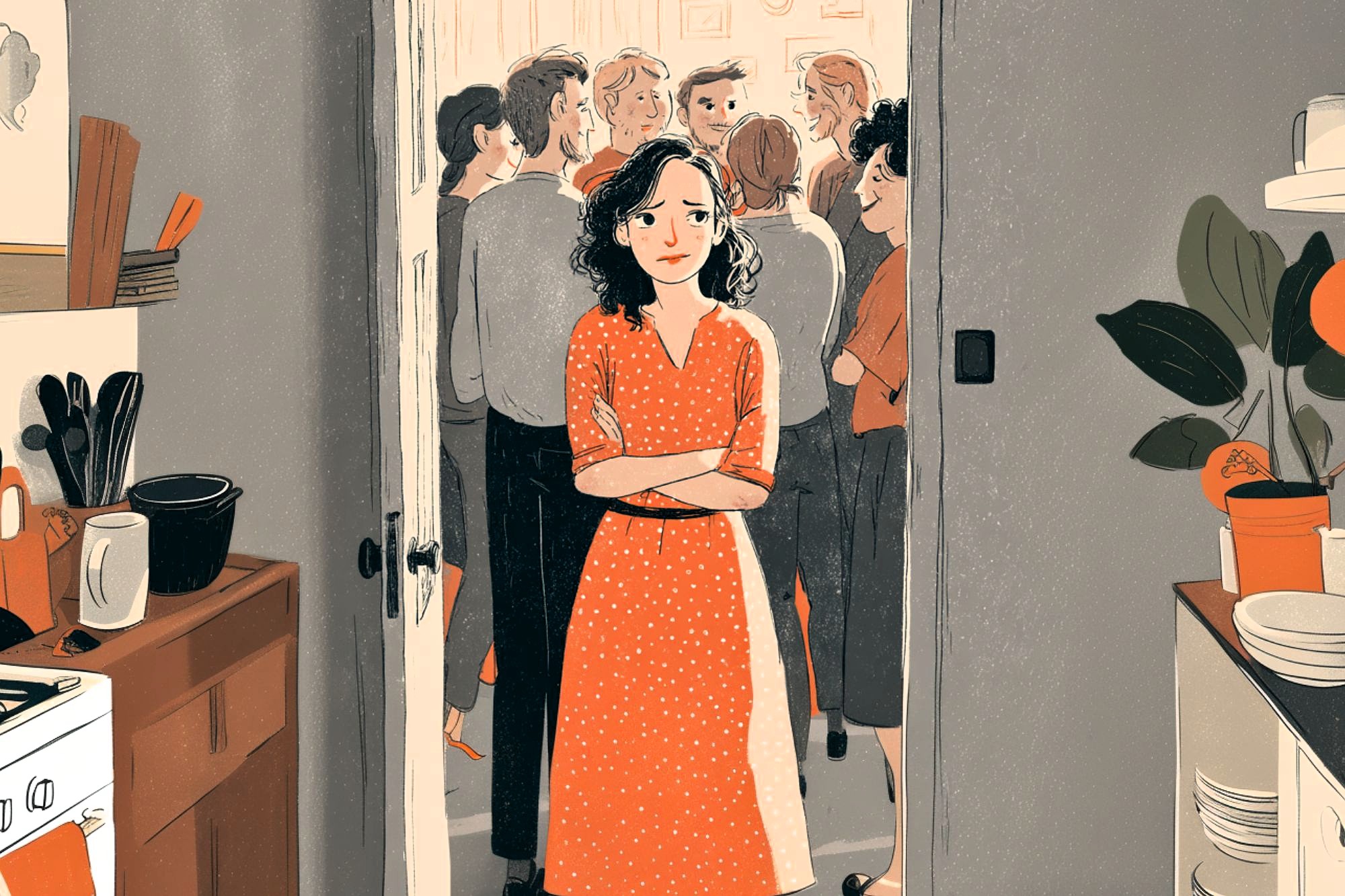
Do you feel safe and free to express yourself as you need to? It’s a lonely feeling when you’re surrounded by people who should be understanding and accepting but aren’t. Or maybe it’s not all on them. Maybe they would be willing to hear you, but you struggle to have healthy communication and emotional vulnerability because it wasn’t modeled well for you in life.
Either way, instead of being open and able to make that connection, people who struggle to communicate their needs often exhibit behaviors such as these. If any of them sound familiar, it’s a good sign you’re suppressing your true feelings, and your relationships and well-being will be suffering as a result.
1. They reflexively reply with “I’m fine” to any inquiry.
Personally, I’m someone who buried my real feelings for a long time. I live with Bipolar Disorder, and I didn’t understand what was going on in my head, often. Before I was diagnosed, I felt like I should be able to manage everything that was going on. The few times I tried to talk to other people, they would look at me with shock or fear.
Alternatively, they would sometimes downplay what I was feeling because they didn’t understand that something was seriously wrong. Thus, “I’m fine” became my reflexive response to anyone asking how I was doing. It’s nice and neutral, and people don’t tend to ask any more uncomfortable questions after that.
Many people use “I’m fine” as a deflection when they are, in fact, not fine at all. And even if you want to answer completely honestly, it can still slip out. As I was breaking the habit, I would find that I would habitually respond with “I’m fine,” but then need to backtrack to open up the conversation with something like, “Actually, I’m not fine. I said that out of habit. Can we talk about…?”
2. They downplay their own needs using qualifiers and minimizers.
Many “low maintenance” people are actually avoiding or neglecting their needs instead of voicing them. They may have been taught that their needs aren’t important through a neglectful childhood or abusive relationships. They may not want to impose on others because they feel that if they do impose, the other person will abandon them.
In conversation, this can manifest as the person softening or walking back their needs. They may say things like, “If you don’t mind…” or “It’s not a big deal, but can we…” That way, they are presenting their needs but still softening them enough to try to make it palatable to the receiver.
But that’s just not something that should be necessary in a healthy relationship. Your needs are your needs, and assuming they are actually reasonable, you don’t have to qualify or downplay them.
3. They rely on hints instead of directly communicating their feelings.
People who aren’t assertive or who have been abused into believing their feelings don’t matter may rely on hints more than direct communication. They’ve been taught that direct communication may bring dire consequences – like abuse, being yelled at, or having their feelings minimized. Thus, they drop hints, and they hope other people will care enough to notice and interpret them correctly.
That, however, is a direct route to frustration because there are so many points of failure along the path of trying to get your needs met through hints. First, the other person needs to notice them. Second, they need to be able to interpret them correctly. Third, they need to then determine the appropriate response.
Compare that to direct communication, where you tell someone what’s wrong and what the remedy is. It’s worth doing because the people you want to have around you will want you to feel safe and comfortable enough to express yourself. And if they don’t, then they may not be the right people to be around.
4. They often struggle with resentment.
One issue I ran into in my own healing journey was the idea that resentment can just pile up. When you have unaddressed emotions or needs, they don’t just disappear into the ether. Instead, they pile up in the dusty corners of your brain, taking up space and causing more problems for you as time goes on. And that starts leaking out as anger, disappointment, and greater resentment.
You may not be able to exactly pinpoint where it’s coming from. All you know is that when you look at the other person, you feel that bitterness of resentment creep in. It’s because they aren’t meeting whatever emotional needs or expectations you may have for them. And in any relationship, it is normal to have expectations of emotional intimacy and connection.
5. They overshare with the wrong people.
Instead of talking about it with the people who matter, these people may instead overshare with others who aren’t involved. That could be random strangers in their life, coworkers, or even just venting on social media to no one in particular. What this person does not do is bring their issues up with the people who are actually involved, who can solve the problem.
It may seem like communicating your needs, but venting to random people is a form of avoidance because those people aren’t contributing to the issue (and thus the solution). It’s almost like a type of rumination, where you just sit and stew in the negative emotions in a way that will not be helpful.
6. They avoid important conflicts.
Sometimes conflict is important. Conflict happens even in healthy relationships because everyone is different. Sometimes, you will brush up against one another’s boundaries, and then you need to address the issue. You need to be able to make your needs and emotions heard, as do they. Then, you need to work together to ensure that conflict doesn’t happen again.
Not only is this a normal part of relationships, but it also builds trust between people. It’s one thing for a person to say, “I care about you.” It’s quite another to demonstrate it by showing they care by understanding your needs and boundaries, and working to respect them. That takes actual effort. The words “I care about you” are virtually meaningless without action because anyone can say them.
But someone cannot demonstrate that they are willing to respect your boundaries and build that trust if you avoid conflict and don’t communicate what they are.
7. They rehearse conversations that they won’t have.
A person who struggles in this situation may be able to perfectly articulate their problem, why they’re experiencing it, and what the solution is. However, they can’t express it to the people who actually need to hear it. Instead, they ruminate on it, rehearsing it over and over in their head as they struggle with it.
That’s a bad sign for the relationship because that means communication has broken down. No relationship can flourish when the participants can’t talk to one another openly. Instead, it becomes a one-sided affair, where the person who can’t express themselves becomes an emotional pack mule. They carry the load for the whole relationship when it should be carried by everyone involved.
8. They feel lonely in their groups of people.
In the film World’s Greatest Dad, Robin Williams’ character laments, “I used to think the worst thing in life was to end up all alone. It’s not. The worst thing in life is to end up with people who make you feel alone.”
That is an unfortunately common truth for many people because they don’t bring up their emotional needs and true feelings to the people that matter. They aren’t giving their people the chance to forge those deep emotional connections with them. They aren’t allowing themselves to be truly seen and known. Instead, their loved ones are getting a sanitized version of that person, whom they may eventually realize they don’t know at all.
The people that you surround yourself with should be able to accept you for who you are, flaws and all. To be clear, that doesn’t mean that they accept terrible behavior. Far too many people use that reasoning as an excuse to persist with bad behaviors. But it does mean that they accept your needs and feelings, though.
Closing thoughts…
There are few things worse than feeling alone and unheard around people you’re supposed to be close to. The unfortunate truth is that many people stay in situations or circumstances that don’t fit them. They stay silent because they may be afraid of rejection or the other person being unkind.
The problem is that it does long-term harm. When you repeat a bad pattern enough, it becomes a bad habit. Once it becomes a bad habit, then not only do you have to learn new habits, but you have to unmake the old ones while unraveling the harm they caused.
It’s far better to be open and honest, so the negative people can weed themselves out. It’s better to be alone than to try to have close relationships with the wrong people.