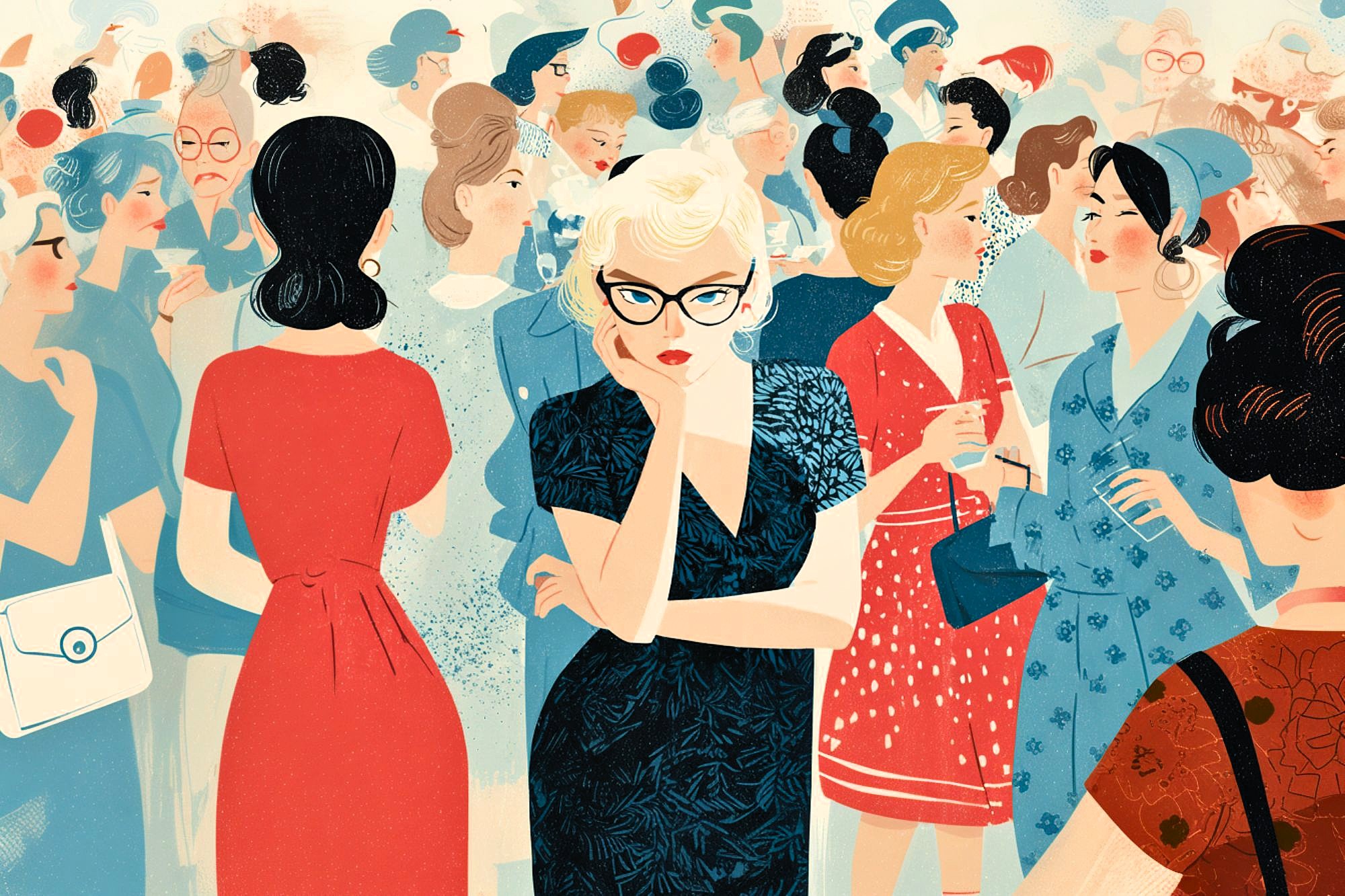
Most of us have cultivated a variety of social circles over the years. Some were by proximity, such as befriending a group of people at work and hanging out with them regularly, while others came about through shared interests or experiences.
That said, as the saying goes, people are in our lives for a reason, a season, or a lifetime, and the reality is that very few fall into the latter category. It’s perfectly normal to evolve past your existing social circle as you grow as an individual, so here are the signs to look out for that your fellowship is coming to an end.
1. You suddenly realize that their interests and priorities are astonishingly different from your own.
Over 20 years ago, I had a regular brunch meetup with some women in one of my social circles. We all got along quite well, but over a period of several months, I realized that I had less and less in common with them. This epiphany culminated in a final shared meal in which I couldn’t contribute anything to the group discussion without coming across as contemptuous.
It’s normal and completely okay to shift priorities over time, especially if you experience things that change your perspective on various things. If you feel that your current social circle has stalled at a particular point in their personal development, and that they don’t share the values and priorities that you’ve developed, then that’s a huge sign. It’s time to let those friendships go and spend more time with those who resonate at the same frequency that you do.
2. You feel drained after spending time with them.
When you have a great social circle that you look forward to seeing on a regular basis, time often flies when you’re with them. Hours fly by like minutes, and you might even feel sad when you part ways because of the time you’ll have to spend apart.
In contrast, when you’re no longer aligned with your usual social group, spending time with them leaves you feeling drained. You brace yourself for interactions instead of joining in eagerly, and you may find yourself making excuses for why you can’t attend various functions. In fact, you may realize that you don’t actually like these people much at all anymore, and you’d rather spend time alone (or with others you know) instead of them.
3. Your focus on personal growth or spirituality draws mockery from them.
Many people become more introspective and spiritual as they age, though the form that takes will differ from one individual to another. Similarly, some people make major life changes like changing careers to things that are more soul-nourishing, or becoming vegan and starting an animal sanctuary.
If your social circle makes fun of you for the growth you’re experiencing rather than being supportive, that tells you that you’ve evolved beyond that particular group. This isn’t to say that they’re lesser human beings: they simply aren’t at the same point in their personal journey as you are. You’re blooming into your full self, while they may still be in the bulb or bud stage, but they’ll get to where they need to be in time.
4. You find yourself disappointed in or embarrassed by their behavior.
Whereas you might have found your friends’ antics hilarious several years ago, you may now find them childish and embarrassing. Perhaps you aren’t sure when it happened, but at some point, you continued evolving and growing as a person, while your friends experienced a sort of arrested development at a certain age.
It’s all well and good if they’re happy to behave the same way they did 20 years ago, but if you’re not there anymore, nor do you want to be, that’s ok too. Maybe they’re still keen on clubbing until dawn, or find it terribly amusing to set their gas on fire, but you moved past all that a long time ago. You’ve been humoring them for years because you didn’t want to seem judgmental or mean, but now you’ve reached the point where you can’t take it anymore. If this sounds familiar, it’s time to move on whilst still things are still amicable.
5. You don’t share their unhappiness or complaints.
It’s strange when the people around you complain bitterly about the things that bring you joy, or that you’re trying to navigate with grace. For example, if you’re both around the same age, but these people are constantly bemoaning how much they despise the aging process while your goal is accepting (or even enjoying!) it, that can be both draining and disheartening.
Similarly, if they’re in the same business as you or have similar lifestyles, and your life is fulfilling while theirs makes them miserable, it becomes quite difficult to put up with their litany of grievances.
Whilst obviously it’s good to support your friends through hard times, and no one should be expected to be peppy all the time, relentless negativity will eventually wear not only the friendship down, but your spirit too. Don’t let it.
6. Your friends condemn you for changing.
People change a great deal over the years, and you might have made some major changes that resulted in you no longer meshing with your current social circle. A perfect example of this is if your social circle is heavily enmeshed in a drinking culture, and you’ve decided to go sober for health or personal reasons.
If your social circle doesn’t support your personal decisions, or downright condemns you for the changes you’ve made, that’s a clear sign that you’ve evolved beyond their company. Some people hit a wall in terms of their personal development, while others keep growing and changing until their dying day. Don’t feel obligated to halt your evolution for the sake of making others more comfortable.
7. You realize the only things you have in common are aspects of your distant past.
Some people maintain the same social circle for decades: they cultivated a close friend group in high school or college, for example, because those were the people they were around on a daily basis. They hold onto these friendships out of loyalty and shared history, but most people change a great deal between the ages of 17 and 47 (and beyond).
As such, perhaps you’ve come to the realization that the only things your group ever discusses are the things that happened over 30 years ago. Your shared history is really all you have in common. It might be that you’re completely different people now, and your camaraderie feels more like an obligation than sincere kinship.
Though this can be hard to accept, once you do, that chain of obligation is loosened, and you feel free to pursue friendships with those of like mind instead.
8. You feel that you’re speaking a different language.
If the people in your social circle keep misunderstanding what you share with them, that’s often a strong indicator that you’re no longer on the same wavelength. Maybe they laugh off or dismiss the topics you discuss as being “too deep,” or look at you like you suddenly started speaking Klingon and they have no idea what you’re talking about.
When you suddenly realize that you’re almost literally speaking a language that your social circle doesn’t understand, you recognize that it’s time to move on. There are countless other people out there who will “grok” you, and it’s much more encouraging — and fulfilling — to sing along with those who can harmonize with you.
9. Their ethics (or lack thereof) don’t align with your own anymore.
Have you ever spent time with your social group, generally enjoying yourself, until one of them said something that you found appalling, and the rest nodded and murmured in agreement, much to your horror and dismay? When that happens, there’s a cold, stark realization that you’re the puzzle piece that no longer belongs in that picture.
It’s disheartening when you find yourself the odd one out, but it also offers you the opportunity to reevaluate your acquaintanceships. For example, if you’ve dedicated yourself to working for the greater good, and those in your social circle are actively working against your efforts, then not only is it in your best interests to part ways, it would wear away at your soul if you didn’t.
Final thoughts…
Most of us aren’t in the same careers or relationships we had in our early twenties. We got promotions or pursued different career options, and outgrew those early partnerships to find paths and people that suited our goals and personalities better. These evolutions are seen as perfectly normal, but most people believe that friend circles should somehow last forever, even if you’ve evolved beyond them. They shouldn’t. It’s perfectly natural for friendships to fall away as you get older.
Never feel obligated to remain in situations that you feel are detrimental to your personal growth and well-being for the sake of people-pleasing or avoiding potential conflict. Life is far too short to spend with people who don’t bring you joy anymore.