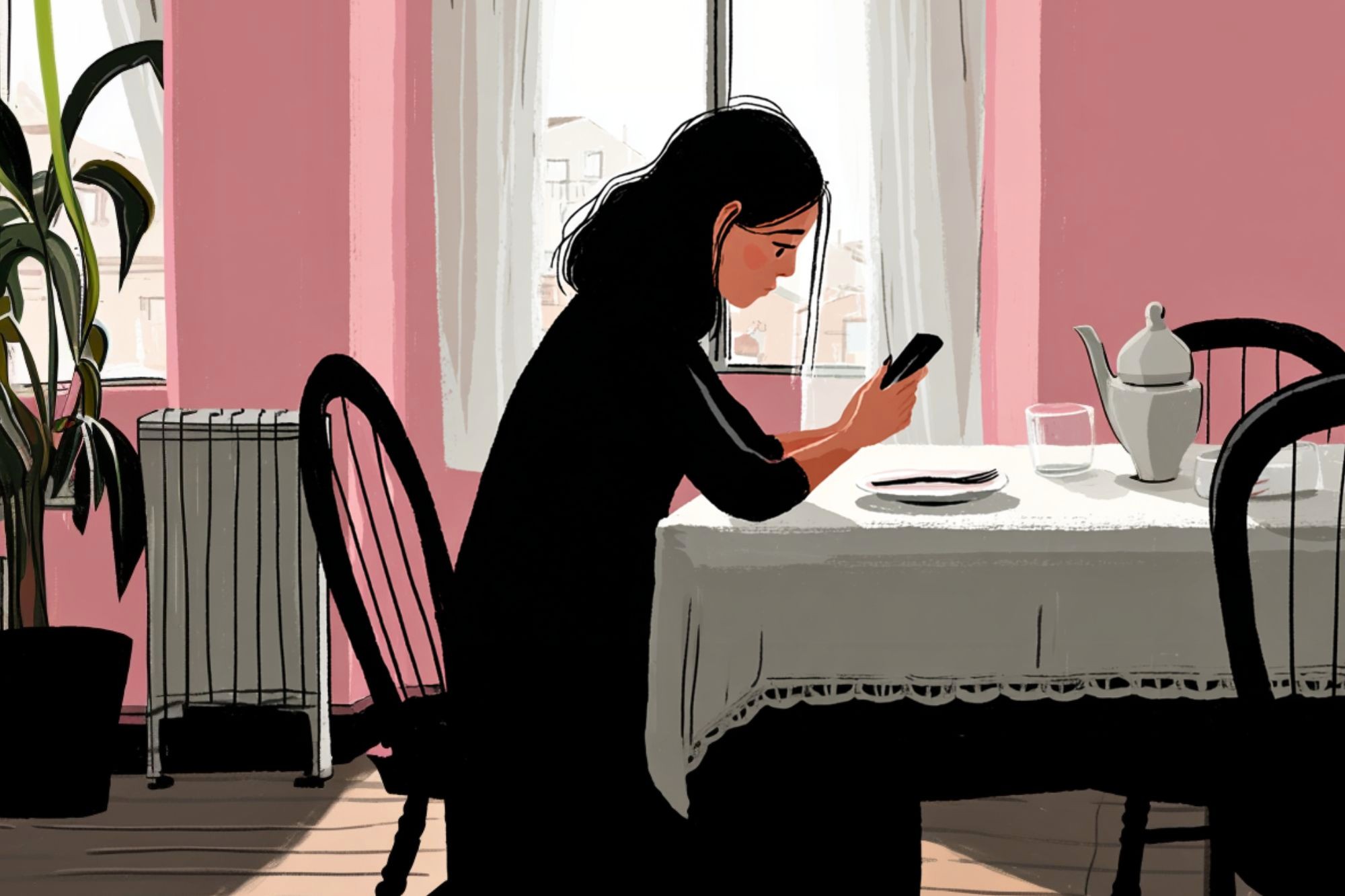
Wanting closeness and actually building it are not always the same thing.
Sometimes the very people who ache for connection are the ones pulling away, without ever fully meaning to.
I have watched this pattern play out in my own life and in the lives of people close to me who swore they wanted more intimacy while doing everything possible to avoid it.
Below are eight psychological reasons this disconnect happens more often than we admit and why noticing the pattern in yourself might be the first real step toward changing it.
Psychology suggests these 8 things might be why you are choosing loneliness without realizing it:
1. Fear of vulnerability outweighs your desire for connection.
Opening yourself up to another person means handing them power over how you feel. That trade can feel riskier than most people will admit, especially once you’ve been burned by it before.
I remember pulling back from a friendship in my twenties the moment it started to matter, not because anything went wrong, but because it could eventually go wrong, and I wasn’t ready to find out whether it would.
Psychologists link this instinct to an avoidant attachment style. It’s formed early on, and it treats emotional exposure as a danger rather than a reward.
And research shows that an avoidant attachment style predicts greater loneliness because of deep-rooted beliefs about disconnection and rejection that often form long before adulthood.
The irony here is brutal. The protection against getting hurt becomes the very thing that keeps you isolated.
Closeness stays out of reach, not because you don’t want it, but because wanting it enough to risk vulnerability feels harder than living without it.
2. Past rejection has wired you to expect disappointment.
Even a single painful rejection can recalibrate your expectations for every relationship that follows it, sometimes for years afterward. Essentially, once burned, the mind starts scanning for the next exit before it even walks through the door.
This often shows up as pulling away first, assuming the worst in a slow reply, or reading distance into an offhand comment that meant nothing at all.
In romantic relationships, psychological research has found that people high in rejection sensitivity consistently interpret partner behavior as more negative than it is.
But it happens across the board. As such, with friends, family, partners, or even colleagues, you may view ambiguous or neutral behaviors as indicators of rejection, even when outside observers see nothing wrong.
And the problem is that distortion becomes self-fulfilling.
Expecting rejection tends to invite the very outcome you feared, because withdrawal and hypervigilance make genuine closeness difficult to sustain over time. And eventually, loneliness starts to feel safer than the risk of being proven right again.
3. Independence has become a shield against being hurt.
Somewhere along the way, needing nobody got rebranded as strength. And there is some truth in that. Self-sufficiency matters, but taken far enough, it turns into a wall dressed up as a personality trait.
Known as hyperindependence, psychology teaches us that it’s a common trauma response, often as a result of abandonment, betrayal, or being parentified from a young age.
You start solving every problem alone, turning down help with the dishes or a ride to the airport out of habit rather than necessity.
By mistaking isolation for resilience, you never let anyone get close to you. The identity is comfortable because it never requires trusting someone else with your struggles or your setbacks.
Over time, though, independence stops being a skill and becomes an excuse never to let anyone close enough to matter.
Connection requires occasional dependence, and if that idea makes you uneasy, the wall you built to protect yourself might be the very thing standing between you and the closeness you say you want most.
4. Low self-worth has made closeness feel undeserved.
When you don’t fully believe you deserve closeness, you tend to put up walls that stop people from getting in.
You keep people at arm’s length simply because letting them fully in would mean trusting that they actually want to be there, and that trust can feel like the riskiest leap of all.
This might look like never reaching out first, downplaying your needs, avoiding sharing anything vulnerable, or assuming someone isn’t really interested in you, even when their behavior suggests otherwise.
What’s more, low self-worth does not just make new relationships harder to build. It makes relationships that already exist feel undeserved, which can push you to test people until they leave.
You find ways to sabotage friendships or relationships before the other party can reject you first.
5. Social anxiety has turned connection into a threat.
Small talk that feels effortless for someone else can feel like a performance review when social anxiety is in the picture.
Every pause gets replayed later that night. Every silence gets read as a judgment rather than as simply what it is: a silence.
For those experiencing it, this is exhausting enough that avoiding the interaction altogether starts to look like a reasonable, even responsible, choice.
But without exposure, relationships simply can’t develop. The tricky part is that avoidance works in the short term, removing the discomfort immediately, and reinforcing it as the safe, comfortable approach. But as the pattern repeats, it costs you depth and closeness.
6. Control feels safer than vulnerability in relationships.
Control feels safer to our brains than uncertainty; that’s a fact. Yet some people are more prone to pursuing control than others. Controlling behavior is common in people with anxiety, and it can also be a trauma response.
The problem is that relationships are uncertain by nature, no matter how well you prepare for them in advance.
For example, I have a friend who plans every detail of her relationships right down to what she will say in a first conversation, rehearsing it in the car beforehand. But you simply cannot script how someone else will respond, what they will need, or when they might disappoint you.
And that unpredictability can feel unbearable if control (or at least the illusion of control) has become your main coping tool for everything.
So the alternative is to keep people at a manageable distance, or to only let them in on your terms, which is just another form of distance in disguise.
Genuine closeness requires you to tolerate not knowing how things will unfold. But if that trade-off feels too uncomfortable to accept, you may have found that solitude has become the more bearable, more controllable option.
7. Unresolved grief has made new bonds feel like betrayal.
Loss changes how safe a connection feels, even when it comes to a connection that has nothing to do with what you lost in the first place.
After a breakup, a death, or any major upheaval, grief often triggers social disconnection as a protective response.
Letting someone new in can feel as though you’re setting yourself up to be blindsided by loss all over again before you feel ready for it.
What’s more, it can feel disloyal. Even if the new connection has nothing to do with the one you lost, simply experiencing feelings of happiness can make you feel guilty.
So instead you hold back, not out of a lack of desire for closeness, but because of the guilt, ot because the last time you were close to someone, it ended in pain you’re still carrying around with you.
Grief doesn’t always show up when or as we expected it to. Sometimes it just shows up as a distance you can’t quite explain, even to yourself.
8. Comfort in solitude outweighs the effort of connection.
For many people, solitude has a low-effort appeal that closeness simply cannot compete with most days, especially after a long week.
Nobody to check in with, no plans to coordinate, no risk of conflict interrupting your evening or your weekend.
This can be particularly true if you have a stressful life with lots of responsibilities, you are living in survival mode, and/or you have a chronic condition that affects your energy levels.
Over time, this convenience can begin to outweigh the reward of connection, especially once you have grown skilled at managing your own company.
People rarely choose this type of loneliness outright. They choose the version of comfort that solitude offers, and connection loses by default because it requires more effort and energy than staying in does.
The problem is that comfort and contentment are not the same thing, even when they feel similar in the moment you’re living in.
Solitude might feel easier today, but the version of you five years from now will likely wish you had put in the effort when you could, while it still felt optional.
Final thoughts…
Choosing loneliness rarely feels like a choice from the inside. It feels like self-protection, independence, or simply the path of least resistance on a hard day.
But underneath fear, past rejection, low self-worth, anxiety, control, grief, and comfort sits the same ache for closeness you started with.
Recognizing which of these patterns shows up in your own life won’t fix things overnight. It does give you somewhere honest to start, though.
The people you want closer won’t walk through a door you keep locked, so the real work begins with noticing your own hand on the latch.