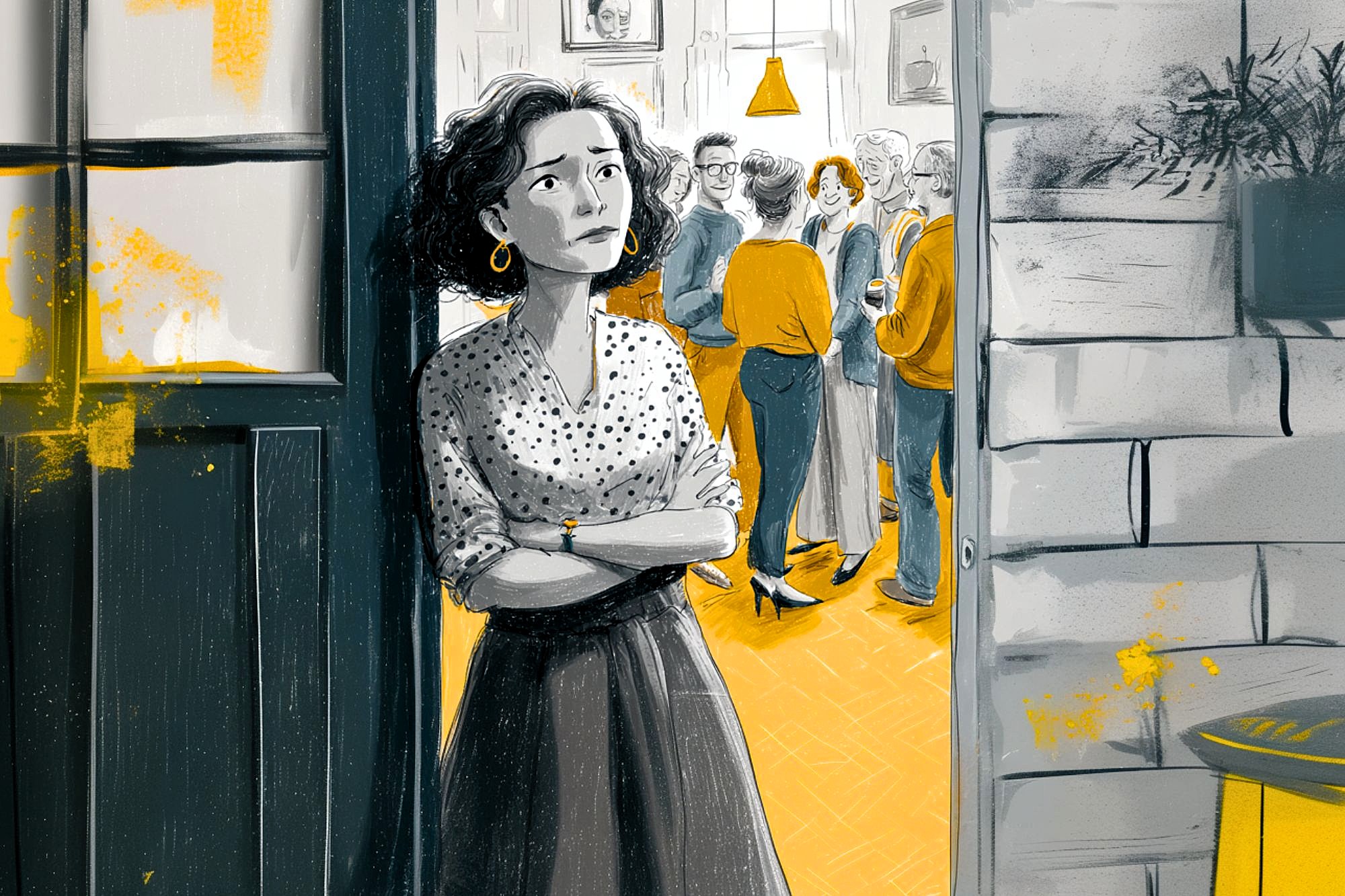
Our formative years are labeled as such because they form the foundations of who we’ll become as adults. Because of this, the things we experienced in our youth will have an immense effect on how we relate to others, the choices we make, and so on.
If you grew up without a lot of friends, either having a lonely childhood or one that involved more bullying than you ever wanted, that experience will be reflected in various life choices and behaviors in your adult life. And as such, you may discover that you’re still bracing for these things to happen:
1. To be abandoned when you let your true, weird colors shine through.
When you were younger, how much of your authenticity did you have to withhold or mask in order to be accepted by your peers? How often did you check yourself so you refrained from giddily talking about the things that excited you most, so your “friends” didn’t think you were a “weird loser”? And if you did falter in that self-regulation, how quickly did those people abandon you when they saw the “real” you?
Even though the people you associate with now are (hopefully) far more mature and open-minded than those you knew in the past, you may still hold back from expressing how you really think or feel so as to avoid potentially alienating them. Instead, you might keep your little joys to yourself and not admit to anything that may draw someone’s contempt.
2. Having to put in all the effort to keep friendships and relationships alive.
If you weren’t one of the more popular kids in school, chances are that you really had to go above and beyond to keep the people you liked in your life. Rather than friendships being easy or having any type of longevity, they only survived as long as you were the one reaching out, making an effort to get together, and so on.
These one-sided friendships are as disappointing as they are exhausting. You may feel like you can’t actually rely on any of the people you know to show up if you need them because you’ve always been the one putting in all the energy to keep them around. As a result, you may try to avoid burdening them when you’re experiencing difficulty — not because you’re ashamed, but because you feel that you can’t trust them to help you.
3. Judgment for potential social awkwardness.
One of the main reasons that many people advocate against homeschooling children is the lack of socialization that occurs when people are isolated from their peers. I’ve seen this firsthand, with people who only grew up socializing with their siblings and cousins: as adults, they had no idea how to interact with anyone. That said, it’s also worth noting that the relationship goes the other way, i.e., sometimes it’s inherent differences in the way a child socializes (and the resultant bullying and isolation) that drive them to be homeschooled, rather than the other way round.
Either way, if you were isolated from people your own age when you were growing up, didn’t have a lot of friends, or were bullied because the way you socialized was different from others, you may suffer from rather crippling social anxiety now that you’re an adult.
In fact, you may yearn for stronger connections and friendships with those around you, but you’re so afraid of them thinking poorly of you that you don’t pursue them, choosing solitude on your own terms rather than risking judgment or rejection.
4. Being used.
When you make friends, you may wonder whether they’re sincerely interested in spending time with you and having you in their lives, or if they’re only keeping you around for their own benefit. Are they just using you, so you’ll contribute financially to events and nights out? Or are they only keeping you around for comic relief, or because they’ll seem better looking or more successful in comparison?
These thoughts may constantly roll around in your subconscious, undermining any relationship you try to cultivate — either platonic or romantic. You might even sabotage connections out of a fear of being used, even if they’ve given you no indication that such a thing will happen. In your mind, it’s a matter of “yet,” rather than “if.”
5. Being left out for being different in some way.
Many people who grew up without a lot of friends experienced loneliness and exclusion because they were different from the majority of those around them. Some were of a different cultural background or religion, while others may have been excluded for being overweight, neurodivergent, having visible disabilities or differences, or simply being “uncool.”
If this was something you experienced in your youth, you may find yourself bracing for similar exclusion or ostracization in adulthood. You may not be dealing with the same juvenile jerks you knew in school, but part of you might always feel like you don’t belong or aren’t good enough.
6. For any happiness to be fleeting.
For some of us, the reason we grew up without a lot of pals was that our families moved around too often for us to make solid friendships. Some people are still friends with those they met in kindergarten and grew up alongside, while others barely had a chance to get to know anyone before it was time to leave again. My family moved seven times before I was 12 years old, so any time I started to make new friends, those connections were severed before they had a chance to flourish.
As an adult, any time you feel that you’re finally cultivating a strong bond with another person, you may find yourself bracing for the other shoe to drop. You’re getting along too well, having an amazing time with someone who really “gets” you, so naturally you assume something’s going to come up to take that away from you like it did when you were a child.
7. Waiting for them to label you as “too much”, “too needy”, “not fun enough,” etc.
Some people grew up with few friends because they invariably ended up labeled as too much or not enough of various things. If they called or texted too often, for example, they were called needy or demanding. Alternatively, if they weren’t available to go partying or travelling at the drop of a hat, they were berated for not being spontaneous enough.
This is a sign of never having connected with the right people rather than being too much/not enough of anything: it was a compatibility issue, not a personal failing. That said, if you grew up perpetually checking and adjusting your behavior to other people’s wants, you may have developed a contrived, people-pleasing personality that’s perpetually being micro-adjusted, instead of being able to be authentic with those who claim to be your friends.
8. Being taken advantage of (or mocked) because you struggled to read social situations.
Unfortunately, some people who grew up without many (or any) true friends were instead “befriended” (aka used) by those who took advantage of their naivete or lack of experience in a certain situation to get them to do something that they can laugh about.
This often happens to autistic people who are more likely to take people at face value and can struggle to determine when someone has ulterior motives. They assume they are up front, so why wouldn’t others be? If this sounds familiar, you may not even have recognized that these things were happening until after the fact, possibly when someone else brought it to your attention.
As such, this can leave you feeling uncertain in your adult relationships. You may find that you overanalyze situations now, perpetually second-guess your interactions, and are always waiting for someone to reveal that you’ve unknowingly been the butt of their jokes all along.
9. For your existing friendships to fade away.
When a person grows up without something that’s important to them, they’re often terrified of losing it when it does later appear in their life. This is why people who have been romantically lonely in the past will often tolerate mistreatment in their relationships: they’d rather shoulder the abuse than risk being alone again.
If you didn’t have a lot of friends when you were growing up, you may constantly worry that your current friendships will fade away, leaving you bereft of close companions. These fears may be so pervasive that you can’t enjoy the time you spend with them, or you find yourself imagining how terrible you’ll feel when these people are no longer in your sphere.
Final thoughts…
If you find yourself constantly bracing for the things mentioned here, I highly recommend the Buddhist practice of non-attachment. It encourages you to be as present as possible in everything that you experience, without clinging to it in such a way that it would cause suffering when and if it disappears.
Rather than experiencing pre-emptive grief or sabotaging relationships in case they fall apart, enjoy every moment you get to spend with the people you care about. This helps to alleviate a lot of the anxiety and fear of potential loss, so you can flow with things as they unfold instead.