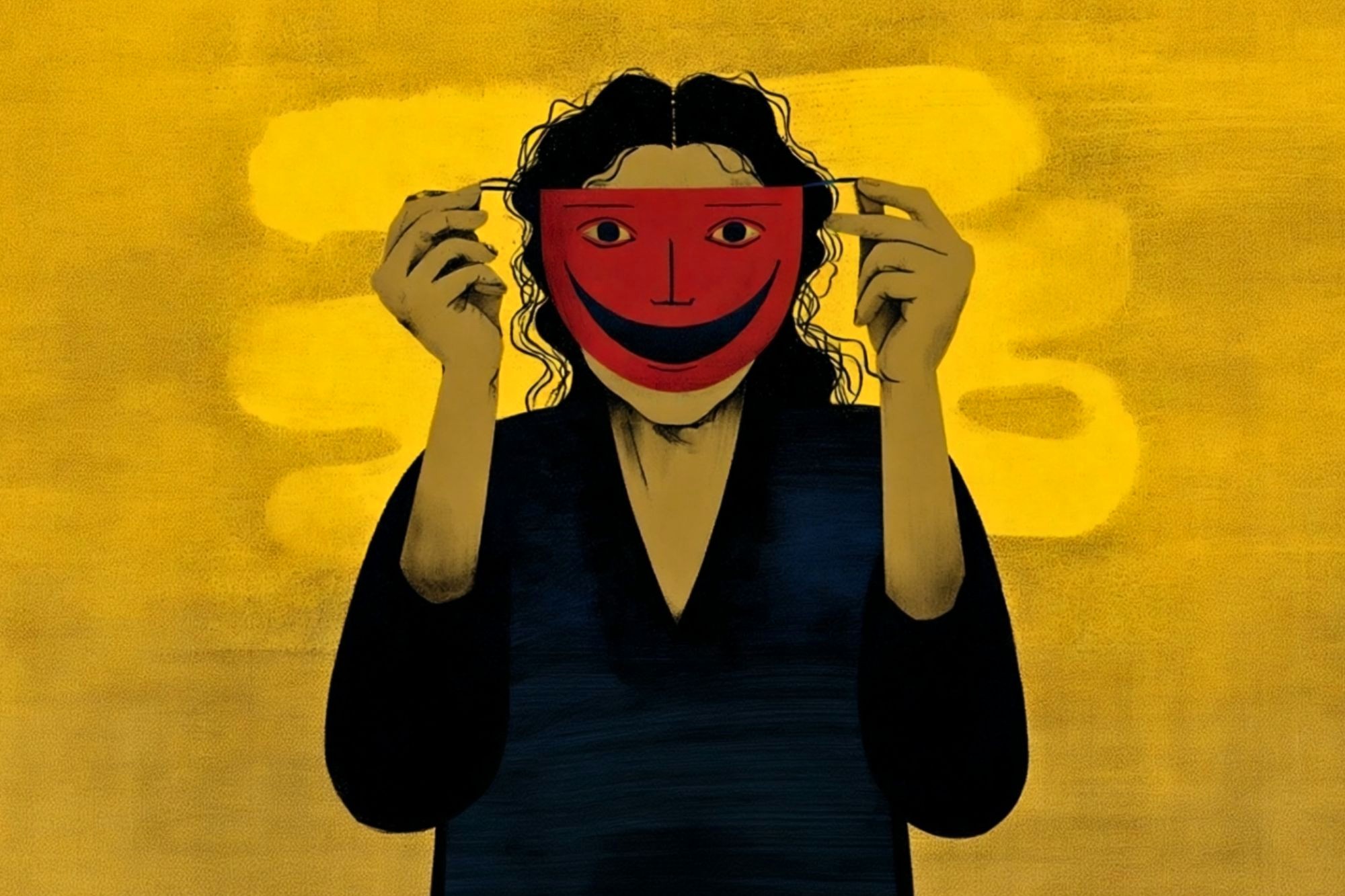
Some days, being yourself can feel like another item on your to-do list. You must remember when to smile, swallow the comment you want to make, pretend you’re fine, and mentally rehearse the right response before anyone notices you’re struggling.
I know that song and dance all too well. For years, I thought adapting to everyone around me removed the friction, and in a house where I was a surrogate mother to most of my younger siblings, it seemed to make sense.
But the problem with performing every day is that the mask you wear becomes heavier and heavier. The emotional, mental, and even physical costs keep adding up, simultaneously exhausting and disconnecting you in the following ways.
9 ways performing every day is slowly depleting your spirit:
1. Your brain never gets to clock out.
Performing every day turns ordinary interactions into mental multitasking.
During conversations, you’re listening while monitoring your facial expression, deciding whether you’ve spoken too much, checking the other person’s reaction, and editing whatever comes out of your mouth next.
And then when you get home, you replay the whole thing.
That constant self-surveillance creates a second layer of work beneath whatever you’re actually doing. Even low-stakes decisions can become strangely demanding because you’re choosing based on the facade you project.
Should you admit you’re overwhelmed? Will saying no seem selfish?
Self-doubt quickly begins feasting on your ability just to exist.
Eventually, there’s precious little mental space left where you’re not managing other people’s perception of you. It’s difficult to feel rested when part of your brain is permanently on quality control like that.
2. You become disconnected from your real emotions.
Someone asks how you are, and you respond with the usual “I’m fine” without even considering the question. Sometimes that’s social shorthand, and that’s ok.
The trouble starts when automatic emotional editing becomes your default. You laugh when you’re uncomfortable, act enthusiastic when you’re depleted, and reassure everyone else when you’re the person who needs reassurance.
I’ve caught myself performing “fine” so convincingly that even I almost believed it. Almost. But my body knows better, and there’s something deeply tiring about smiling through a difficult day while every part of you wants to retreat somewhere quiet and stop responding to people.
Your actual emotions don’t disappear because you give everyone the polished version. They’re simply pushed backstage. Keeping sadness, anger, fear, or exhaustion hidden requires a massive amount of energy, and you may end up feeling wrung out without understanding why.
3. You live with the fear of being an impostor.
Performance often comes with an uncomfortable catch — the better you become at it, the more you may fear someone discovering the person underneath.
Perhaps everyone thinks you’re wonderfully organized, but your bedroom currently looks like a laundry basket exploded. Or your co-workers consider you calm under pressure, even though you cried in your car before walking into the office. Friends describe you as confident, while you privately second-guess almost everything you say.
None of those contradictions make you a fraud. Humans are considerably messier than the edited versions we present. However, maintaining an image in this way can make normal imperfections feel like incriminating evidence.
Instead of allowing someone to see that you’re struggling, uncertain, or occasionally chaotic, you just work harder to protect the persona.
The cruel irony is that the praise you receive can then make you more anxious, because the image you cultivate outgrows your ability to sustain it.
4. You forget who you are beneath the performance.
You can be surrounded by people who love you and still feel strangely lonely. If they only see the agreeable, upbeat, or endlessly capable version of you, there’s always a little distance between being loved and feeling known.
Imagine a friend inviting you out after an awful week. You want to say you’re exhausted and would rather stay home. Instead, you go, turn on the charm, and spend the evening making everyone laugh. They leave thinking you had a great time. You leave wondering why nobody noticed you were struggling.
How could they, though? Performing asks other people to connect with the version you’ve given them. Over time, you may even feel resentful that nobody sees beneath it.
Genuine connection requires risk and being willing to let people encounter your quieter, quirkier, needier, less polished sides, too.
5. You lose sight of what you love.
Spend long enough adapting yourself to different rooms, and an unsettling question can creep in: you start wondering what you actually want.
You become so practiced at reading everyone else that your own preferences get fuzzy. I know this feeling well. I used to choose the restaurant everyone would like, soften opinions before sharing them, and instinctively become whoever a situation seemed to require.
Eventually, even simple choices felt difficult when nobody else was providing the script.
After my first marriage ended, I suddenly had space that was mine and decisions that didn’t need anyone else’s approval.
The freedom felt wonderful, but rediscovering myself wasn’t instantaneous. I had to pay attention to what I enjoyed, wanted, and believed when nobody else was influencing the answer.
I realized that the hidden cost of performing includes becoming an expert on everyone else except yourself.
6. Your body starts carrying what you won’t show.
Your mind is often willing to keep the show going long after your body wants to close the curtain.
I’ve learned this one the hard way. I didn’t want to inconvenience anyone or change the mood. I could still smile, answer questions, and get through what needed to be done, so I convinced myself I was coping.
Then I’d get home and crash.
That physical collapse can feel confusing when you’ve technically managed the day. But appearing OK takes effort. You’re overriding your body’s signals to slow down while expending extra energy to make sure nobody notices.
When you do that often enough, exhaustion stops feeling like an occasional consequence of a hard day and becomes the price you pay for looking as though nothing is wrong.
7. You find it harder to ask for help when you actually want (and need) it.
Being known as the strong one can feel good until you desperately need permission to be anything else.
Maybe you’re the co-worker who always finds a solution, the friend who answers crisis texts, or the family member everyone relies on. Then your own life gets difficult. You stare at a message asking whether you’re OK and type, “Yep, all good,” before returning to a situation you’re barely managing.
The longer you’ve performed competently, the more vulnerable honesty can feel because asking for help seems inconsistent with the person everyone thinks you are. Constantly proving you can cope creates a trap, because people continue to lean on you, genuinely believing you are fine.
Sometimes dropping the act starts with giving them more accurate information. I had to let the ball drop so my family understood that I wasn’t OK and needed to rest. While it hurt me to do so, it also helped me in ways I desperately needed.
8. Your hidden needs turn into resentment.
Earlier in my marriage, I always picked up the kids from school, even if I was running late and raggedly tired, because I believed it was my responsibility. At first, being accommodating felt easier than disappointing someone.
I never tried setting boundaries or sharing the load with my husband, and the resentment that began to slip through the cracks almost cost me my marriage. I became irritated when he asked for another favor and frustrated that he didn’t seem to realize I needed a break. It was only once I stopped acting fine that my erratic behavior and moods made sense.
Once I spoke up, my partner knew he could help. I had seemed so strong that he was afraid to intrude on the responsibilities I had assigned to myself.
If you act invincible too, you may surprise yourself when you become angry at people for believing the version of yourself you’ve consistently shown them. But why wouldn’t they believe it? They aren’t mind readers.
Saying what you need may feel uncomfortable, but resentment is often far more damaging than an honest no.
9. You stop giving yourself room to grow.
Growth is messy. You misunderstand things, make questionable choices, change your mind, and occasionally discover that you were spectacularly wrong.
And that’s difficult when you’ve built your identity around appearing polished. Instead of admitting you don’t know something, you bluff. You avoid unfamiliar situations where you might look inexperienced. You hide mistakes rather than examining what they can teach you.
I spent years thinking that keeping the peace meant I was handling conflict well. In reality, I was often avoiding it. Learning to say what I needed, disagree with someone I loved, and tolerate the discomfort afterward seemed untidy. However, it allowed me to grow, which was something performing never did.
Sometimes becoming more yourself means being willing to look a little messy and unfinished along the way. And really, who among us is a perfectly finished product?
Final thoughts…
Dropping the performance and sharing every thought, emotion, or struggle with everyone you meet is not always advisable.
Some situations do require restraint, and some people haven’t earned access to your most vulnerable self.
The difference is whether you’re choosing what to share and when, or constantly reshaping yourself out of fear that the real you is unacceptable.
Sometimes masks are necessary, but when it’s safe, you can drop the performance. You can laugh without wondering what people think and ask for what you need.
Each small moment of honesty gives you a little of that energy back — and a little more room to simply be yourself.