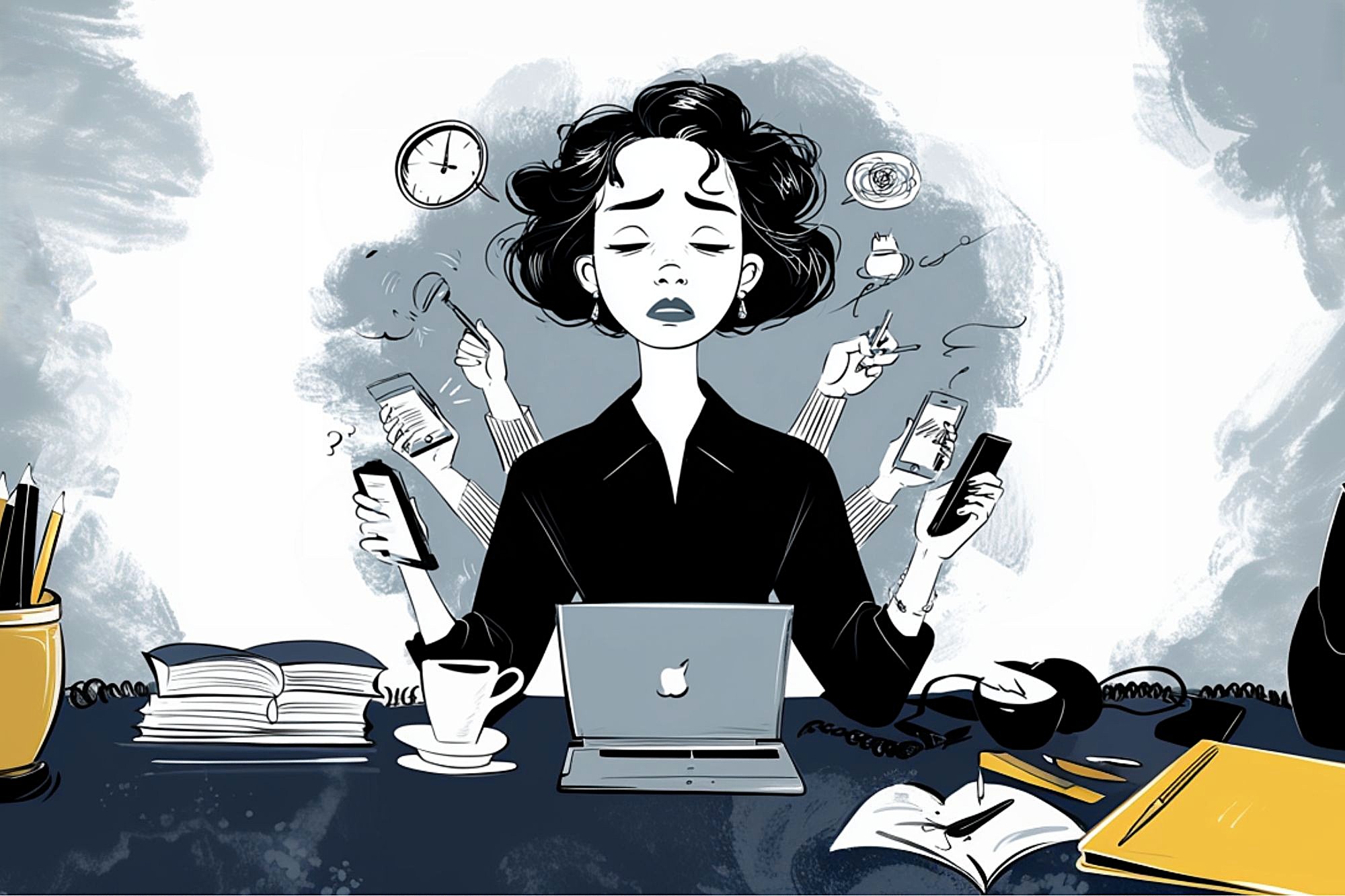
We wear exhaustion like a badge of honor. Pushed through another week on five hours of sleep? High five. Worked through illness? What dedication. Sacrificed rest for productivity? That’s commitment.
But let me tell you: your body is keeping score. And eventually, it stops accepting “just one more push” as payment.
The willpower that used to carry you through will eventually start to fail. The determination that got you here will become irrelevant. Because no amount of mental fortitude can override our basic biology forever.
If you’ve noticed that pushing through doesn’t work as it used to, you’re not imagining it. And if you’re not there yet, please, let this be a warning of what will happen if you continue.
1. Your body isn’t a machine—it has limits you can’t negotiate with.
You can’t willpower your way out of genuine physical depletion, no matter how many motivational quotes you read. When you push through exhaustion repeatedly, your body depletes actual, measurable resources: stress hormones like cortisol and adrenaline, cellular energy stores, and neurotransmitters that regulate mood and focus. These aren’t infinite.
For years, I prided myself on never taking sick days, on my relentless work ethic. I couldn’t understand people who were happy to take time off work when they were unwell rather than “just” push through.
Then my body stopped asking and started demanding—chronic pain forced me to listen, and I haven’t been able to ignore it since. Your body will likely try gentle signals first: fatigue, difficulty concentrating, irritability. Ignore those long enough, and it escalates.
We’ve all convinced ourselves that one more late night won’t matter, that we’ll catch up later. But there’s a difference between occasionally pushing through a busy period and operating in a constant state of depletion. One is sustainable. The other is sabotage.
What to do instead: Learn to distinguish between temporary tiredness and bone-deep exhaustion. Treat rest as essential maintenance, not a luxury you’ll get around to eventually. And start noticing your body’s early warning system before it has to shout.
2. You’re accumulating a “rest debt” that compounds over time.
Think of rest like money in a bank account. You can occasionally dip into your overdraft, for example, by staying up late for a genuine emergency, or pushing through a particularly demanding week. But if you’re constantly withdrawing without depositing, you’re accumulating debt. And that rest debt compounds with interest.
One missed night of sleep is manageable; your body can bounce back. But weeks of inadequate rest create a deficit that doesn’t disappear with one good night’s sleep or a lazy Sunday. What’s more, you may tell yourself you’ll catch up on the weekend, but then the weekend arrives, and there are groceries to buy, emails to answer, and children who need you. The repayment never happens, and the debt grows.
Eventually, your body charges you interest: that means longer recovery times from minor illnesses, persistent brain fog, and emotions that swing wildly over minor inconveniences. What used to take a day to recover from now takes a week. The math stops working in your favor, but you keep borrowing anyway, convinced you have no choice.
What to do instead: Start making small deposits regularly rather than hoping for one big payoff. Add one earlier bedtime per week. Decline one obligation that isn’t essential. We’re all busy, but we make time for what we think is important. That can be as small as building in five-minute breathing breaks throughout your day. After all, incremental repayment is still repayment.
3. Your brain stops functioning properly when you’re chronically exhausted.
Ever read the same sentence five times without absorbing it? Walked into a room and completely forgotten why? Snapped at someone you love over something trivial? That’s often your exhausted brain waving a white flag.
When you’re chronically depleted, executive function, that is, the part of your brain responsible for decision-making, emotional regulation, memory, and focus, deteriorates significantly. Essentially, you’re trying to do complex cognitive work with a processor that’s overheating and lagging.
And the cruel irony is that exhaustion makes you less efficient, so tasks take three times longer, which means you get even less rest, which makes you less efficient still. You’re trapped in a cycle where pushing through actually reduces your output.
Meanwhile, your emotional regulation disappears. You cry over spilled milk—sometimes literally. Small frustrations feel catastrophic. You know you’re overreacting, but you just can’t seem to stop.
What to do instead: Recognize that rest actually increases productivity, not decreases it. Schedule your most cognitively demanding work for when you’re typically most rested. Give yourself permission to do less when you’re exhausted, rather than doing everything poorly and then having to redo it anyway.
4. You start relying on artificial props (caffeine, sugar, adrenaline) that make things worse.
It usually starts innocently: an extra cup of coffee to get through the afternoon slump. Then it’s two extra cups. If you’re not careful, you’ll be downing energy drinks you swore you’d never touch.
It becomes a case of using stimulants to override your body’s alarm system, but not addressing why the alarm is sounding. Of course, we all have our vices. You don’t need to swear off caffeine if you enjoy it. But that’s the key question: are you drinking it because you need it to function or because you enjoy it?
The biological trap is that these props provide temporary boosts by triggering stress responses, which ironically deplete you further in the long run. What’s more, your body builds tolerance, so you need more for less effect.
Some people even unconsciously become addicted to adrenaline itself, creating urgency and crisis to generate energy—everything becomes last-minute, high-stakes, because that’s the only way they can muster the fuel to complete it. Then there is the sugar rollercoaster, which is equally as destructive: quick energy followed by crashes that leave you more exhausted than before.
What to do instead: Notice when you’re reaching for stimulants instead of acknowledging genuine exhaustion. Experiment with one week of prioritizing more sleep instead of more caffeine, and observe what shifts. Address the root cause—inadequate rest—rather than endlessly managing symptoms.
5. You lose your ability to feel joy or be present.
I can tell you from living with chronic pain and fatigue that prolonged exhaustion steals something precious: your capacity for joy and presence. Everything feels gray, effortful, and muted.
For example, perhaps your child tells you an animated story about their day, and you can barely track the plot, let alone engage with appropriate enthusiasm. Or your friend shares genuinely good news, and you have to fake excitement because you simply cannot muster it. You’re physically present but emotionally absent, and everyone can feel it.
The activities you used to love feel like obligations you have to endure. You go through the motions, but you’re not really there. You know you should be present. You desperately want to be. But depletion has stolen your capacity for connection and joy. Your loved ones feel your absence even when you’re sitting right beside them, and you feel it too, which makes everything worse.
What to do instead: Recognize emotional numbness and inability to be present as critical red flags requiring immediate change. Start protecting time for genuine recharging, not just collapse-and-scroll-your-phone time. Communicate with loved ones about what you’re working on. Schedule truly restorative activities, even if they feel impossible right now. This is your warning system at high alert.
6. You’ve normalized a state of emergency.
Our nervous systems are constantly at work, balancing between feeling safe, being driven to act, or being alert to danger. Psychologists call these the soothe, drive, and threat systems.
When you chronically push through exhaustion, you get stuck in threat mode—fight-or-flight becomes your default setting instead of an emergency response. This happens because your nervous system never gets the signal that it’s safe to stand down.
The soothe system requires actual rest, safety, and recovery to activate, but when you push through, you keep overriding those needs, so your nervous system remains stuck in the threat response.
You’re essentially telling your nervous system, “there’s no time to relax, keep going” over and over until it believes you’re in permanent danger. As a result, you end up constantly wired, vigilant, and unable to truly relax even when you want to.
And when you do finally have downtime, you feel guilty and anxious rather than restored because your threat system is still running the show. You clench your jaw unconsciously. Your breathing is perpetually shallow. And your shoulders live somewhere up near your ears.
What to do instead: Simply recognizing that the threat system has become your normal is the crucial first step. Practice nervous system regulation through deep breathing, gentle movement, or time in nature to deliberately activate your soothe system. Seek outside perspective from a therapist, doctor, or trusted friend to reality-check your state. Remember: sustainable isn’t supposed to feel like a constant emergency.
7. Your immune system waves the white flag.
Perhaps like me, you used to rarely get sick, or at least “not sick enough” to warrant any downtime. Now you’re fighting off your third cold in two months. Or you get sick, and it lingers for weeks instead of days or wipes you out completely. You might feel like you’re constantly “coming down with something” or “fighting something off.”
This isn’t bad luck or aging—it’s your immune system, compromised by chronic stress and insufficient rest. The biological mechanism is straightforward: stress hormones suppress immune function, and rest is when your body performs essential repair and maintenance. When you push through illness instead of resting, you stay sick longer and weaken yourself further.
The pattern becomes: get sick, push through anyway, get sicker, take longer to recover, fall behind on responsibilities, stress about catching up, weaken your immune system further, get sick again.
For me, ignoring my body’s messages for years—working through fatigue, priding myself on never taking sick days—contributed to exacerbating an underlying chronic condition I didn’t know I had. By the time my body forced me to stop with chronic pain and fatigue, the damage to my nervous system was far more extensive than it might have been.
What to do instead: Treat early warning signs seriously instead of dismissing them. Actually rest when you’re sick, genuinely rest, rather than “working from home,” which is just working while feeling terrible. Build in daily immune-supporting habits—adequate sleep, decent nutrition, stress management—before your body forces you to through complete breakdown.
8. You’re teaching others (especially children) that this behavior is normal.
One thing that really drove things home for me was understanding that my relationship with rest and boundaries doesn’t exist in a vacuum. Children, younger colleagues, and friends absorb our patterns and internalize them as normal.
When your daughter sees you constantly exhausted, never setting boundaries, always saying yes despite obvious depletion, she learns that’s what responsible adulthood looks like. At work, junior employees watch leadership running on fumes and conclude that setting boundaries is career suicide.
You might think pushing through demonstrates responsibility and commitment, but you’re actually modeling unsustainable patterns that others will replicate and suffer from.
What to do instead: If you can’t do it for yourself, do it for those whom you no doubt love deeply. Make rest visible and normalized in your household and workplace. Verbalize your boundary-setting: “I’m going to bed early tonight because my body needs rest.” Show that rest doesn’t equal laziness or lack of commitment. If you realize you’ve modeled harmful patterns, apologize and course-correct. It’s never too late to teach better.
9. The things you’re pushing through FOR start to suffer anyway.
The bitter irony is that you likely sacrifice rest to be a good parent, dedicated employee, and attentive partner—but exhaustion makes you worse at all of those things. Your work quality declines. You make mistakes that require fixing, which takes more time than resting would have. Tasks that should take an hour take three because you can’t focus. Creativity disappears entirely.
At home, you end up parenting from empty: snapping at your kids over normal childhood behavior, impatient with their reasonable requests, physically present but emotionally absent. Your relationship suffers because you’re too tired for meaningful conversation, intimacy, or fun—you’re just two exhausted people existing in parallel.
Eventually, something breaks down completely—you get too sick to show up at all, you make a significant mistake with real consequences, or an important relationship ruptures from sustained neglect.
What to do instead: Honestly evaluate what you’re actually achieving in your exhausted state versus what you could achieve with adequate rest. Consider that doing less, but doing it better and with presence, might serve everyone more effectively. Calculate the true cost of pushing through: mistakes, relationship damage, health consequences, repairs, and more.
10. You’re one crisis away from complete collapse.
It’s worth mentioning that even if you’re somehow still managing everything perfectly, you’re likely operating with zero reserves. There’s no buffer, no slack in the system.
When you keep pushing through your exhaustion, you end up one unexpected event away from everything falling apart: a sick child, a broken-down car, a surprise deadline, or a family emergency. When you have reserves, a flat tire is annoying; when you’re exhausted, it feels apocalyptic. Normal life curveballs become catastrophic.
I’ve watched people completely collapse when that one additional stressor appears—unable to stop crying, unable to get out of bed, panic attacks that seemingly came from nowhere.
And the recovery time from complete collapse is significant—often weeks or months to climb back to baseline functioning. Some people end up in medical or mental health crisis territory, where their body or mind simply forces rest by completely shutting down. Ironically, the time spent preventing collapse through consistent rest is far less than the time required to recover from it.
What to do instead: Build in a buffer before you desperately need it. Create reserves by resting now, while you can still choose to, rather than waiting until your body chooses for you. Identify your personal warning signs and respond to yellow flags before they turn red. Accept that prevention is more efficient than recovery.
11. You’ll lose touch with what your body is telling you.
When we ignore our body’s signals for too long, we ultimately stop receiving them clearly. For example, you don’t notice you’re hungry until you’re shaky and irritable. You don’t realize you’re thirsty until your head pounds. You haven’t used the bathroom in eight hours because you’ve been too busy to notice.
Your body says, “I’m tired,” and you say “not now” often enough that eventually it either stops asking—or starts screaming through illness and pain instead. This is an interoception breakdown: your ability to sense your internal state gets progressively duller the more consistently you override it.
The danger is that by the time you “feel” exhausted enough to justify stopping, you’re already in serious deficit. And let me tell you, coming back from that is no mean feat.
What to do instead: Practice regular body check-ins throughout your day—pause and notice what you’re actually feeling physically. Respond to early, gentle signals instead of waiting for emergency-level symptoms. Rebuild trust with your body by honoring its needs. Start with the basics: eating regular meals and snacks, drinking water regularly, and taking bathroom breaks.
12. Rest itself becomes harder when you’re chronically exhausted.
This is perhaps the cruelest paradox: you’re desperately tired, but you can’t sleep. You finally have time to relax, but you can’t settle. You’re “tired but wired.” That is, physically exhausted but mentally racing and unable to shut off. The stress hormones that have been keeping you upright now prevent the very relaxation you need for restorative rest.
When you do have downtime, you’ll likely find that guilt and anxiety flood in rather than relief. You might develop or worsen sleep problems: insomnia, unrefreshing sleep, waking up as exhausted as when you went to bed. It would appear that you’ve genuinely forgotten how to rest. That’s because your nervous system is so dysregulated that it can’t downshift into rest mode anymore.
Unfortunately, it becomes a vicious cycle—you need rest to function, but you can’t rest because you’re too dysregulated, which makes you more exhausted, which makes rest even harder. You’ve lost the actual skill of resting, and it needs to be consciously relearned.
What to do instead: Distinguish between collapse and true rest, and actively learn restorative practices such as meditation, gentle movement, time in nature, and genuine disconnection from life stressors (yes, this includes your phone). Be patient with yourself as you relearn something that should be natural. If sleep issues persist, seek professional support—a sleep study, therapist, or doctor can help identify and address underlying problems.
Final thoughts…
If you’re reading this and recognizing yourself in these patterns, I cannot stress this enough: needing to rest is not weak, and it’s not lazy. You’ve been operating under a cultural lie that rest must be earned through productivity, when the truth is that rest is a biological requirement for being human.
You can rebuild your capacity for rest, but it starts with honest acknowledgment of where you are right now. What’s one boundary you could set this week? One obligation you could decline? One earlier bedtime you could prioritize? Rest isn’t giving up on your responsibilities—it’s crucial to if you want to meet those responsibilities sustainably.
The badge of honor you’ve been wearing for pushing through is actually a warning label. Please don’t do what I did. Please don’t ignore the warning.