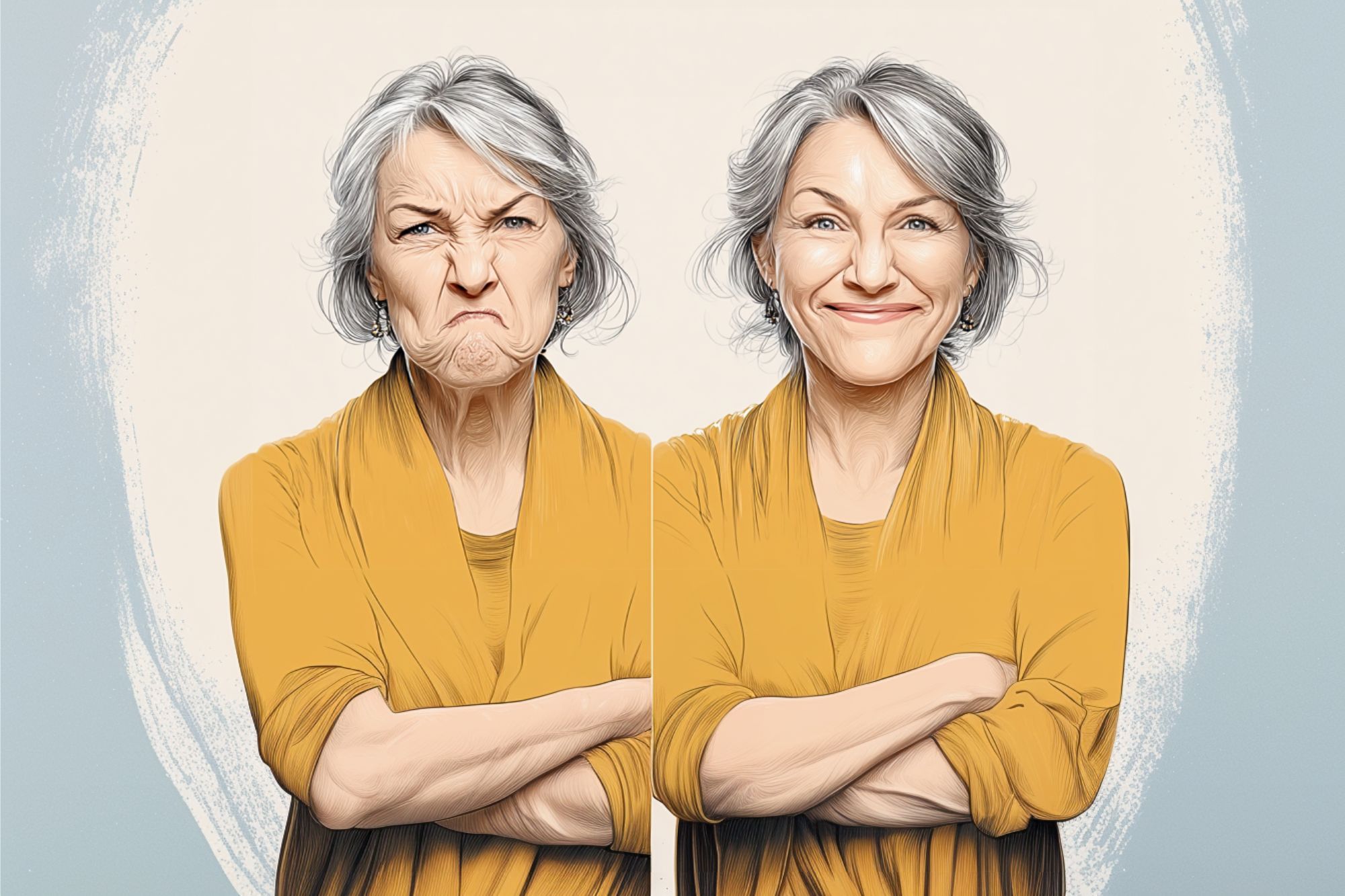
Have you noticed that some older adults are truly miserable curmudgeons who complain about everything, while others twinkle with kindness and delight? Though some of the ways we think are genetically predisposed or a result of our formative conditioning, a lot can be determined by the conscious decisions we choose to make regarding the way we think about the world and how we experience it.
The psychology of cognitive reframing teaches us that the following thinking patterns will help to determine whether you’ll grow gentler or bitter as you age, depending on which choices you make. Which will you choose?
1. “The modern world scares me” vs. “The modern world benefits me.”
Many of us have friends and relatives who either refuse to engage with the modern world or who are afraid of it. Some are overly suspicious of it, while others get flustered when they don’t understand something immediately and dismiss it completely, rather than learning how to operate it.
There are a lot of modern conveniences that are immensely beneficial to older adults. Voice-activated home assistance, video doorbells, and wearable health monitors are just a few things that can help older individuals live safe, independent lives for as long as possible. It may take us a bit longer to remember how to work the thingies, but once we familiarize ourselves with them properly, they’re generally immensely beneficial across the board.
2. “I can’t do anything anymore” vs. “I’m grateful that I can still do so much.”
After I had my last stroke, I couldn’t use my left hand properly for five months. I was devastated at the thought that I might never be able to knit again, and I’d be lying if I said that I didn’t feel bitterness and resentment at first. However, those feelings eased as I shifted focus and picked up embroidery and botanical illustration again for the first time in years. I did eventually regain full use of my left side, but that experience was a beautiful lesson in gratitude and adaptability.
We will all experience changes as we age that alter our ability to do different things. When this inevitably happens, we can either choose to become bitter about our inability to do those things anymore or we can find solutions to adapt to new ability levels and embrace new things that are easier for our aging bodies and minds to enjoy. There are always wonderful things to experience if we open ourselves to them, rather than shutting ourselves down in depressed frustration.
3. “Nobody gives a damn about old people” vs. “Old people still have a lot of value to give.”
It’s a sad truth that a lot of individuals summarily dismiss older adults as being out of touch, irrelevant, and obsolete. As such, it’s understandable that you might begin to believe them if that’s what you’re exposed to. That said, there are still many people who recognize that older people don’t just have a lot of value to offer, but are invaluable resources for so many things.
The key seems to be to get involved with the right groups. For example, there are countless opportunities for older adults to share their wisdom and skills with younger generations, such as through volunteering and community projects that span generations. Interacting with other people, sharing techniques, and working on useful projects will likely result in far more life satisfaction and joy than sitting at home feeling useless.
4. “My glory days are behind me” vs. “I still have so much left to give.”
Many people have a specific age range in which they felt they were at the top of their game. Maybe they were fitness enthusiasts who won awards for their speed and strength, or their beauty was such that they turned heads everywhere they went. When one’s personal value is tied up in these external factors, it’s easy to become bitter when they fade.
It’s at times like these that it’s important to remember that who we are and what we have to offer have little to do with the corporeal vessels we’re temporarily piloting. The people who love us most adore us for who we are, not for our appearance or achievements. We can still be great friends, active community members, teachers, care providers, and creators until our last days here on this beautiful planet.
5. “Contemporary media is garbage” vs. “There’s a lot of great stuff to enjoy.”
Many of us grew up with parents and grandparents who griped about how awful the media we enjoyed was. The music we loved was atrocious from their perspective, movies were too loud, and everything was better in their day. They insisted on only partaking in media they enjoyed in their youth, and refused to try anything modern.
But it doesn’t have to be inevitable that we follow in their footsteps as we age, and those who embrace contemporary offerings tend to be much happier and more vivacious. You only have a quick look online to see silver-haired individuals at concerts, having a fantastic time, or sharing great new albums, books, or films they’ve discovered with their online communities.
There’s such wealth to explore from all around the world, and being open to it can keep your heart open and gentle rather than closed and embittered.
6. “Those darned kids/animals are making too much noise” vs. “They sound so happy. Maybe I can join in too…”
A lot of bitter older people will glare at children who squeal with delight when feeding ducks at the pond, or if dogs are tearing around chasing one another at the park. Those who behave in this way seem to have forgotten how much fun it was to discover little bits of bliss in their youth, or how to enjoy watching others delight in the joys that life can bring.
In contrast, those who soften and grow gentler rather than bitter will light up with happiness when they see the little ones enjoying themselves. They’ll ask the dogs’ names and may even carry biscuits in their pockets in case the owners give permission for them to be shared.
Furthermore, they might ask to join in to feed corn or peas to the ducks and swans, thereby reliving the delights of their own childhood while simultaneously creating some intergenerational harmony and teaching the littles that older people can still be fun too.
7. “Everyone I know is going away” vs. “I am so lucky to meet so many new, wonderful people.”
There may be many reasons why people disappear from our lives as we get older. For example, some retire to warmer countries while others move in with their adult kids in other cities to help take care of their grandchildren. There’s also the difficult reality that some people we know decline more quickly than others — such as with early-onset dementia — and inevitable mortality robs us of some of our favorite people over time as well.
It’s easy to become angry and bitter about these types of ever-increasing losses, but it’s much more rewarding to focus on positive things instead. As long as we draw breath, we have the opportunity to meet and cultivate relationships with new, wonderful people within our spheres.
Friendships can blossom in the most unexpected places, between people of all walks of life. You may become best friends with the tattooed barista who makes your coffee perfectly every time, or find a soul mate in a new spiritual community. Open your heart to these possibilities and be prepared to discover immense beauty there.
8. “I’m useless because I’m not productive anymore” vs. “I’m so grateful to finally be able to rest and prioritize my joy.”
It’s estimated that over 20% of adults experience prolonged periods of exhaustion, and this fatigue just gets more intense over time. Many work two jobs to make ends meet, but even those who work one job can be worn thin due to pressing responsibilities, household tasks, and the overall fatigue that comes with keeping oneself and one’s family going. Add natural aging and chronic pain or illness to the equation, and the exhaustion can be truly crippling.
People whose sense of self-worth is tied to their productivity can often feel depressed and useless in their elder years, once they’re no longer grinding around the clock. As a result, they can become embittered about the perception of having been pushed out of a job they loved, or feeling like they no longer have anything of worth to contribute.
But our worth is not defined by our output, and it never was. We are worthy simply because we exist. Refocusing on gratitude to finally be able to rest and decompress properly can alleviate a great deal of bitterness and bring the focus back to gentle positivity instead.
Final thoughts…
Everything we go through offers us different pathways to experience. It’s up to us to choose which one will provide us with greater opportunities for personal growth, as well as overall joy and fulfillment. It’s true that as we age, we can’t do all the things we did when we were younger, but that doesn’t mean that we’re surrounded by darkness and closed doors. Let go of the “can’ts”, embrace life’s changes as they arise, and you’ll soften into elder years that are much gentler, kinder, and more joyous than you could ever imagine.
“Ring the bells that still can ring
Forget your perfect offering
There is a crack, a crack in everything
That’s how the light gets in
– From Anthem, by Leonard Cohen